How infant skulls took on an elite shape
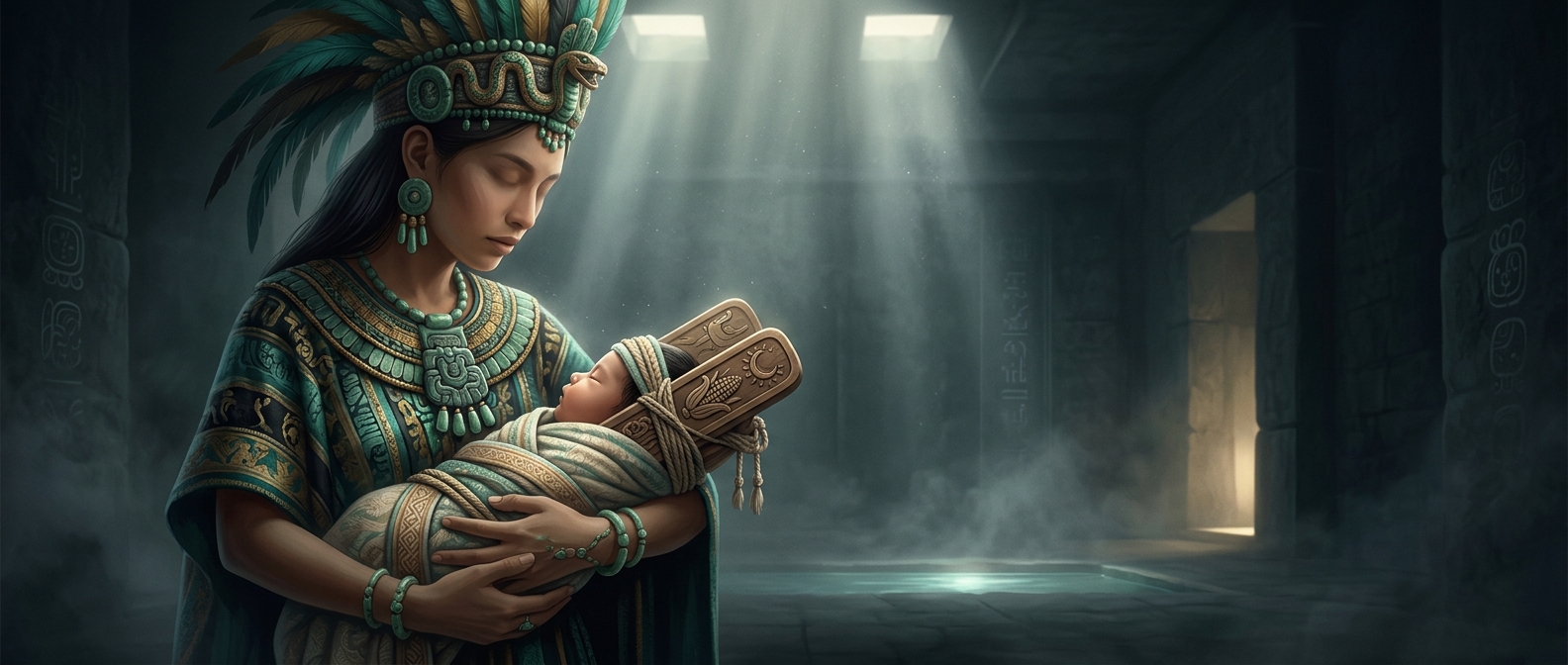
A baby’s skull is not a single solid shell. In infancy, its bones have not yet fully joined, and the skull can change shape under sustained pressure as it grows. Maya caregivers could use bindings or firm supports to guide that growth over time, producing a deliberately elongated form. The practice depended on beginning early; once the bones had hardened, the same shaping would no longer work.
This was not a single uniform style across every Maya community or period. Archaeologists find different forms of cranial modification, and not every person had a reshaped skull. The method and result varied, making the head’s contour a visible feature of someone’s appearance from childhood onward.
A body made to echo a sacred image
The appeal was more than an abstract preference for an unusual silhouette. Maya images sometimes show rulers and other high-status people with elongated heads, and the maize god—the deity connected with maize, a central food crop—was also depicted with an elongated head. Shaping a child’s skull could therefore make the body resemble an admired sacred form while marking social standing.
That resemblance linked everyday life to a larger system of meaning: maize sustained communities, while rulers presented themselves through images associated with divine power and renewal. A modified head could make those associations legible without a written explanation. It was both a bodily appearance and a signal of identity.
Status began before a child could choose
Because the shaping had to start in infancy, adults—not the child—made the decision. The result could last into adulthood, carrying a family’s ideals and social position on the person’s body. That is the striking consequence: an elite standard of beauty was not merely taught later through clothing or manners. It could be built into a child’s growing skull before that child could express a preference.