The engineering behind a faster crossing
A liner could not win speed simply by adding more power. Its hull had to move through water with as little resistance as possible. A long, relatively narrow hull helped it cut through waves, while its stern and propellers had to turn engine power into forward motion efficiently. Even small gains in hull design could matter over an ocean crossing—but they could not erase the cost of pushing a huge ship faster.
That cost rose sharply with speed. The engines needed more fuel to overcome water resistance, so a ship built to chase a record could burn substantially more fuel than one designed for economical service. Designers therefore faced a practical trade: favor a hull and machinery optimized for speed, or conserve fuel on the many routine voyages when no rival was in sight.
A record made at sea, not in a laboratory
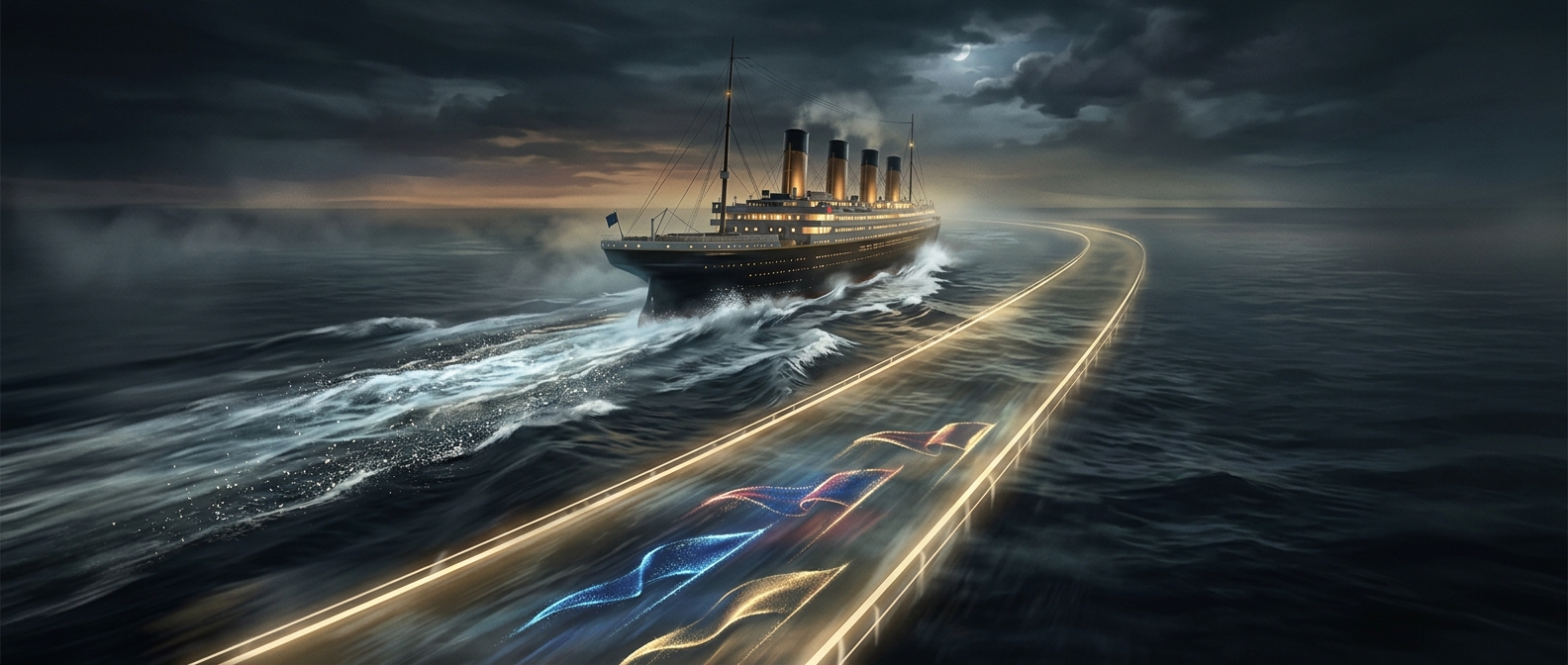
The Blue Riband was an informal accolade for the fastest Atlantic crossing by a passenger liner, not a trophy awarded under a single, controlled test. Ships crossed in changing weather and sea conditions, so a record reflected both a vessel’s capabilities and the circumstances of its passage. The rivalry was thus a public test of engineering, but not a perfectly even one.
For the companies, speed could distinguish a liner in a crowded market: passengers might pay attention to a ship that promised a quicker journey. The record chase made the trade-off visible. A faster crossing could become a powerful selling point, while the extra fuel required to achieve it remained a cost on every voyage.