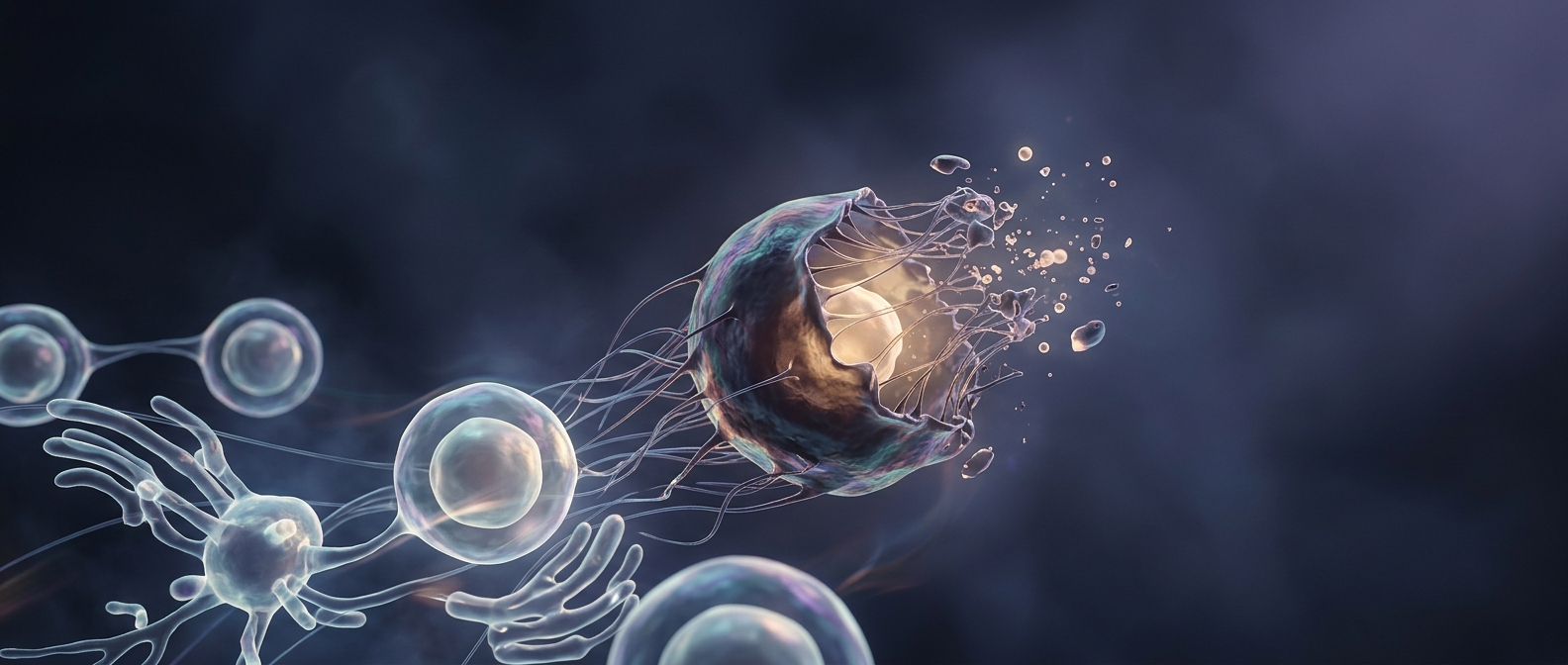
A controlled exit for a damaged cell
A badly injured cell can activate apoptosis, a regulated process of self-destruction. Rather than bursting, it changes shape and breaks into small, membrane-wrapped packages called apoptotic bodies. The membrane keeps the cell’s contents contained, limiting the chance that they will spill into nearby tissue and provoke inflammation.
How the dismantling works
The process is coordinated by enzymes called caspases. Once activated, they cut key proteins inside the cell, switching off its normal operations and helping it compact and fragment. The cell’s outer membrane also changes in ways that act like an “eat me” signal. Nearby immune cells—and other cleanup cells—recognize the signal, engulf the fragments, and digest them.
This orderly packaging matters because a cell contains substances that can alarm surrounding tissue if released abruptly. In apoptosis, those materials are carried away with the fragments instead of being scattered through the neighborhood.
Why the body uses it
Apoptosis helps shape tissues during development and remove cells that are old, unnecessary, or too damaged to function safely. That can reduce the chance that a damaged cell survives and keeps dividing. It is not a guarantee against cancer: cells can evade the process, and disease has many causes. But the cleanup route gives the body a way to remove individual cells without turning their destruction into a larger mess.
The key difference is not simply that the cell dies, but how: it leaves behind sealed parcels that other cells can collect.