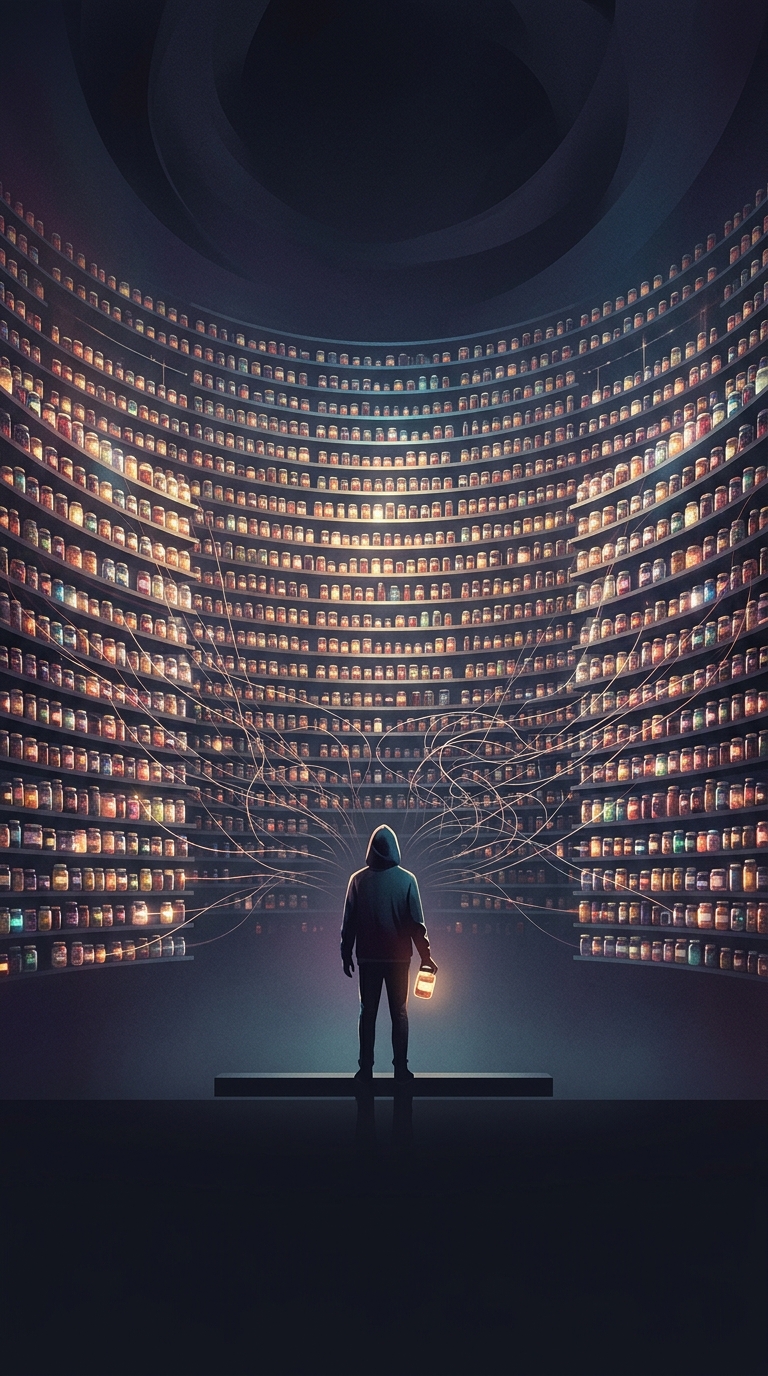
When choosing becomes its own task
A streaming catalog can turn a simple question—“What should I watch?”—into a small decision project. Each option has to be noticed, judged, and compared with the others. When many titles look plausible, viewers may spend more effort deciding than they expected to spend choosing a show.
The difficulty is not simply the number of choices. It grows when the options are hard to compare: a comedy, a documentary, and a drama offer different kinds of evening, and their thumbnails and short descriptions reveal only a little. Viewers have to guess which one will fit their mood, then wonder whether a better pick is still farther down the list.
The cost of imagining the alternatives
Choosing one title means giving up the chance to watch the others for now. That can invite anticipated regret: the worry that the chosen show will disappoint while a better one goes unwatched. More browsing can seem like a way to avoid that mistake, but every new possibility can reopen the decision. The result is familiar: scrolling through trailers and menus, then settling on nothing—or rewatching a known favorite.
A familiar show has an advantage beyond comfort: the viewer already knows what kind of experience it offers. That reduces the uncertainty of the choice. A new title may be more appealing in theory, but it requires a guess about whether its pace, tone, and subject will suit the moment.
Why a bigger catalog can feel smaller
Streaming services try to make large libraries easier to navigate with categories and personalized recommendations. Those tools narrow the field, but they cannot fully know what a viewer wants tonight, and a row of recommendations still asks the viewer to choose.
So a broad catalog can increase the chance that a suitable show exists while making it harder to find and commit to it. The practical bottleneck is not always a shortage of things to watch; sometimes it is the attention and confidence needed to pick one.