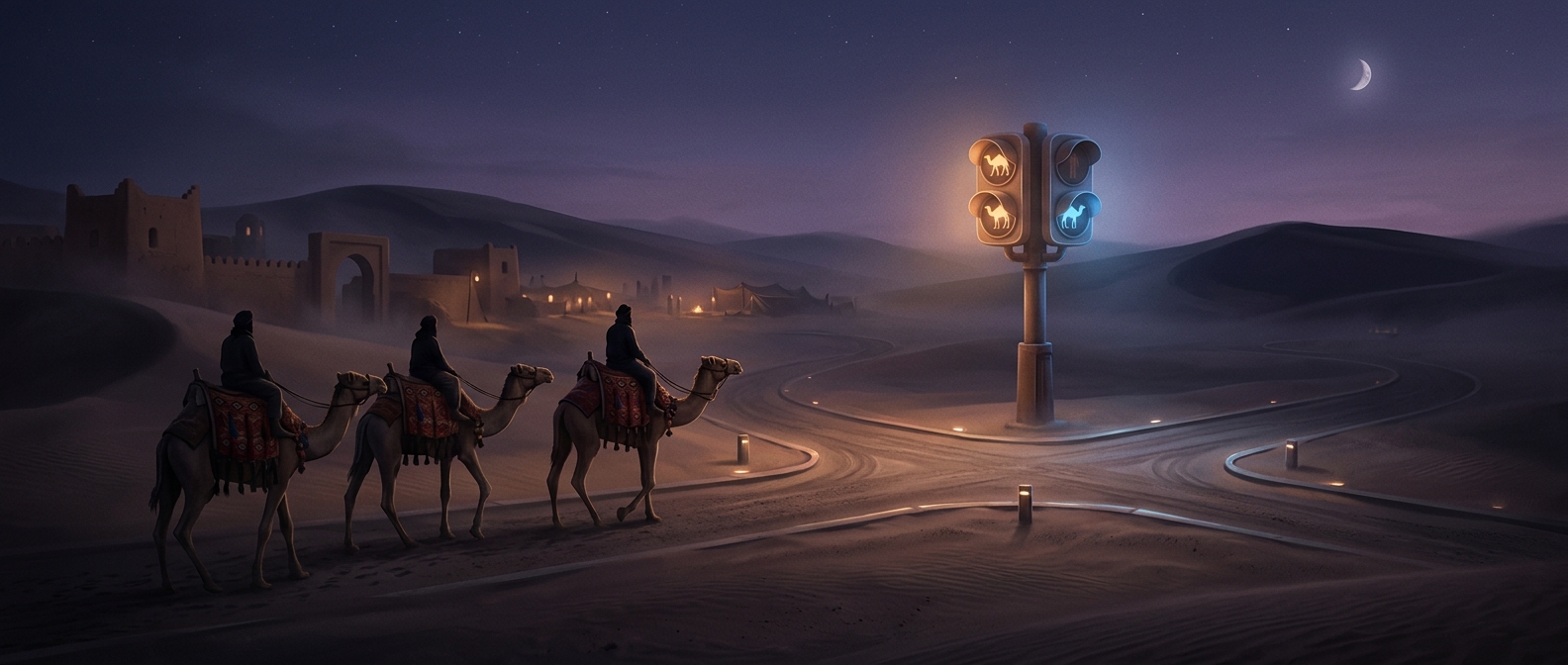
A signal built for a moving caravan
In Dunhuang, a camel symbol on a traffic light makes an ordinary road signal legible to people guiding camels as well as to drivers. The icon matters because a caravan is not a single vehicle that can accelerate through a gap: several animals and riders may need time to cross together.
Why the picture helps
A familiar red, yellow, or green light communicates whether traffic should stop or proceed. The camel symbol adds a second, more specific cue: the signal applies to a camel crossing. Riders can recognize that instruction at a glance, while drivers can see that the crossing is meant for a slow-moving group rather than an ordinary pedestrian.
That distinction helps make a crossing more predictable. When vehicles know to wait and riders have a clear indication that the route is open, the caravan can move across as a group instead of being forced to negotiate each gap in traffic.
An old route meets modern traffic
Dunhuang’s camel crossings reflect the practical overlap of road traffic and camel travel. The signal does not make camels move faster; it makes their presence and needs harder to miss. A small change to the familiar traffic light lets a busy road communicate with the people—and animals—who still have to cross it.