A military privilege became a livelihood trap
The Eight Banners were the Qing dynasty’s hereditary military and social system. Banner households—many of them Manchu, alongside Mongol and Han units—were tied to garrisons, including those in Beijing that protected the imperial capital. Their status came with official support, but also with expectations: they were to remain available for military service rather than make a living through ordinary trades or manual work.
That arrangement made sense to a state seeking a dependable force near the throne. A stipend kept a soldier and his household attached to the banner system. But it also made the family’s income depend on the government, not on skills or businesses that could grow with changing needs.
Fixed support met changing household needs
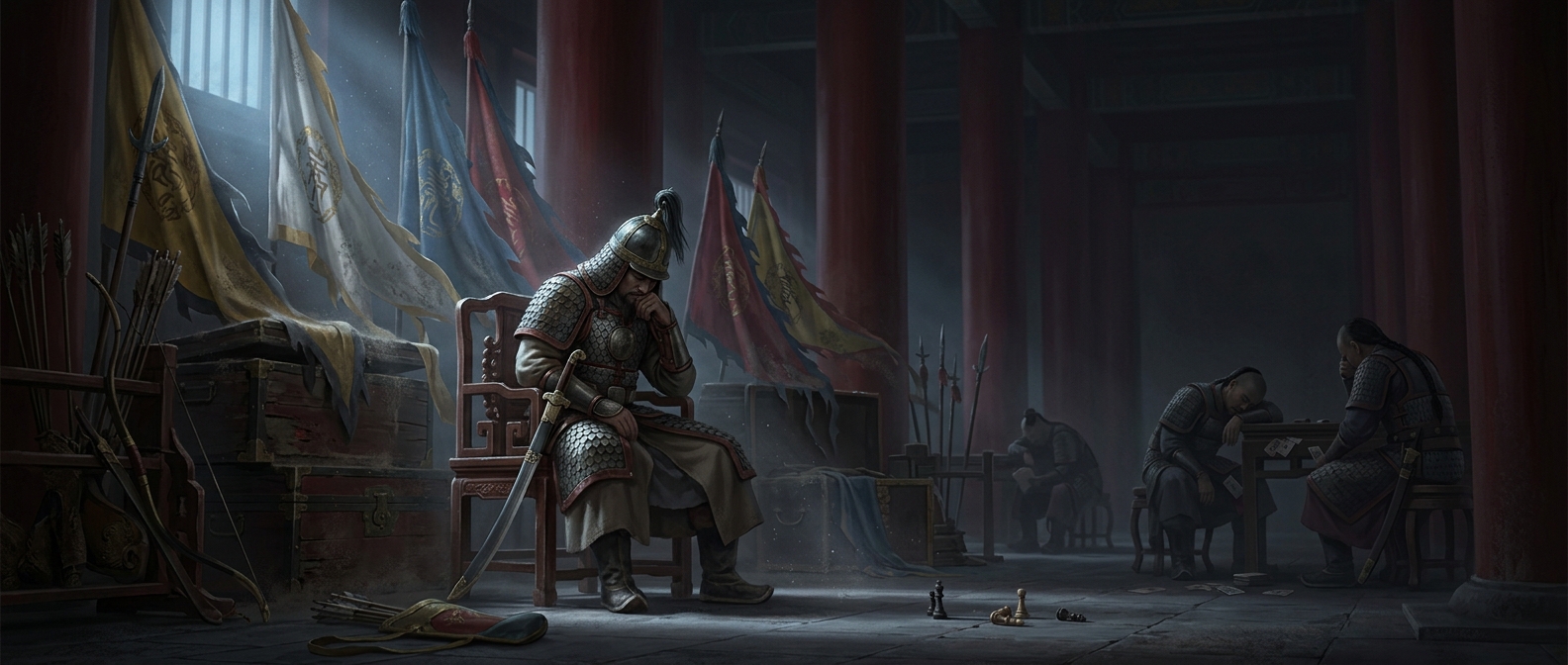
Over time, the system became harder to sustain. A stipend that might support one household could be stretched across more relatives and descendants, while restrictions on outside work narrowed the ways families could make up a shortfall. The result was not simply privilege, but dependence: when official support proved inadequate, many bannermen had few acceptable routes to supplement it.
Some turned to gambling, opium, or borrowing, deepening their financial troubles. These were not inevitable outcomes for every banner family; they were symptoms of a system in which social rank and state support endured even as the practical means of maintaining that rank weakened.
When status outlasts its purpose
The Qing had built the banners to bind military service, identity, and livelihood together. That could secure loyalty, but it also discouraged adaptation. As the banners’ military role changed, the inherited obligations and limits on work did not automatically disappear. The irony was stark: a status designed to guarantee security could leave families less able to support themselves when the state’s old arrangement no longer fit their circumstances.