From captive to commander
Qutuz’s rise began inside the Mamluk system, in which boys captured or purchased far from Egypt were trained as soldiers and later freed into military service. The word mamluk means “owned,” but the institution was more than a household guard: its rulers and commanders formed a powerful military elite. Training, battlefield experience, and ties to senior officers could give a former captive a path to authority that birth alone did not provide.
Qutuz climbed that hierarchy during a crisis. In 1259, he became sultan of Egypt, where he faced an approaching Mongol army and demands for submission. The Mongol advance had already devastated much of the region, making resistance a high-stakes decision for Egypt’s Mamluk leadership.
The stand at Ain Jalut
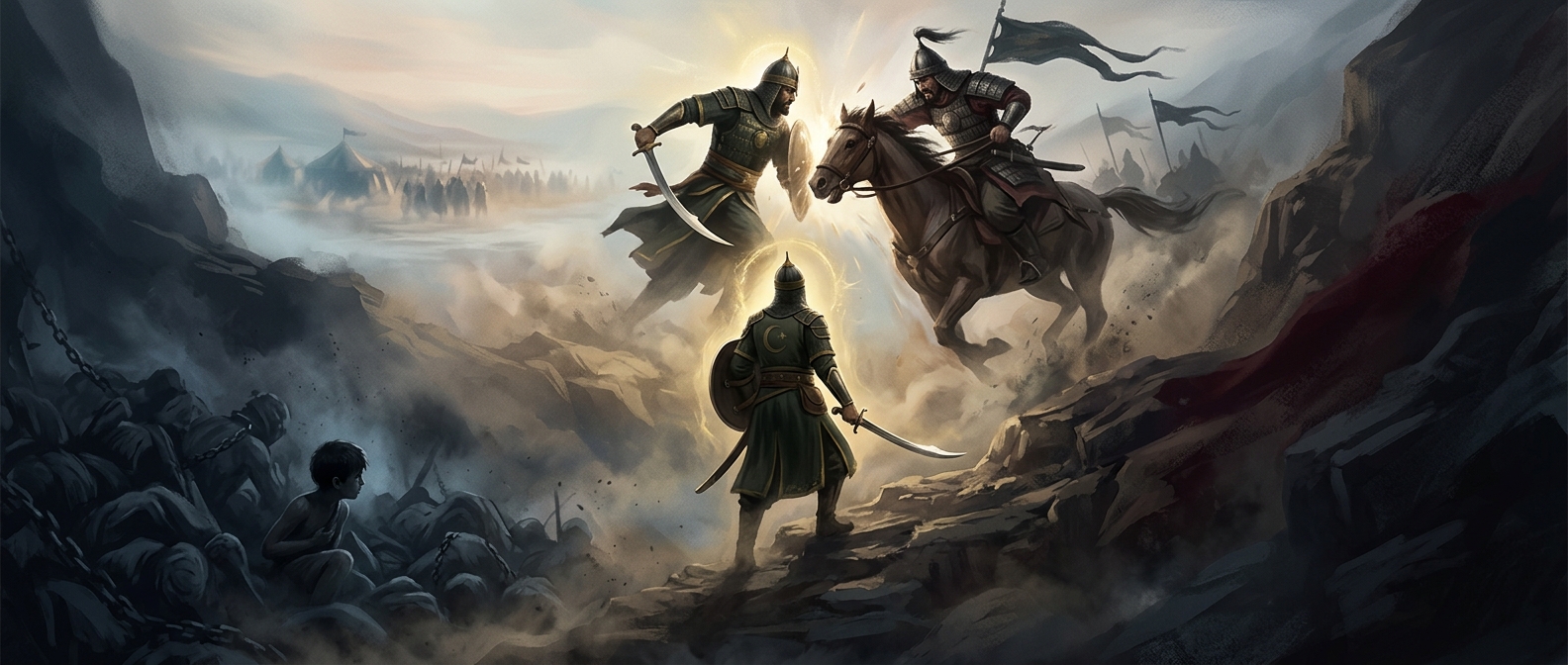
In September 1260, Qutuz’s army met a Mongol force led by Kitbuqa at Ain Jalut, in what is now Israel. The Mongols had taken much of Syria, but this was not the entire Mongol army: its ruler, Hulagu, had withdrawn much of his force after the death of the Mongol Great Khan, leaving Kitbuqa with a smaller contingent.
The Mamluks used concealment and maneuver to draw the Mongols into battle. During the fighting, Qutuz is reported to have personally led a counterattack. That charge helped rally his troops and turn the encounter into a Mamluk victory. The defeat did not end Mongol power, but it halted this westward advance and showed that Mongol armies could be beaten in the field.
A victory with a short aftermath
Ain Jalut helped secure Egypt and preserve Mamluk rule in the region. It also altered the political balance: the Mamluks, rather than the Mongols, became the dominant power in Syria and Egypt. Qutuz did not enjoy a long reign after the victory; he was killed on his return to Egypt, and Baybars succeeded him.
The striking turn is not simply that a captive became a sultan. The same military system that had taken Qutuz from his homeland trained him into a commander capable of leading the force that checked the Mongols’ advance toward Egypt.