A blank round removes the bullet, not the danger
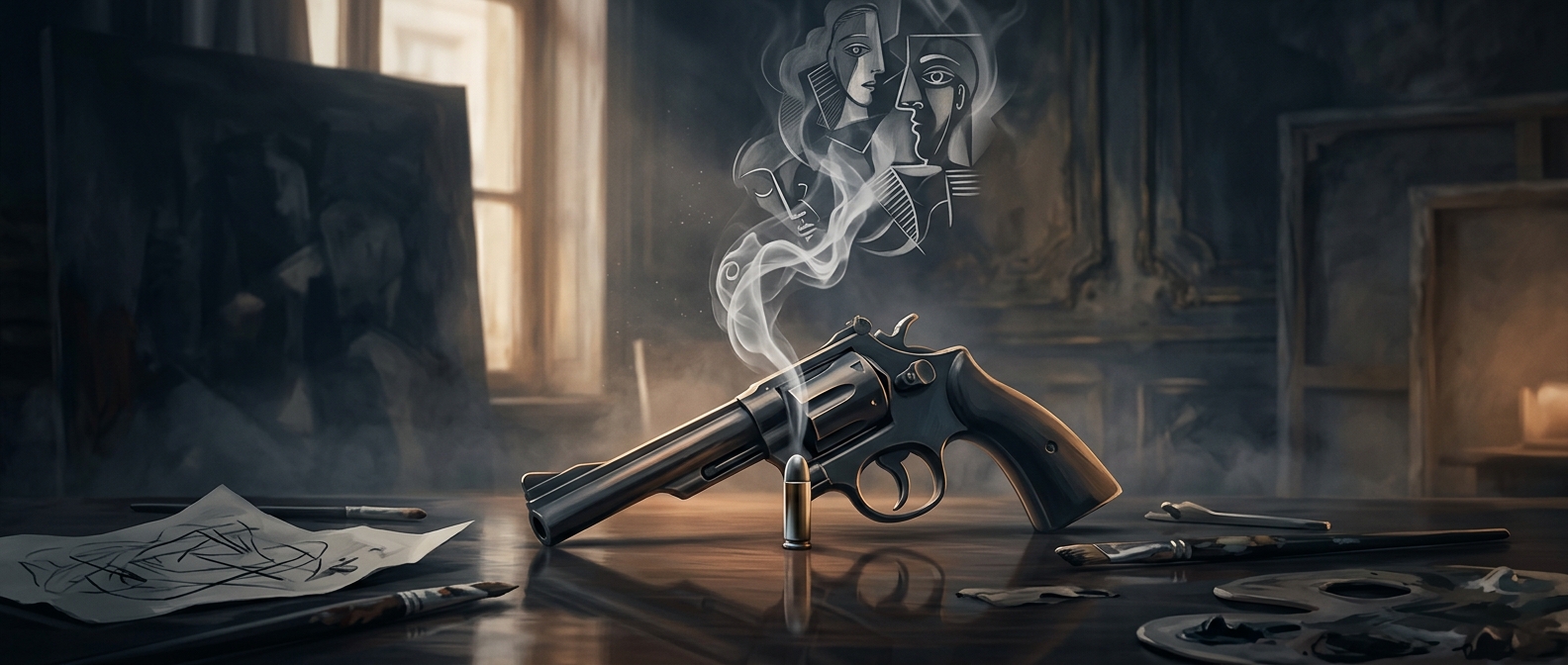
A blank cartridge is designed to make a gunshot sound without sending a bullet downrange. It still ignites gunpowder, producing a loud report and a burst of hot gas; at close range, that discharge can injure someone. So a revolver loaded with blanks was not an ordinary firearm in its effect, but neither was it a harmless prop.
That distinction gave the gesture its force. People could hear and see the familiar signs of a gun being used, while the missing bullet made the act a kind of staged violence. The performance depended on others not knowing—or not trusting—that the weapon was loaded only with blanks.
Theater could still function as intimidation
Picasso’s imitation of Alfred Jarry carried an extra edge when he aimed the revolver at critics. The gun turned an argument about art into a physical threat, even if its ammunition was intended to fire without bullets. A critic facing the weapon had to respond to the danger as it appeared, not to the technical difference inside the cartridge.
That is why the blanks matter less as a guarantee of safety than as part of the act’s theater. They allowed the gunshot ritual to be repeated without a bullet, but they did not make pointing a gun at someone a neutral joke. The threat came from the uncertainty and the gesture itself.