From battlefield companies to inherited households
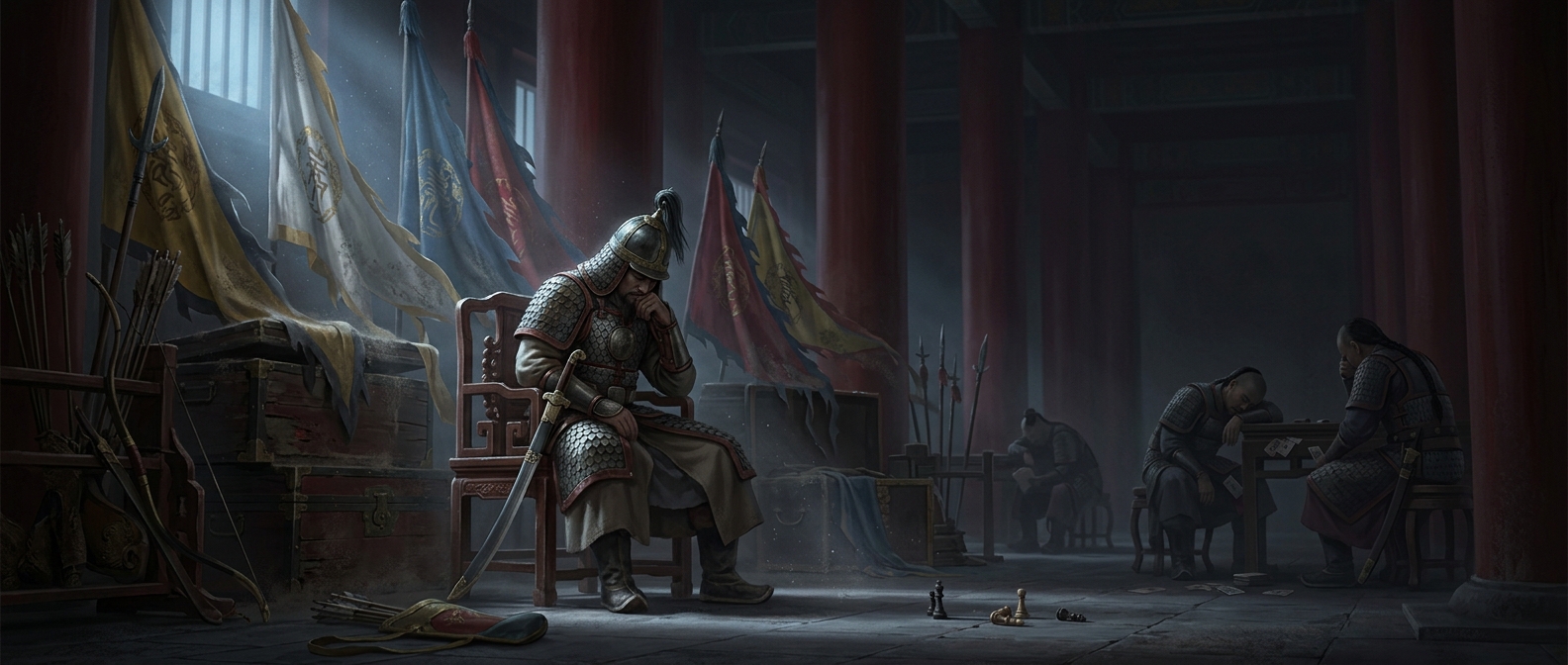
Nurhaci’s banners began as a way to organize people for war and governing. In the early 1600s, he grouped followers under colored standards; as the system expanded, it became the Eight Banners. The colors were yellow, white, red, and blue, each in a plain or bordered version. A banner was more than a unit in an army: it registered households and connected its members to the state.
That link made banner status consequential in ordinary life. Membership was generally inherited, and banner households could receive state support and be assigned to garrisons, including in the Qing capital. The banners also contained administrative divisions for Manchus, Mongols, and Han Chinese who entered the system. So the color on a banner marked a place in a broad institution, not simply a soldier’s uniform.
A social order the court could manage
The system helped rulers mobilize troops, distribute obligations and benefits, and keep track of families across the empire. It also gave banner people a distinct legal and social position. Marriage within the banner population was encouraged, though banner status did not mean that every family followed identical customs or lived the same life.
After the Qing conquered China, the banners remained central even as the dynasty’s population and responsibilities grew far beyond the original military organization. The court placed banner garrisons in important cities and maintained banner institutions for generations. Over time, many banner households became less directly involved in campaigning, but their membership still shaped access to support, occupations, and community ties.
The lasting consequence of the colors
The system’s strength was also a constraint: a state could organize and reward families through hereditary categories, but those categories could outlast the military conditions that created them. The banners endured because they joined army, household registration, and social rank in one structure. For Qing subjects, the color was not merely a signal on a battlefield—it could identify the institution that shaped a family’s place in society.