A canopy meant to travel with its owner
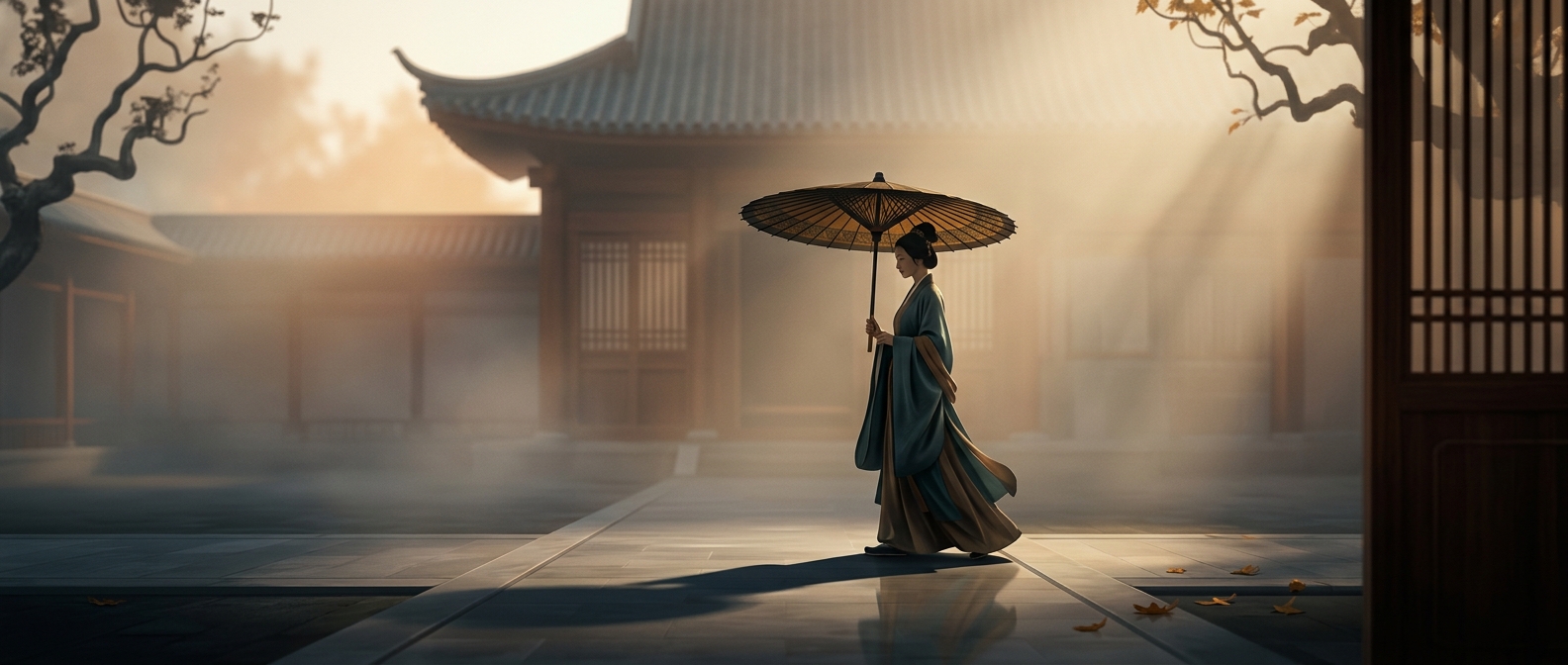
An 11th-century Chinese umbrella turned a small patch of shade into something portable. Its bamboo frame held a sheet of waxed paper overhead; as a person moved, the canopy moved too, keeping direct sunlight off the head and upper body. Unlike a fixed awning, it did not require a building or a chosen resting place.
The design also shows why the word umbrella can mislead modern readers. Today, we often think first of a device opened in a downpour. In this case, the defining job was shade. The umbrella was closer to a handheld canopy than to the all-weather accessory many people now picture.
The frame made shade practical
Bamboo provided a light supporting structure, while the paper spread across it formed a broad cover. Together, those parts made a simple tradeoff: the user had to carry and hold the device, but could create shade wherever the journey led. That mattered most when there was no roof nearby and stopping beneath a tree was not an option.
The umbrella’s later association with rain can obscure this earlier use. Its history is not simply a story of making a familiar object more durable; it is also a reminder that the same basic form can serve different needs. In 11th-century China, its useful innovation was personal, movable shade.