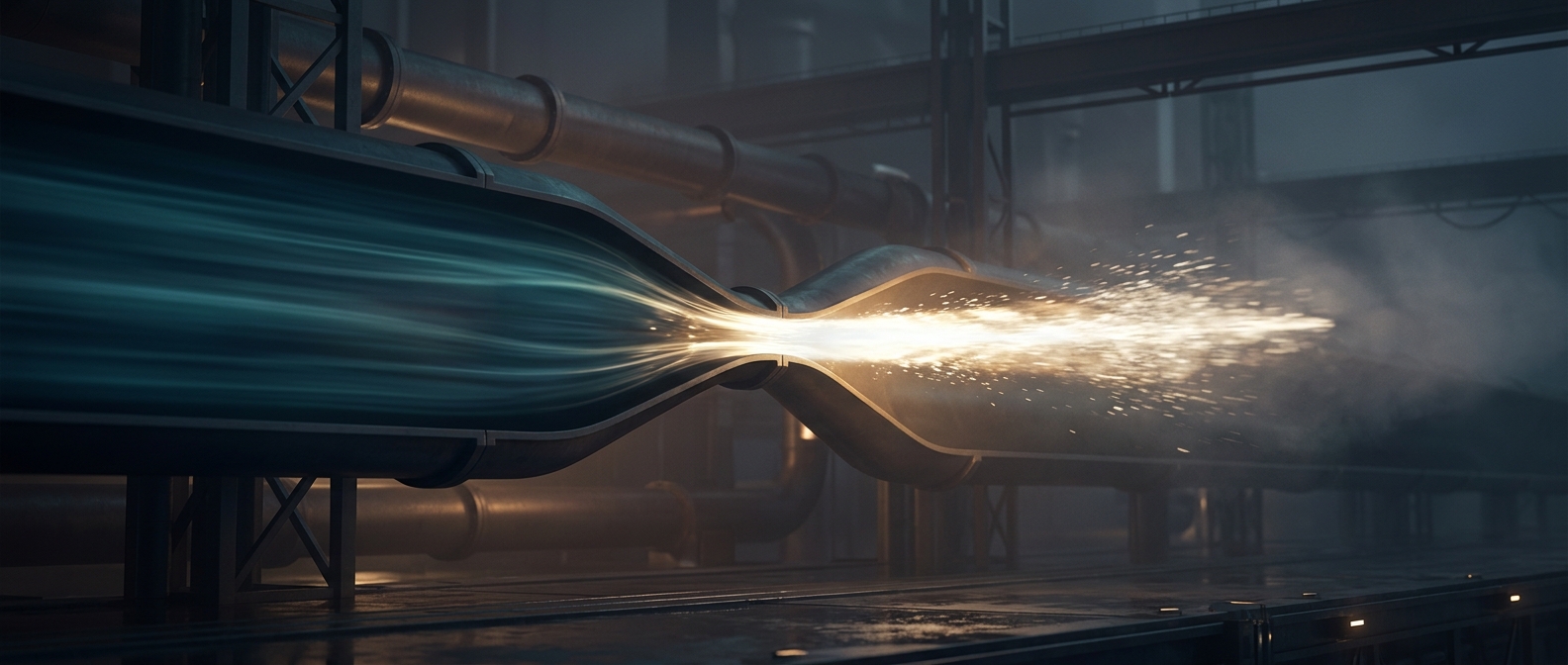
How a narrow passage creates suction
When a liquid or gas enters a constriction, the same amount of fluid must pass through each section of the pipe each second. Because the opening is smaller, the fluid has to travel faster there. In a smooth, level pipe, that speed increase comes with a drop in static pressure—the pressure the moving fluid exerts on the pipe walls.
The energy has not vanished: some of the pressure energy has become motion. This tradeoff is the Venturi effect. In real pipes, friction and turbulence also dissipate energy, so the pressure does not simply return to its original value downstream.
Turning the pressure drop into a tool
A Venturi tube uses a narrow throat between wider sections. Pressure taps before and at the throat let an instrument compare the pressures; that difference can be used to estimate how much fluid is flowing. The device has no moving parts, though its constriction does create a pressure loss.
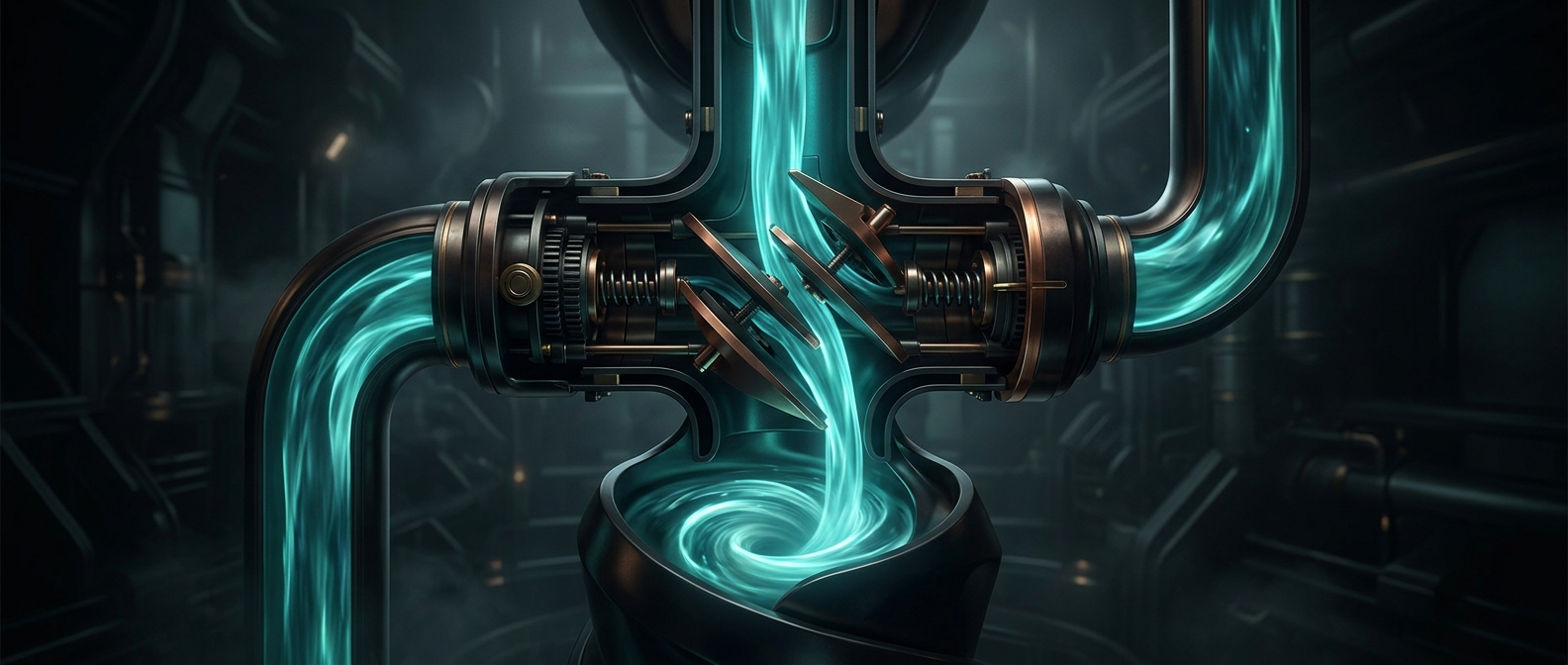
The low-pressure region can also draw in another substance. In an atomizer, fast-moving air through a narrow passage lowers the pressure beside a small liquid opening. The higher pressure on the liquid’s other side pushes it into the airflow, where it breaks into droplets. Similar arrangements mix fluids or pull gas into a stream without a separate pump.
The useful trick is not simply making a pipe smaller: it is placing the constriction where a predictable pressure change can do a job. A narrow throat can measure a flow—or use that flow to pull in something else.