A body could signal self-control
In Greek art, a nude man’s body was more than anatomy: it could make a claim about his character. Classical male heroes and idealized citizens were often shown with small, flaccid penises. The point was not that artists were documenting ordinary bodies. They were using a visual convention: restraint in the body suggested restraint in the person—composure, discipline, and rational self-command.
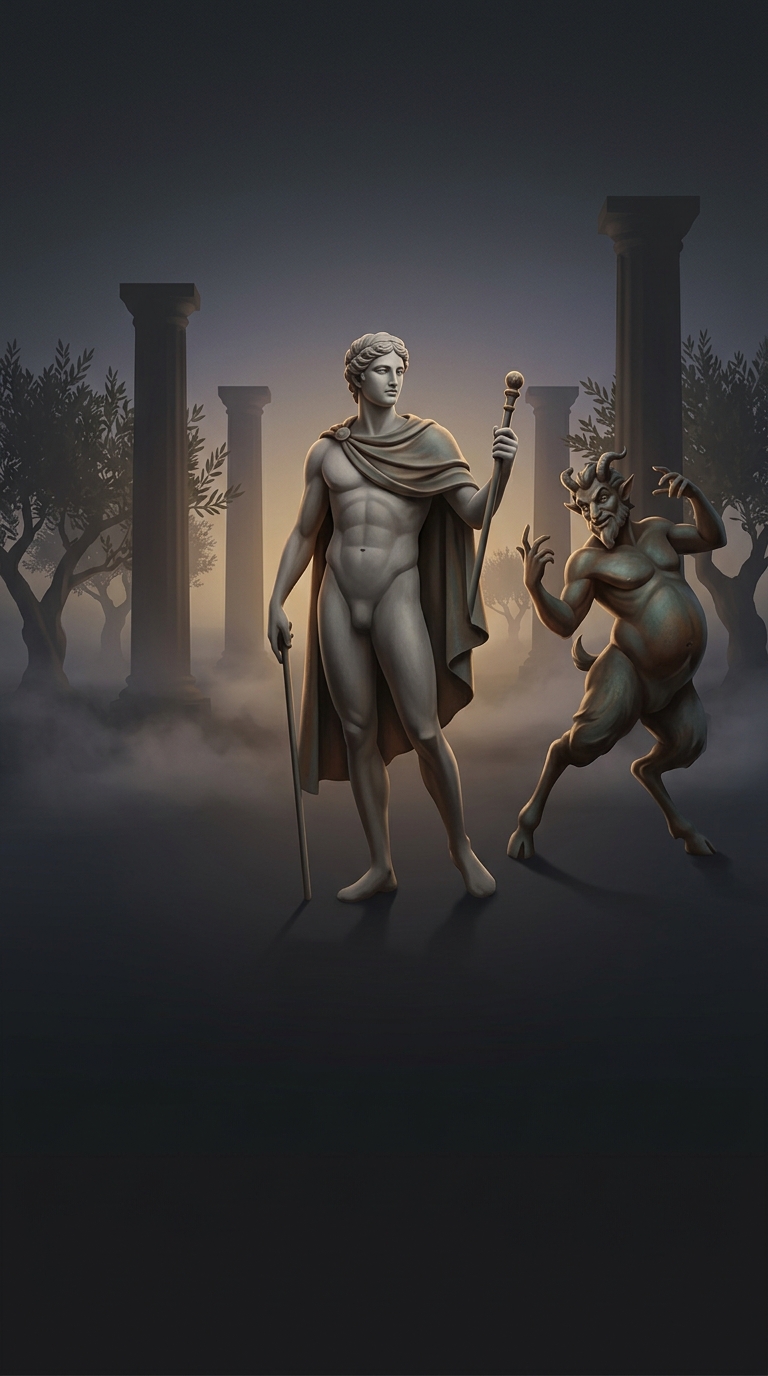
That ideal also carried social meaning. Greek writers and artists sometimes contrasted it with the large penis associated with satyrs, comic figures, and people portrayed as uncivilized or ruled by appetite. The contrast was a cultural judgment, not a medical one. It did not mean that size measured intelligence; it made sexual excess a quick visual shorthand for poor self-control.
Satyrs made the contrast visible
Satyrs were unruly, part-animal companions of Dionysus, the god associated with wine and revelry. In vase paintings and sculpture, their exaggerated anatomy helped mark them as creatures of appetite. In comic scenes, similarly conspicuous proportions could make a character look ridiculous before he even acted.
This worked because the audience already knew the visual code. A composed, idealized male body signaled control; an exaggerated one invited laughter or suggested that desire had taken charge. The joke depended on reversing the ideal, not admiring the exaggeration.
An artistic convention, not a universal rule
Greek art varied across periods, settings, and purposes, and no single image can tell us what every Greek believed. Still, the contrast is striking: artists could use genital proportions as plainly as a costume to sort characters into ideals and comic opposites. A body that looks like a detail to modern viewers could function, for its original audience, as a compact verdict on a man’s character.