How fragrance changes the smell of a metro station
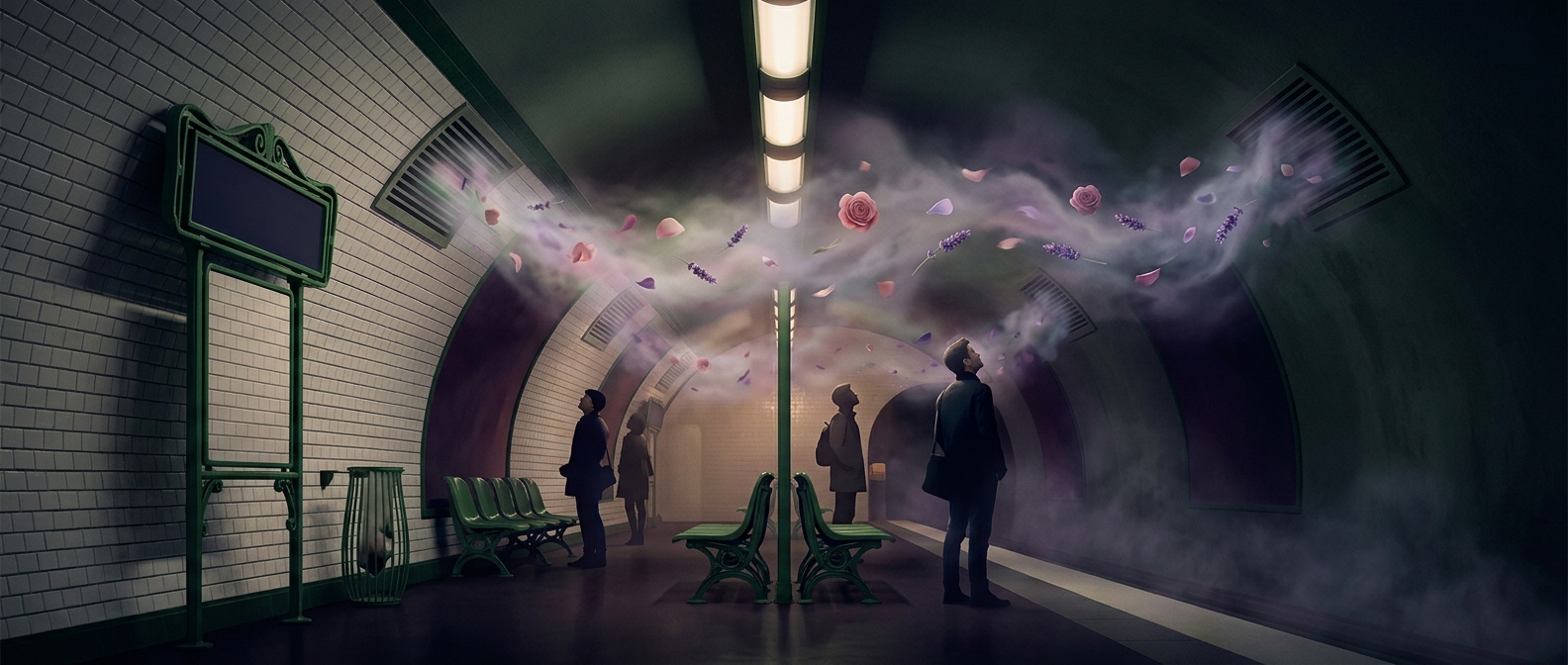
A scent diffuser adds fragrance molecules to the air, where they reach the same nose receptors as odor molecules from damp surfaces, trains, and crowds. The result is not a chemical cleanup: the underlying smells remain, but a stronger or more pleasant scent can make them less noticeable. This is masking, not removal.
A small intervention in a large, moving space
Underground air is continually disturbed by trains, ventilation, and people moving through stations. That makes fragrance hard to keep at one even strength. A diffuser can perfume the air near where it is installed, but the scent may thin out or mix differently as air moves through tunnels and platforms.
The approach also depends on balance. Too little fragrance may do little against the odors; too much can become an unpleasant smell of its own. A perfume can also combine with existing odors rather than simply cover them, changing what passengers notice without changing the dampness or other source beneath it.
Cologne is not maintenance
Scent can improve the immediate impression of a space, but it cannot dry a tunnel, clean a surface, or fix the source of an odor. Its role is closer to an atmospheric makeover than a remedy. Passengers may notice a fresher-smelling station, while the conditions that produced the original smell still require separate attention.