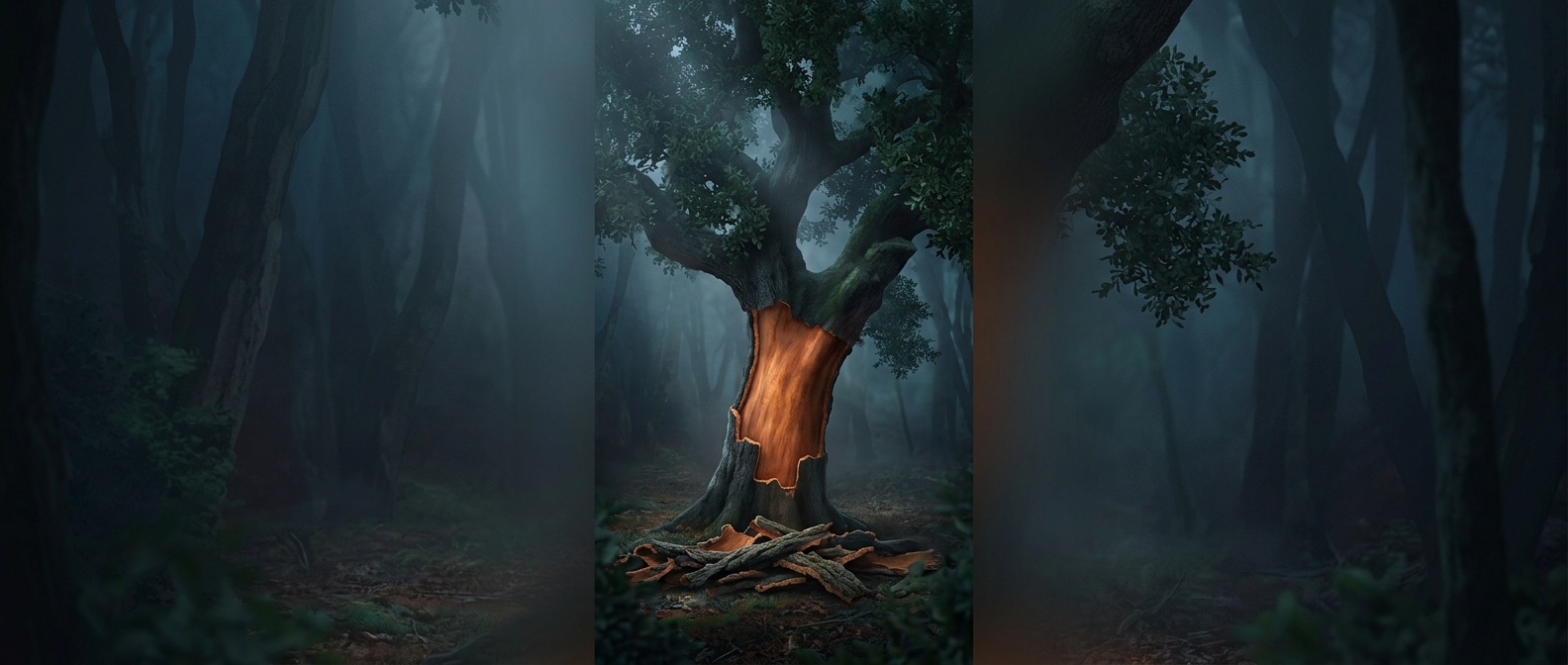
How a cork oak replaces its bark
Cork comes from the cork oak’s outer bark, a layer built largely from cork cells. These cells have walls containing suberin, a waxy substance that slows the movement of water and gases. The layer helps shield the living tissues beneath it from heat, drying, and physical damage.
When harvesters remove the bark, they work around the trunk without cutting into the tree’s inner growth layer. That living tissue—the cambium—continues producing new cells. After stripping, the tree forms replacement cork outward from the trunk, gradually rebuilding a protective layer.
Why harvesting does not have to kill the tree
A tree’s survival depends on preserving the living tissues that move water and nutrients and make new growth. Cork bark itself is mostly dead cells, so taking it away is not like removing a vital, living part—provided the harvest does not injure the layers underneath. The exposed trunk is vulnerable while its new covering develops, which makes careful stripping important.
The bark does not return overnight. It needs roughly a decade to grow thick enough for another harvest. That slow cycle turns one oak into a renewable source: the tree remains standing, and its next crop grows on the same trunk. The practical payoff is unusually visible—each harvest leaves the tree alive to grow the very material that can be gathered again.