How Aloe’s Pale Coating Helps It Handle Sun and Drought
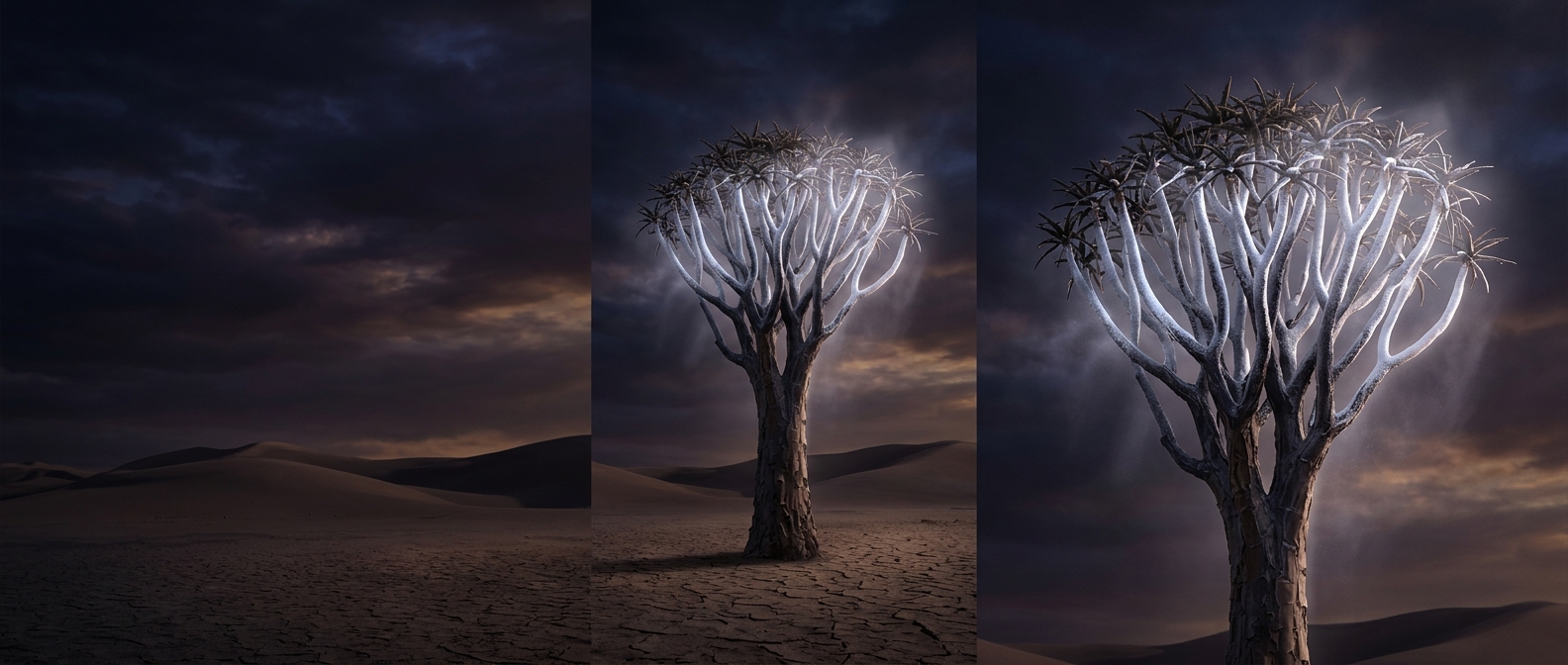
On some aloe leaves, the whitish film is a surface layer of wax, sometimes called a waxy bloom. Tiny structures in that layer scatter and reflect part of the incoming sunlight before it reaches the greener tissue underneath. That can limit the heat and light the leaf has to cope with—much as shade reduces the sun’s load on a surface.
The coating is not a separate covering the plant has to keep applying. It forms on the leaf’s outer surface as the leaf grows. Rubbing it can leave darker marks because it disturbs or removes some of the bloom, exposing the greener surface below.
One Surface, Two Jobs
The wax also helps slow water loss. A leaf loses water as vapor through small pores and across its surface; a water-resistant outer layer makes that escape harder. In a dry, sunny habitat, reducing both excess heating and evaporation helps an aloe conserve the water stored in its thick leaves.
The tradeoff is that a coating cannot replace water altogether, and its appearance varies among aloe species and growing conditions. But where a pale bloom is present, its practical value is easy to picture: the leaf gets a reflective outer layer that also acts as a barrier, without needing to spend its stored water to stay cool.