A living center beneath the scorch
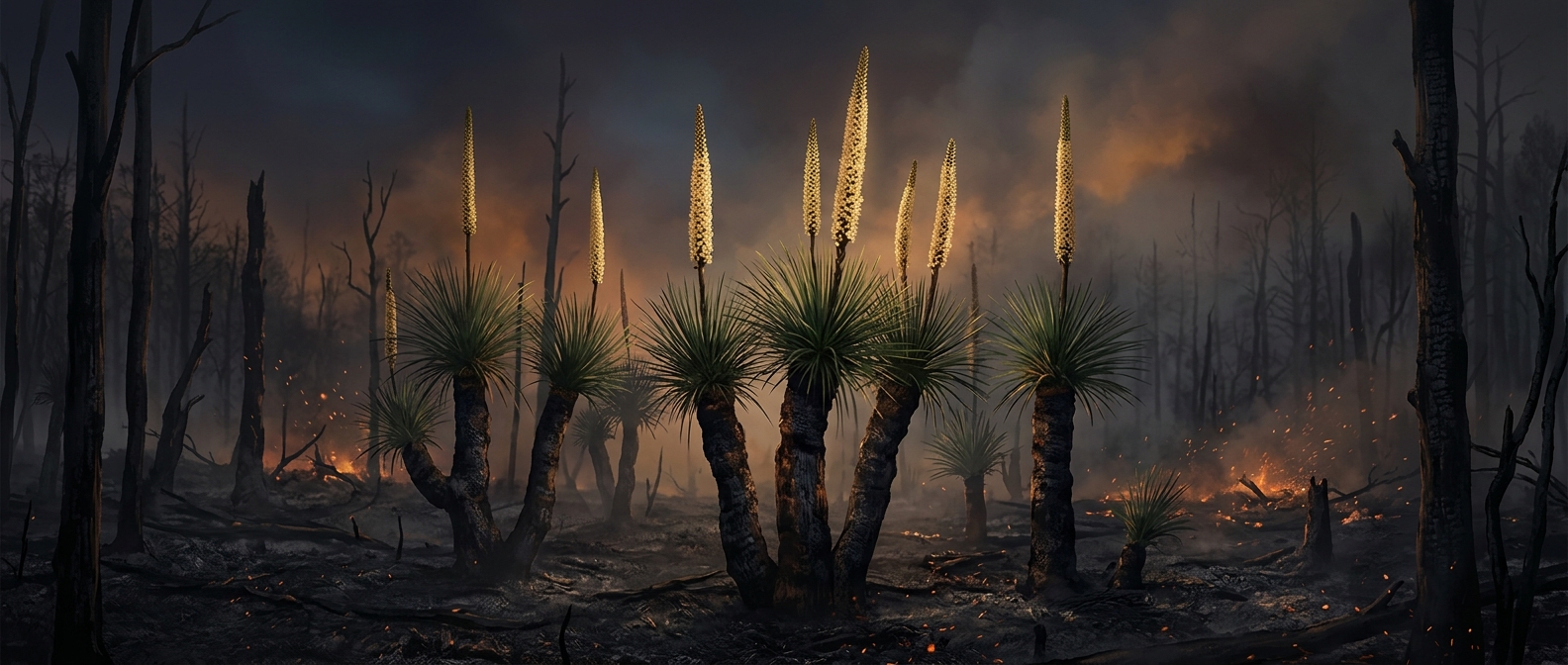
A grass tree’s apparent trunk is largely a column of tightly packed old leaf bases. New leaves grow from a small point at the top, called the growing point or meristem. Because it sits within this dense crown, it can be shielded from a passing fire even when the outer leaves are burned black.
That protection is not a guarantee: a fire that is too intense, or that burns for too long, can kill the plant. But when the growing point survives, it can resume producing leaves after the flames have gone. The blackened exterior may conceal a living center.
Why a flower spike can follow fire
Grass trees can send up a tall flower spike after fire. The spike rises from the surviving crown, lifting flowers above the scorched ground where insects can reach them; later, the flowers can produce seeds. Fire can also clear away surrounding vegetation, leaving the conspicuous spike with less competition for light and space.
The sequence is striking because the bloom does not come from a new plant replacing the old one. It is the same plant rebuilding from tissue the fire failed to reach. A charred grass tree, then, may be less a sign of death than a record of how close the flames came to its hidden growing point.