Heat turns leaf oils into combustible vapor
Eucalyptus leaves contain aromatic compounds—many are terpenes, the same broad class of chemicals responsible for the smell of plants such as pine and citrus. “Volatile” means these compounds readily escape into the air as vapor, especially when heated. The oil is not a hidden spark: it does not ordinarily make a healthy tree catch fire on its own.
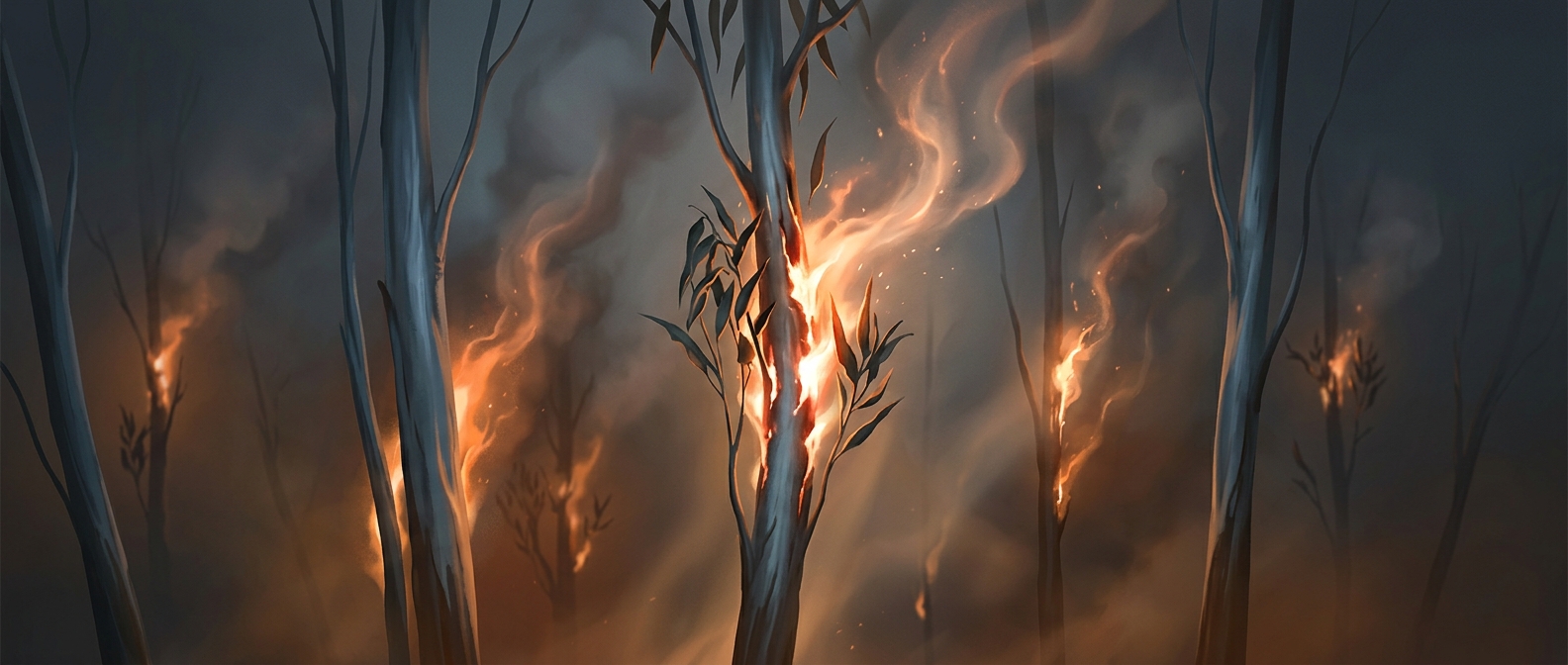
When a wildfire reaches eucalyptus, radiant heat can warm leaves ahead of the flames. Their oils and other plant chemicals evaporate, while the foliage itself dries and begins to decompose under intense heat. If the resulting vapors mix with enough oxygen and encounter a flame or sufficiently hot material, they can burn. That adds combustible gases to a fire that is already underway.
The whole tree matters more than the oil alone
A forest fire spreads through a connected supply of fuel. Dry leaves and twigs on the ground can carry flames toward trunks; branches and foliage can then help fire move upward into the canopy. Eucalyptus oil can contribute to how readily some plant material burns, but it is only one part of that chain. Moisture, weather, the amount of dead vegetation, and the fire’s intensity all affect what happens.
That distinction explains the dramatic claim that eucalyptus “bursts into flames.” The trees do not spontaneously ignite because they contain oil. Rather, once an ignition source starts a fire, heat can release combustible vapors from foliage and help sustain burning. The oil changes the fuel available to a fire; it does not supply the initial spark.