The beak is the bottleneck
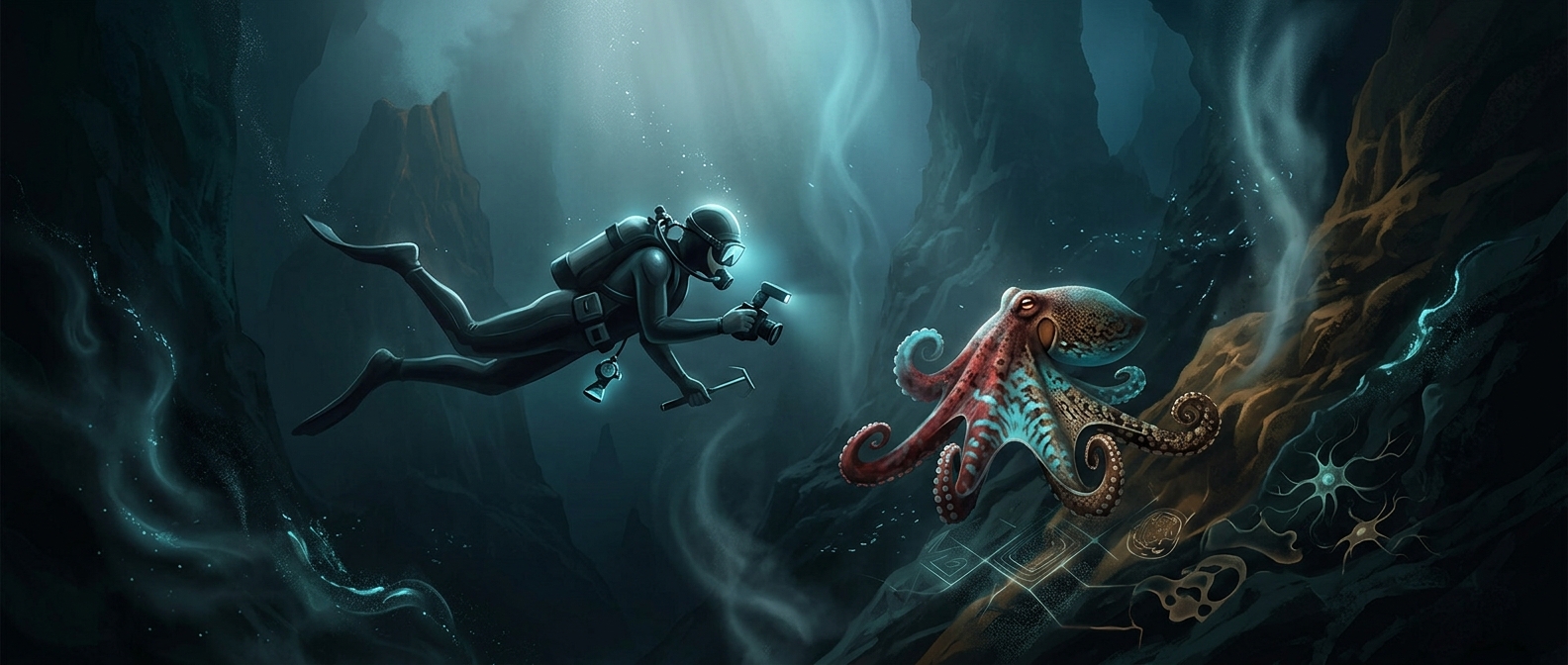
An octopus has no bones to hold its body in a fixed shape. Its arms, head and mantle—the muscular sac that houses its organs—can bend and compress as it moves through a tight opening. The beak is different: this hard, parrot-like mouthpart cannot be squeezed smaller.
That makes the beak a useful guide to whether an opening may be passable. If the beak can fit through, the rest of the octopus can often follow, rearranging its soft tissues as it advances. “Often” matters: the opening’s shape and the animal’s position still affect the maneuver.
How a boneless body moves
Octopus arms work without rigid bones. By changing the shape and tension of their muscles, an octopus can lengthen, shorten, bend or stiffen an arm at different points. Its body can also deform around obstacles rather than having to move as one rigid block.
The result is not simply a matter of being small. An octopus can direct its arms through a narrow gap, then draw its flexible head and mantle after them. Its problem-solving helps it choose a route; its pliable anatomy makes that route physically possible.
A useful escape strategy
This flexibility helps octopuses explore crevices and retreat into confined shelters where many predators cannot follow. The same body that can squeeze through a tight space can also make the animal difficult to contain: a rigid barrier must be narrow enough to stop the beak, not merely the broader-looking parts of the octopus.