How a planchette can move without anyone noticing
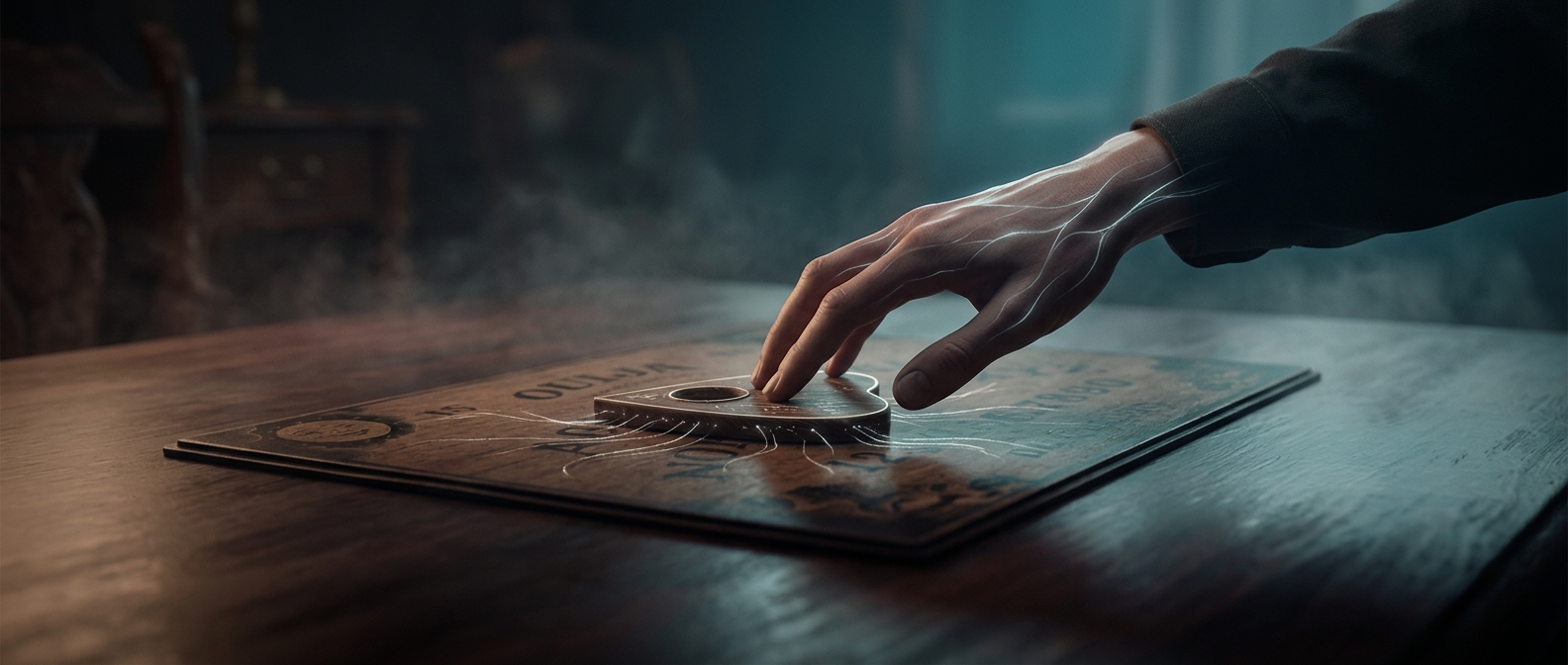
A planchette—the small pointer that slides across a Ouija board—doesn’t need a strong push. On a smooth surface, tiny movements from several fingertips can add up and send it gliding. The people touching it may not feel themselves making those movements, especially when their attention is fixed on the letters or on the question being asked.
This is the ideomotor effect: thoughts, expectations, or attention can prompt small muscle movements without a person consciously deciding to move. It is not the same as deliberately steering the pointer. A player can sincerely feel that their hands are still while their fingers make minute adjustments.
Why the movement feels external
As the pointer shifts, players see where it is heading and may unconsciously make movements that continue the pattern. Each person’s small contribution can combine with the others, while the pointer’s changing position supplies new visual feedback. That loop can turn a faint nudge into a smooth, purposeful-looking path.
The group setting adds another layer. Players share the same question and can watch the same pointer, so a movement may seem to arrive from beyond any one person’s control. The sensation can be convincing precisely because no participant experiences themselves as the author of each small motion. A movement can be real, coordinated, and mysterious to the people producing it—without requiring them to be consciously pushing.