How a narrow rock became a city
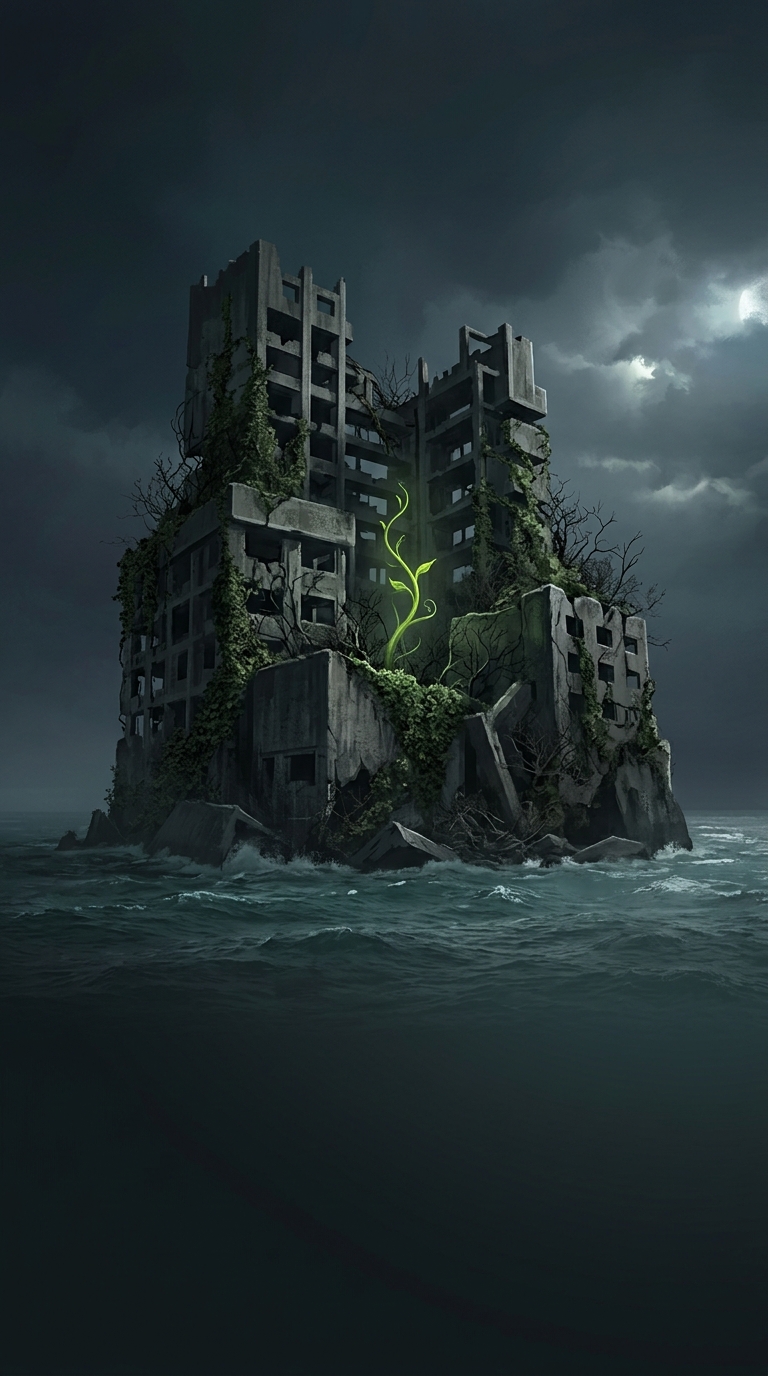
Hashima—often called Gunkanjima, or “Battleship Island,” for its silhouette—grew around an undersea coal mine. As Japan industrialized, miners and their families were packed onto a tiny outcrop several miles off Nagasaki. With almost no room to expand outward, the company built upward: dense blocks of reinforced-concrete apartments, linked by stairs and passageways, filled much of the island.
Concrete was more than an architectural style. The buildings had to withstand salt air, storms and the demands of a crowded mining community. At its peak, Hashima held thousands of residents in an area small enough to cross on foot, making ordinary routines—getting to school, shopping, reaching the mine—part of a tightly compressed urban life.
Why the island emptied so quickly
The mine’s value depended on coal. As Japan shifted toward cheaper imported energy, domestic coal mines became less competitive. Hashima’s mine closed in 1974, and the island’s reason for supporting a permanent population disappeared with it. Residents left, while apartments, schools and other facilities were abandoned rather than converted into a new town.
That abrupt change helps explain the island’s haunting appearance. Furniture and household objects were left behind, but decades of wind, rain and seawater have steadily damaged the buildings. The ruins are not a preserved snapshot of one day so much as the remains of a working community exposed to the elements.
From mining settlement to movie image
Hashima’s jagged skyline and empty concrete blocks made it an evocative reference for the fictional villain’s island in Skyfall. The film’s ruined stronghold is a cinematic construction, not a straightforward record of life on Hashima. Still, the resemblance has helped make the real island recognizable far beyond Japan.
What looks from offshore like a single fortress was once a place built for daily life: homes, work and public services compressed onto a patch of rock. Its most striking feature is not simply that everyone left, but how completely the island’s buildings reveal the industrial system that brought them there—and then vanished.