Why Tikal’s temples clear the canopy
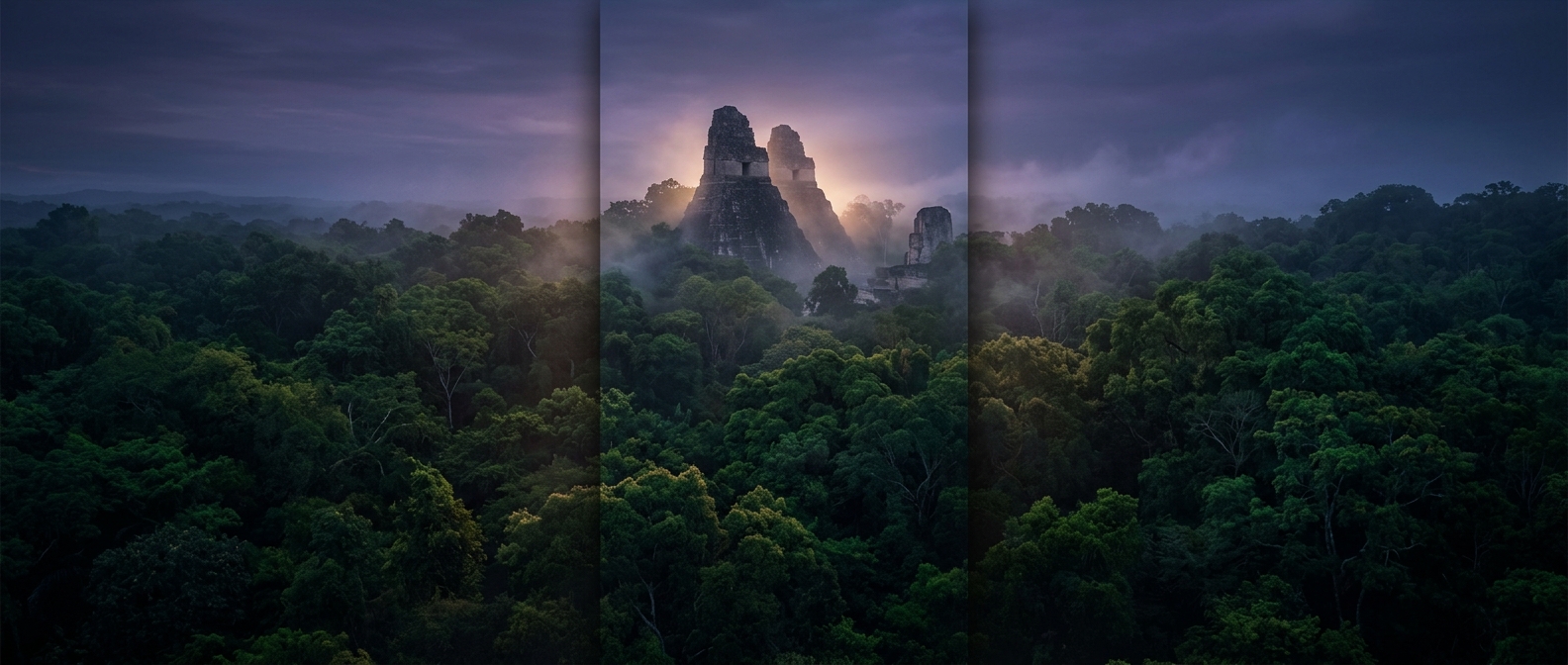
Tikal’s temples rise from the Petén rainforest of northern Guatemala, where trees form a dense, nearly continuous roof over the ground. The tallest structures were built high enough to break that roofline. Their height came from stacked masonry platforms and steep temple buildings at the top—not from isolated towers set apart from the city.
Maya builders used local limestone, shaping it into monumental structures that could be seen across the city and from surrounding areas. The elevated temples gave ceremonial spaces prominence and made rulers’ building projects visible landmarks. From the forest floor today, their upper levels can appear to float above the trees, while the lower architecture is hidden by foliage.
A city reclaimed by forest
Tikal was once a major Maya city, with plazas, residences, reservoirs, and temples spread through the landscape. As the city’s population declined and many areas were no longer maintained, vegetation returned. Trees grew among buildings and over the surrounding ground, gradually obscuring much of the ancient settlement.
That contrast is part of what makes the temples so striking: the forest did not simply surround ruins that had always stood alone. It grew back over a much larger city, leaving the highest structures visible above the canopy. A temple seen from a viewpoint is therefore both a monument and a clue to the scale of the landscape hidden beneath the trees.