Why the Moon’s crossings matter
The Moon’s orbit is tilted by about five degrees relative to the plane of Earth’s orbit around the Sun. As a result, most new and full moons pass slightly above or below the Sun from our viewpoint. When the Moon reaches one of the two points where its orbital path crosses that plane, an eclipse becomes possible: the Sun, Earth, and Moon can line up closely enough for one body’s shadow to fall on another.
Those crossing points are called lunar nodes. They move gradually along the Moon’s orbit, so eclipses tend to occur during particular windows rather than at every new or full moon.
From orbital point to astrological symbol
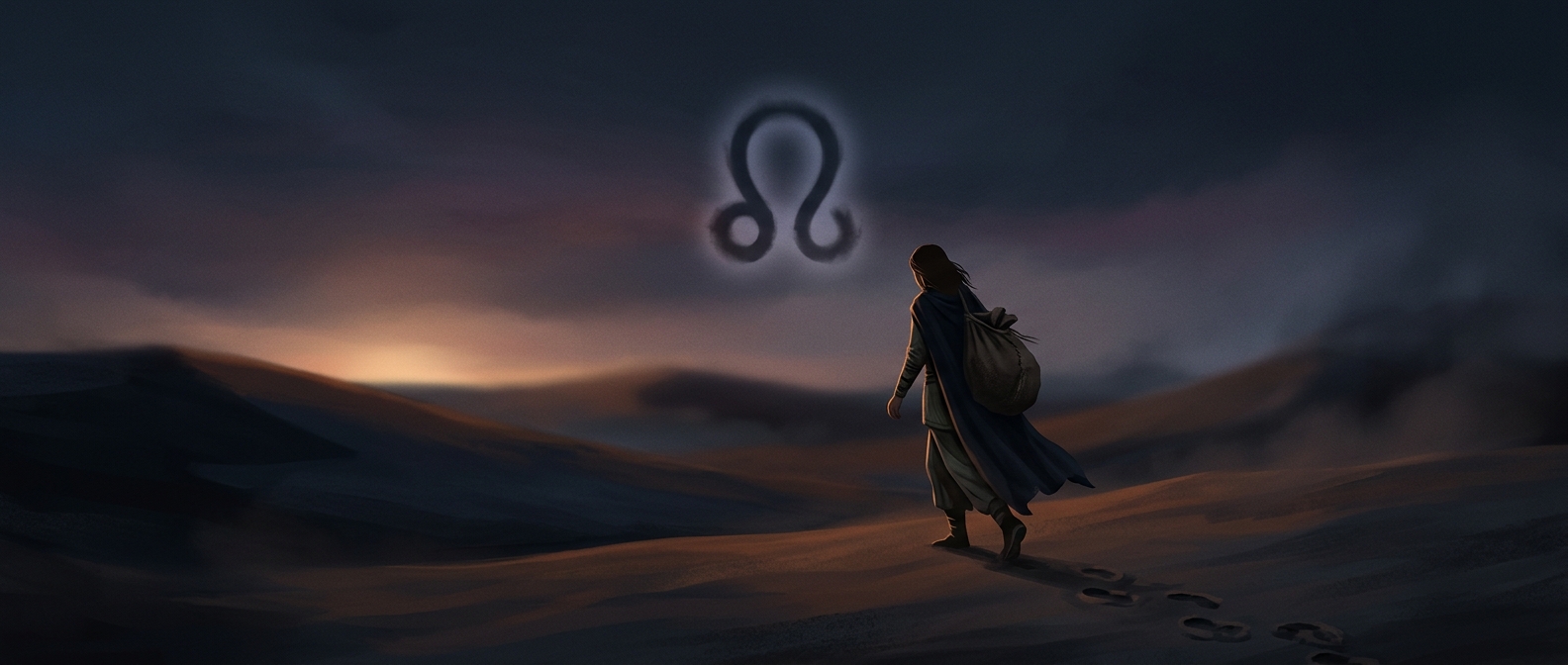
Astrology gives the two nodes meanings that geometry itself does not supply. In some interpretations, the South Node symbolizes familiar patterns or qualities carried from the past, while its opposite, the North Node, points toward growth or unfamiliar territory. “Baggage” is a metaphor within that symbolic system—not a physical property of the Moon’s orbit.
The contrast makes the nodes useful in an astrological reading: one marks what a person is thought to default to, the other what they are encouraged to develop. The actual points remain invisible intersections in the sky, but their symbolic roles turn a feature of orbital mechanics into a story about habit and change.