Why the chair keeps moving
On a fixed-grip chairlift, each chair is clamped to the moving cable, so it travels through the station at roughly the same pace as it does on the line. The lift does not pause for each passenger: stopping it repeatedly would interrupt the flow of riders and put the whole line behind schedule.
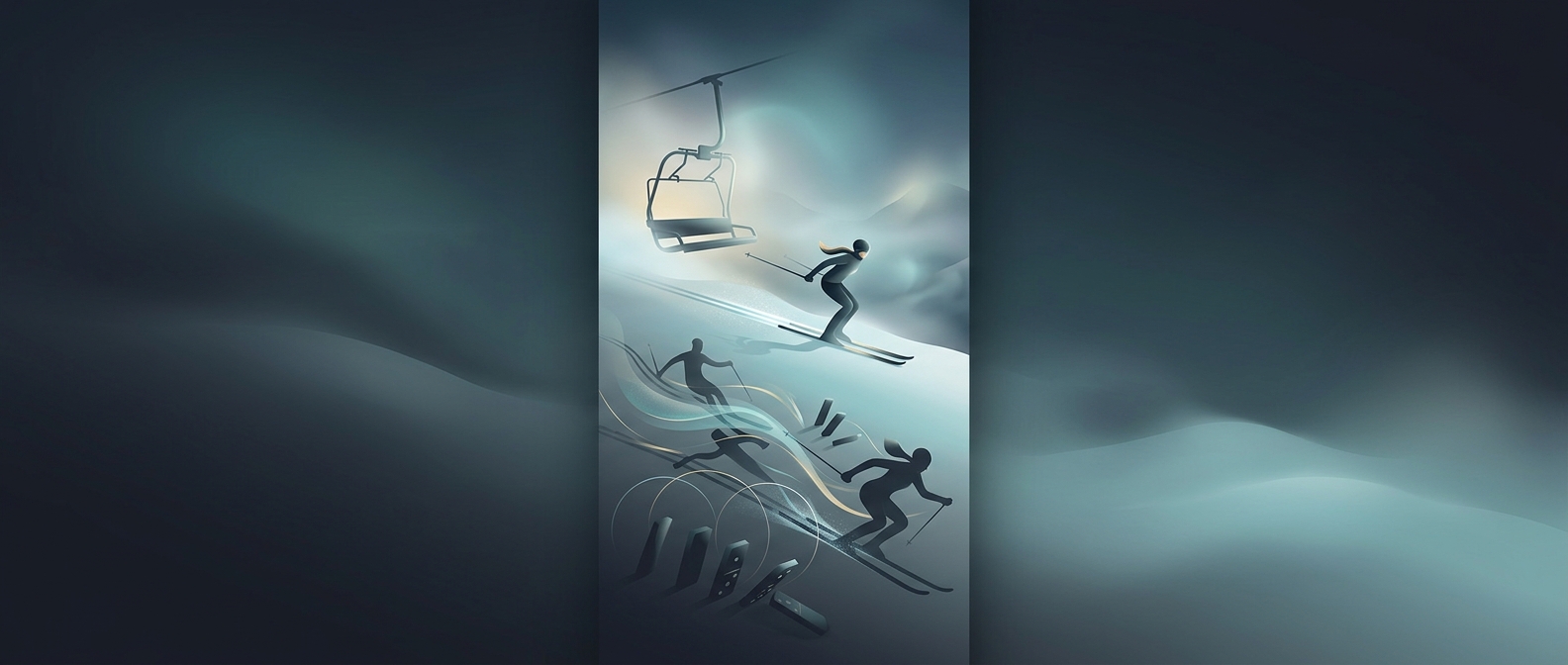
As the chair rounds the large wheel at the top or bottom terminal, its path curves away from the slope. The seat swings with it, while the skier’s skis meet the unloading ramp—a firm, usually gently sloping surface that guides them toward the exit.
The ramp turns timing into motion
The ramp is arranged so a skier can rise from the seat and glide forward as the chair carries on around the bend. The chair’s route and the skier’s route separate: one continues with the lift, the other heads into the marked exit lane. That brief overlap is why riders are told to keep their skis aimed forward and clear the ramp promptly.
A detachable chairlift handles the station differently. Its grip releases the cable, allowing the chair to slow down while passengers load or unload; it reconnects to the faster-moving cable before leaving. A lift that seems to whisk riders away is often relying on a precisely shaped path, not a sudden stop.
Why the exit feels unforgiving
The margin for hesitation is small because the next chair arrives on the same continuous circuit. Operators can slow or stop a lift when needed, but ordinary unloading depends on riders moving out of the chair’s path. The marked lane is not just a suggestion: it gives each person room to glide clear before the chair and the next group come through.