A moving ship becomes a temporary dock
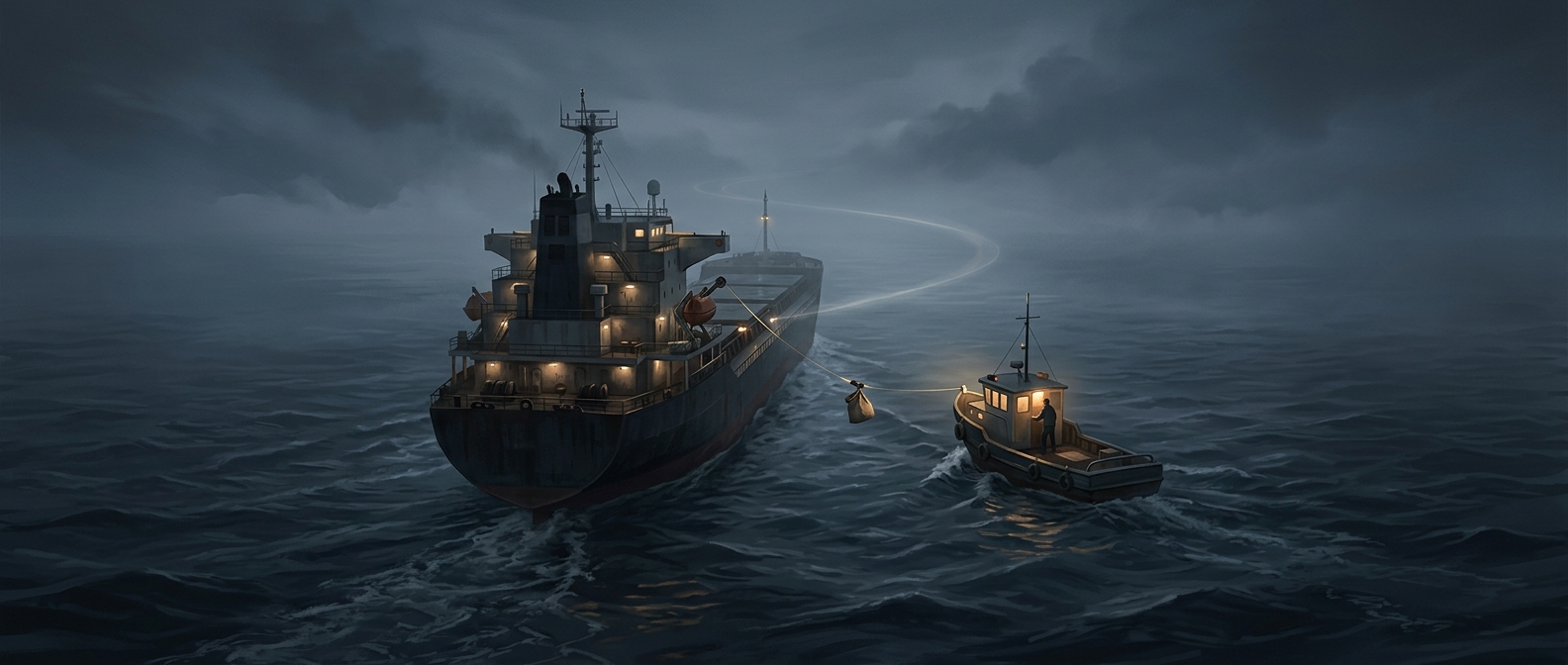
A large vessel does not need to come to a complete stop for a small boat to transfer mail. The mailboat comes alongside and adjusts its speed until both vessels are moving in nearly the same direction at nearly the same pace. That reduces their motion relative to each other, giving the crews a brief window to pass a mailbag or a line attached to it.
The handoff is less like throwing a parcel across open water than reaching between two moving work platforms. A crew member on the ship catches the line and pulls the bag aboard; the small boat stays close only long enough to complete the transfer.
The tradeoff is time against precision
Bringing a large ship to a dock can take time and coordination. It may need to change course, slow down, and later resume its route. A mailboat transfer avoids that interruption, but shifts the challenge to the moment of contact: the boats must hold a safe relative position while wind, waves, and the larger ship’s wake disturb the water between them.
That makes speed matching essential. If the mailboat moves too slowly, the ship draws ahead; if it moves too quickly, it risks crowding the vessel. The crews must also coordinate the pass so the bag and line can be caught without placing anyone between the boats.
A brief connection, not a landing
The exchange turns the ship’s side into a temporary delivery point. Mail can reach a vessel still underway, while the small boat handles the approach and departure. The striking part is how little needs to be transferred for the maneuver to matter: a bag crosses the gap, and the larger ship can keep moving.