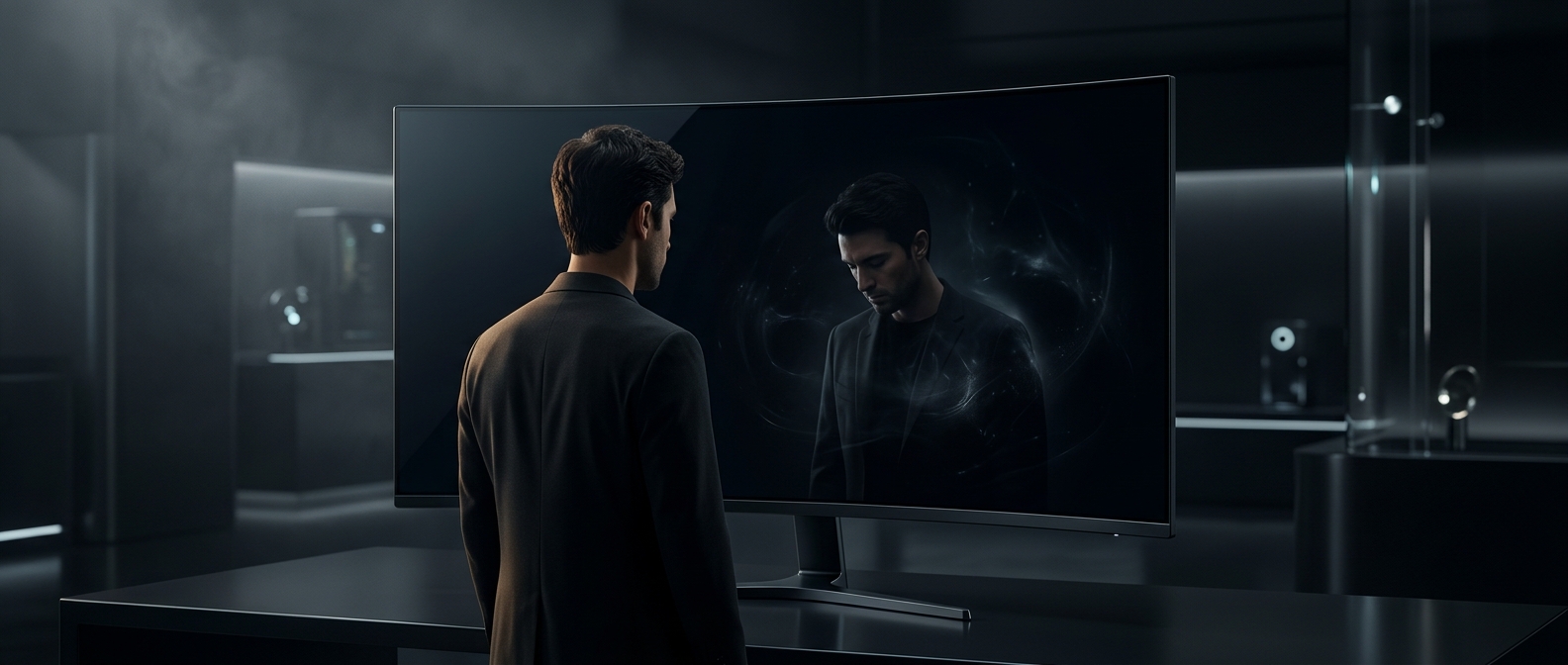
Why a glossy screen can become a mirror
A glossy monitor has a relatively smooth outer surface, so light from a lamp or window can bounce off it in a concentrated reflection. If that light reaches your eyes, you may see a bright patch—or your own face—over the image. The screen is not turning reflective only when a scene goes dark; the reflection is there all along. It is simply easier to notice against a mostly black picture, where there is little screen light to compete with it.
Matte finishes scatter the light
A matte anti-glare surface has tiny irregularities that spread reflected light in many directions instead of sending a sharp image back toward you. That can make reflections less mirror-like, though the light itself does not vanish. Scattering can also soften the picture slightly, depending on the screen and coating.
Glossy surfaces avoid much of that scattering. With less light spread across the image, colors and fine details can appear clearer or more vivid, especially in a room where reflections are controlled. The tradeoff is that bright surroundings are more likely to show up as distinct shapes on the display.
The room becomes part of the picture
For a glossy monitor, placement can matter as much as the image setting: a window behind you or a lamp aimed toward the screen can put a reflection directly in your view. Moving the light source, changing the screen angle, or dimming the room reduces the light that can bounce back. During a dark scene, that small adjustment can determine whether the screen shows only the intended shadows—or also the room watching them.