Why a Foldable Screen’s Top Layer Can Be More Than a Cover
A foldable display has to bend repeatedly without cracking, so it is built as a stack of carefully bonded layers rather than as a rigid glass panel with a loose accessory on top. In some models, a thin factory-applied film is laminated directly over the flexible display. It helps protect the delicate surface while moving with the screen as it opens and closes.
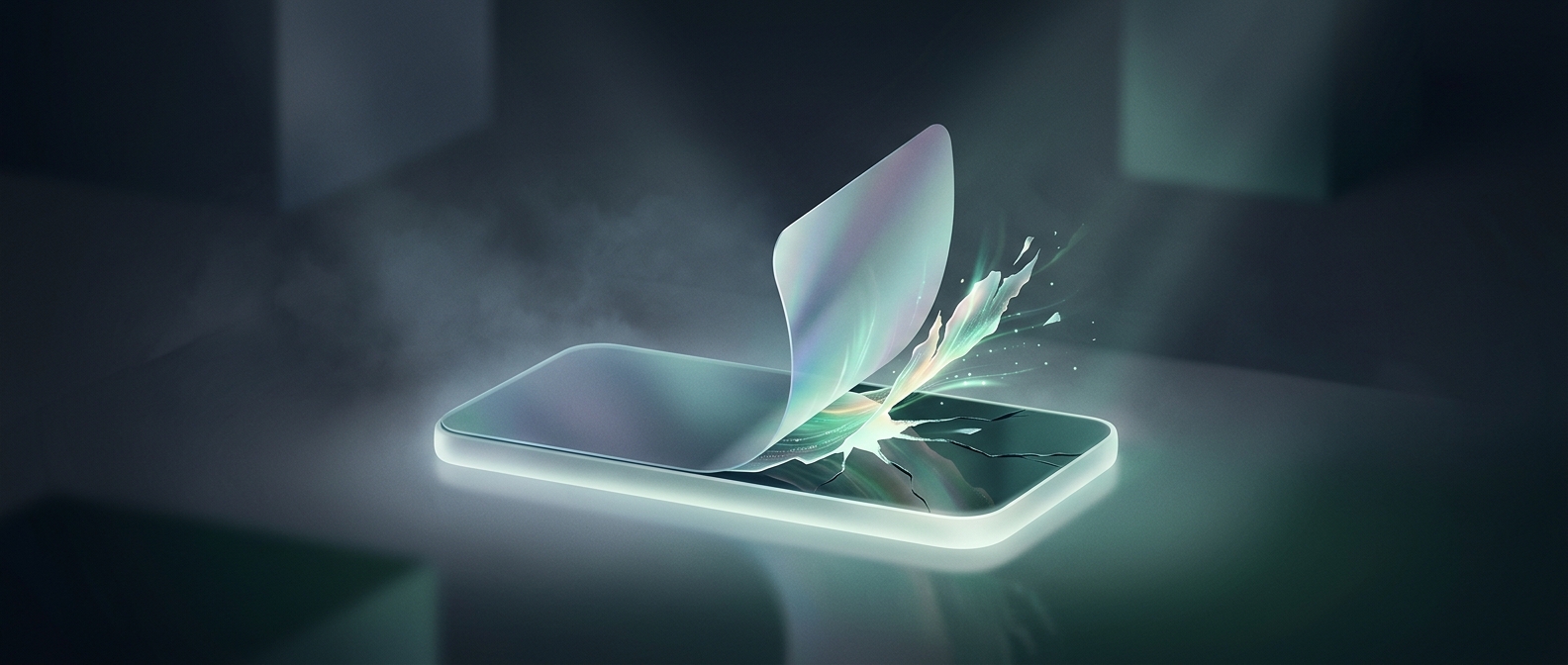
That construction changes what “removing the protector” means. A conventional screen protector sits on top of a finished screen and can usually be peeled away independently. A laminated layer is bonded into the display assembly; lifting it can put force on the layers beneath it or disturb their bond. The result may be visible damage or a display that no longer works properly.
Why the Usual Phone-Screen Habit Can Backfire
On a rigid phone, a peeling corner often looks like an invitation to replace a cheap accessory. On a foldable, the same visible film may be part of the system that protects the bendable display. It can be difficult to tell from appearance alone which kind of layer a particular phone uses, and replacement procedures vary by model.
So a bubble or scratch is not automatically a reason to pull the film off. The manufacturer’s instructions can identify whether the layer is removable and how to handle a damaged one. The practical distinction is simple: a film that looks like a screen protector may still be bonded to the screen it is meant to protect—and peeling it can turn a small surface problem into a display repair.