Why a Longer Wave Means a Lower-Energy Photon
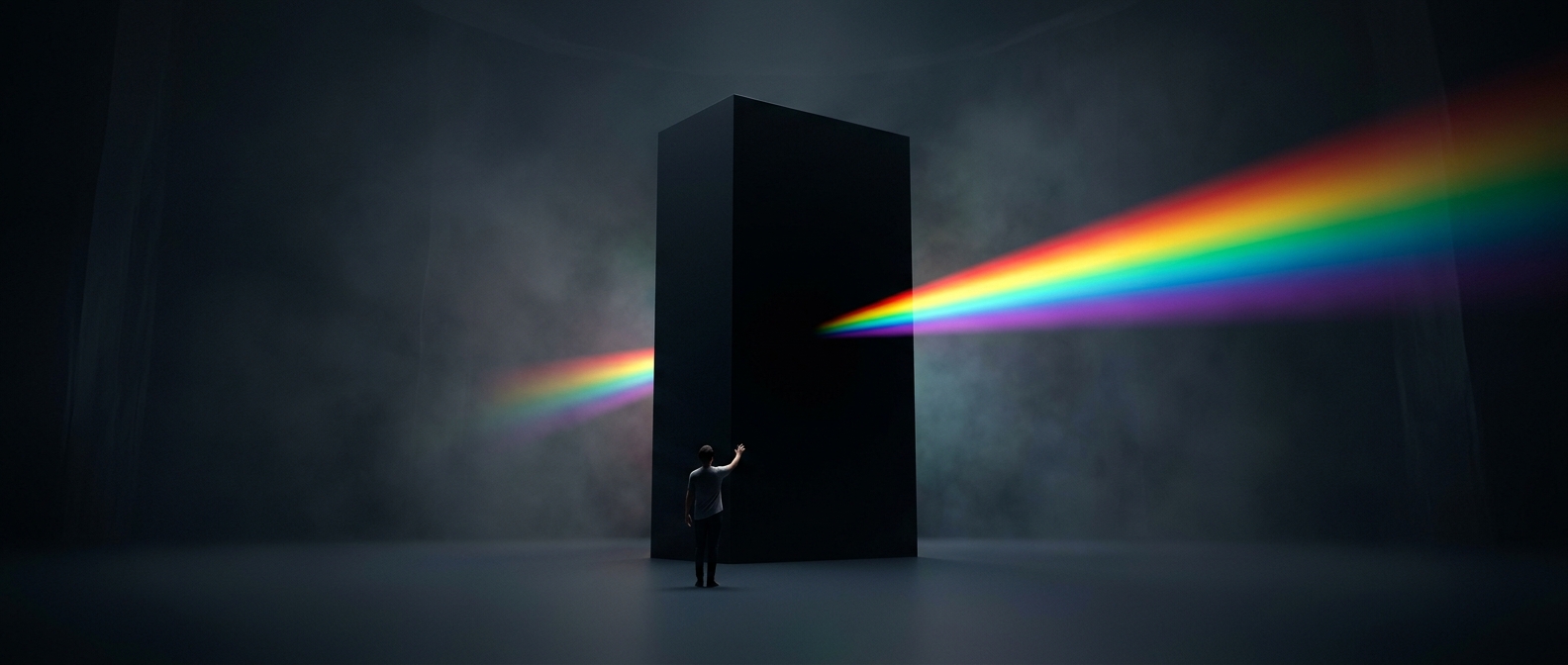
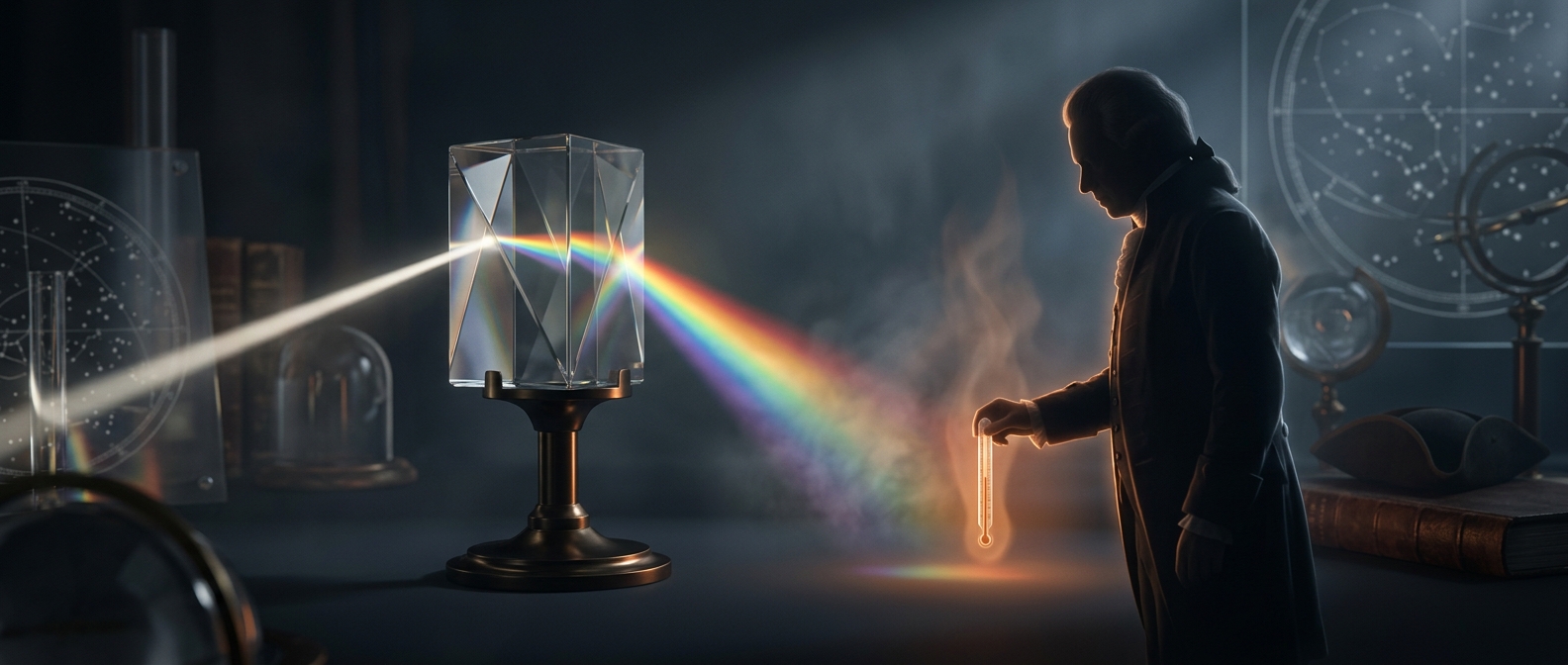
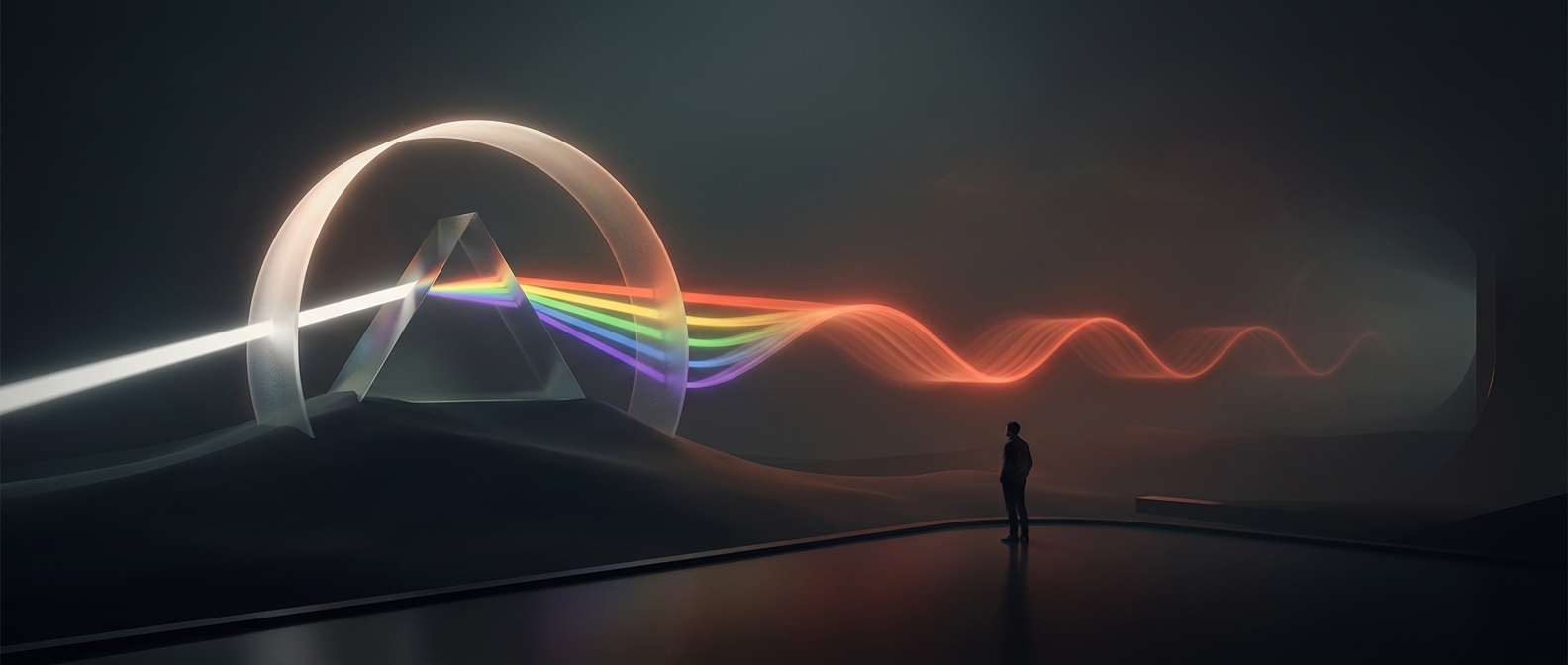
Light is electromagnetic radiation: a traveling pattern of electric and magnetic fields. Its wavelength is the distance from one wave crest to the next. Within the narrow band human eyes can see, red lies at the long-wavelength end and violet at the short-wavelength end.
The energy of an individual light particle, or photon, depends on its wavelength: the longer the wavelength, the less energy each photon carries. This follows from the relationship between a photon’s energy and the frequency of its wave. Because all colors of light travel at the same speed in a vacuum, a longer wavelength corresponds to a lower frequency—and therefore a lower-energy photon.
Photon Energy Is Not the Same as Brightness
Brightness depends on how much light reaches the eye, not just on the energy of each photon. A beam can deliver many red photons, making it bright, even though each one carries less energy than a violet photon. Conversely, a dim violet source can deliver very little total light despite its photons having more energy individually.
That distinction matters whenever “more energetic light” is mistaken for “brighter light.” Color describes the light’s wavelength; brightness reflects the amount arriving at the observer. A red laser can look vivid and intense without its individual photons matching the energy of violet ones.