How a spinning disc made still drawings move
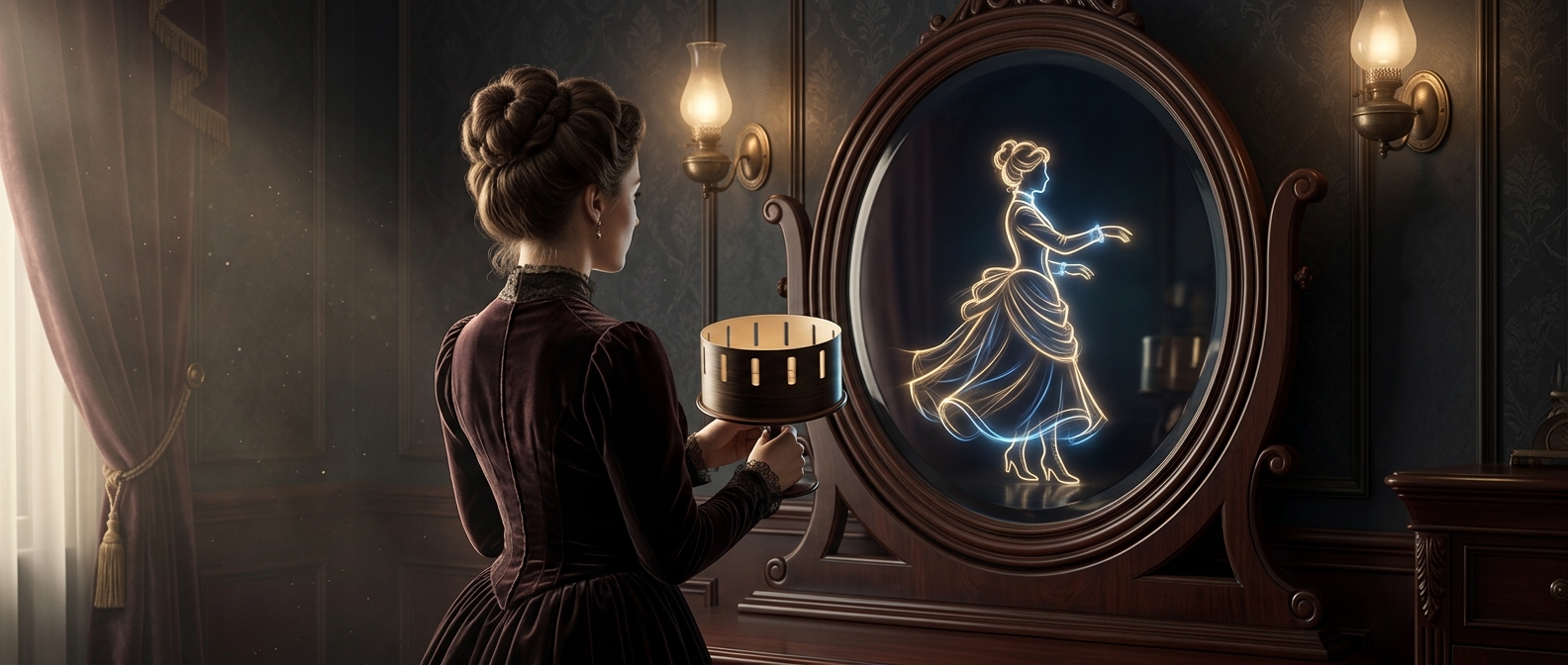
The device was a phenakistoscope, an early animation toy made from a circular card. A series of slightly different drawings ran around its edge, with narrow slits between them. To use it, a viewer held the disc in front of a mirror and looked at the reflection through the slits while spinning the card.
Each slit acted like a brief shutter: it let the viewer see one drawing, then blocked the view as the next drawing moved into place. The images appeared in quick succession at nearly the same spot in the mirror. Because the drawings showed small steps in an action, the eye and brain perceived one figure moving rather than a sequence of separate pictures.
Why the action could loop forever
The drawings formed a repeating cycle. After the final pose, the next image returned to the first, so the motion had no visible ending. In one example, a demon swallowed a man; as the sequence repeated, the man seemed to be swallowed again and again.
The mirror was essential to the usual setup: it let the viewer watch the reflected pictures through the moving slits. The viewer had to keep the disc turning and align an eye with the slots, so this was not animation projected for a crowd. It was a personal viewing device—one person at a time, actively looking into a mirror to bring a loop of drawings to life.