A hunting release became an ecological experiment
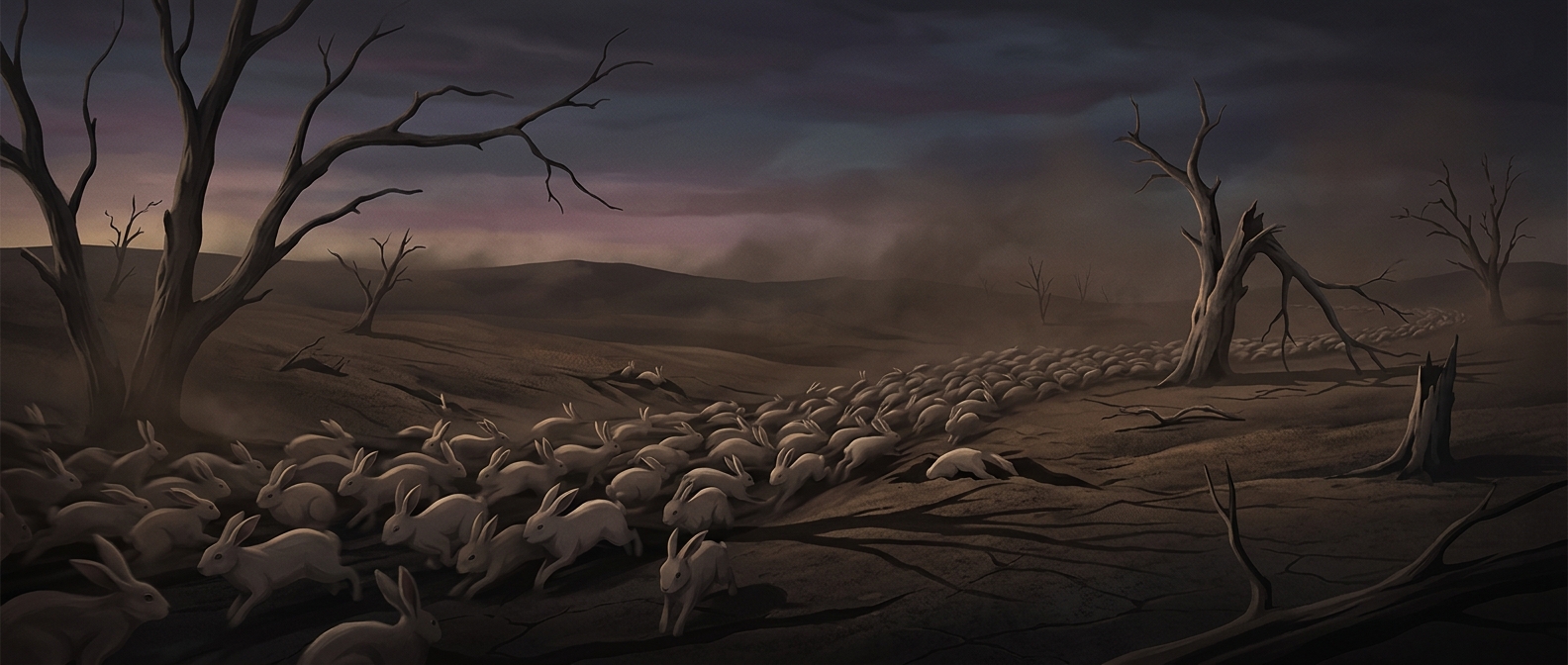
In 1859, settler Thomas Austin released two dozen rabbits on his property in Victoria, hoping to establish game for hunting. Rabbits had arrived in Australia earlier, but this release is often associated with the rapid spread that followed. The country offered them extensive open habitat, and the animals reproduced far faster than local ecosystems could absorb them.
A rabbit can breed while young and produce multiple litters in a year. With few effective controls on their numbers in the newly settled landscape, populations could grow quickly and move into fresh territory. Predators did exist, but they did not keep the expanding rabbit population in check.
Small grazers, large changes
Rabbits feed close to the ground, cropping seedlings and low-growing plants as well as mature vegetation. When many animals graze the same area, plants may be eaten before they can flower or grow back. That leaves less food and shelter for native wildlife, and bare soil becomes more vulnerable to erosion.
The damage can outlast the grazing itself: if young trees and shrubs never survive to replace older plants, the shape of a habitat changes over time. Rabbits also compete with native animals for food, turning a species introduced for sport into a pressure on the wider ecosystem.
Why the problem is hard to undo
Australia has tried several ways to reduce rabbit numbers, including fencing, conventional control, and biological methods—diseases that spread through rabbit populations. These measures can sharply reduce numbers, but they do not remove every rabbit or prevent survivors from breeding and recolonizing cleared areas.
That is why the legacy is not simply a story of one release followed by one failed fix. It is a continuing contest between rapid reproduction and efforts to restore vegetation. In affected landscapes, recovery depends not only on fewer rabbits, but on plants getting enough uninterrupted time to grow back.