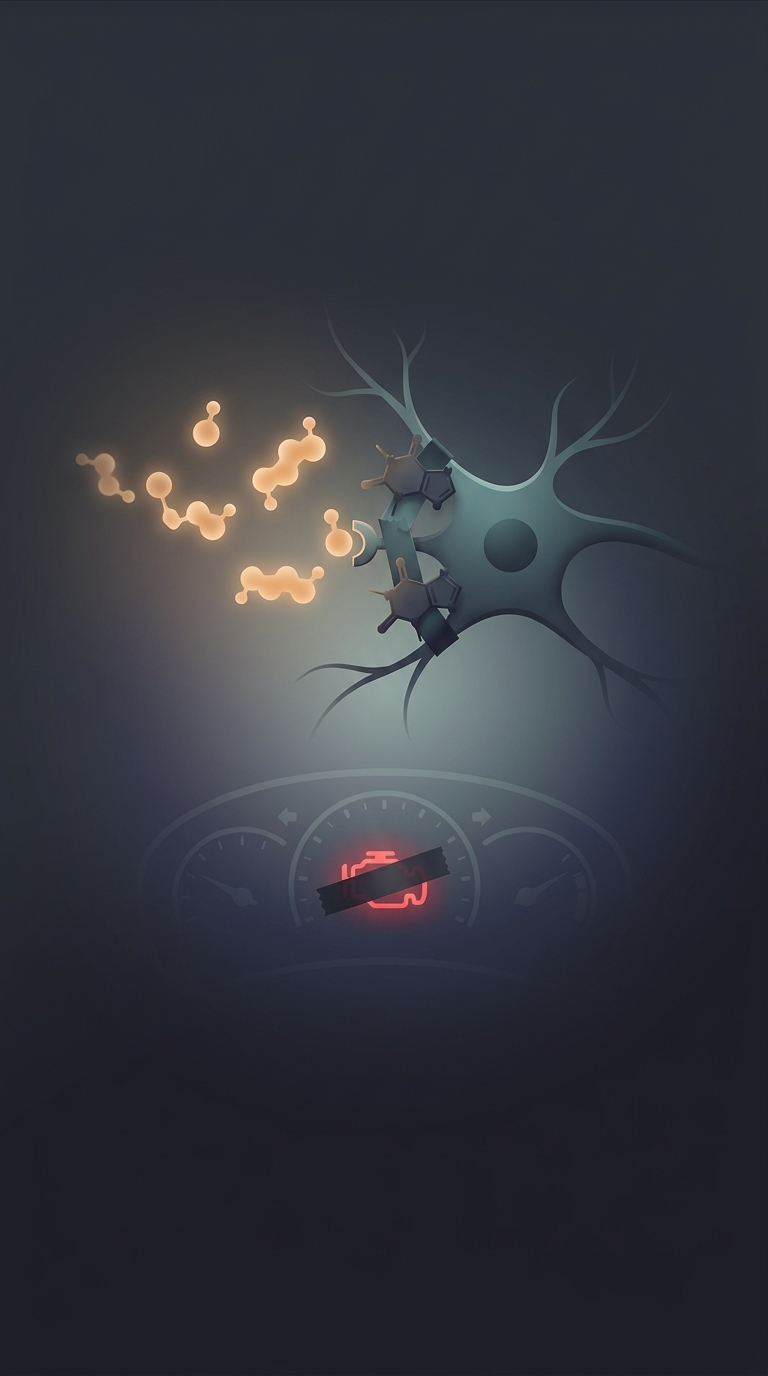
Why a missed cup can bring on a headache
Caffeine temporarily blocks adenosine, a brain chemical that helps build the feeling of sleep pressure. With regular caffeine use, the brain adapts to that interruption, in part by becoming more responsive to adenosine. When caffeine is suddenly absent, its sleep-promoting effects can be more noticeable for a time. The result may include headache, fatigue, difficulty concentrating, or irritability—not simply disappointment about missing a familiar routine.
What caffeine withdrawal feels like
Caffeine withdrawal is a recognized condition. Symptoms typically begin within a day of stopping or sharply reducing regular intake, and can last several days. Headache is especially common; low energy and a foggy or irritable mood can make ordinary tasks feel unusually difficult. How strongly it hits varies with a person’s usual intake and individual sensitivity.
That pattern helps explain why the first coffee can seem to “fix” a morning. It may relieve withdrawal as well as increase alertness, so the improvement can feel more dramatic than the drink’s effect on someone who is not accustomed to caffeine.
Why cutting back gradually can help
Because the brain has adapted to regular exposure, abruptly removing caffeine can produce a sharper adjustment. Reducing intake in steps gives the body time to respond and may make symptoms less disruptive. Caffeine also comes from sources beyond coffee, including tea, energy drinks, soda, and some medicines, so a meaningful reduction depends on the whole routine.
The familiar office joke about needing coffee has a real bodily mechanism behind it. But withdrawal is temporary, and its existence alone does not mean someone has an addiction; it means the nervous system has adapted to a substance that is used so routinely it can be easy to overlook.