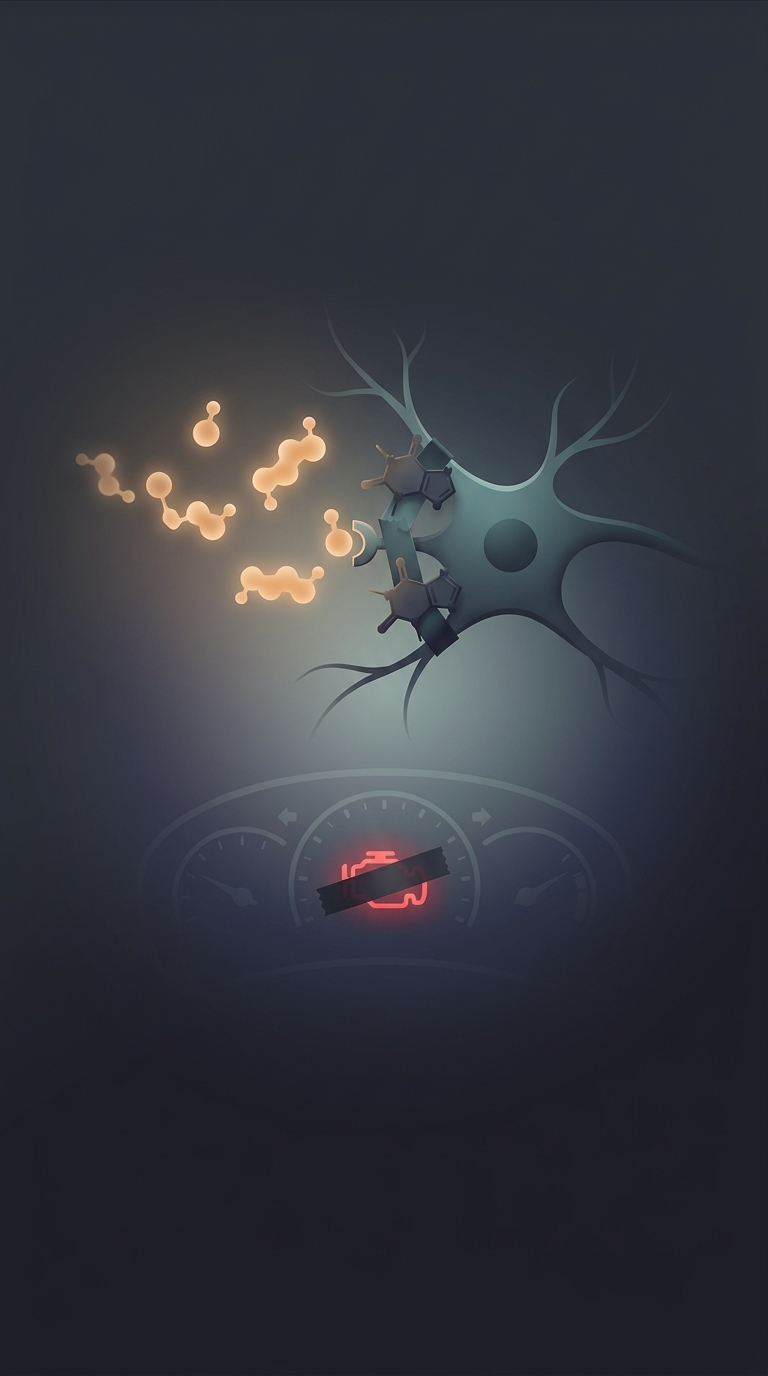
Why Blocking Adenosine Changes How You Feel
Adenosine is part of the brain’s running record of wakefulness. As cells use energy during the day, adenosine levels rise, and its binding to receptors helps dial down neural activity. That growing “sleep pressure” is one reason staying awake becomes harder over time; it works alongside other systems that regulate the body clock and alertness.
Caffeine fits into some of the same receptors without activating them the way adenosine does. In effect, it temporarily prevents adenosine from delivering its usual calming signal. Brain activity is less constrained, so you may feel more alert—but caffeine has not erased the adenosine or repaid lost sleep. The underlying pressure is still there.
What Happens as Caffeine Wears Off
The effect fades as the body breaks caffeine down and its concentration falls. Adenosine can then bind to available receptors again. If a lot of sleep pressure has built up, the return of that signal can feel like a sudden wave of tiredness, even though the fatigue was developing while caffeine masked it.
Caffeine can also make sleep harder to get or keep, especially when taken late enough to remain active at bedtime. That can leave more sleep pressure to contend with the next day. With frequent use, the brain can adapt to repeated receptor blocking, so the same dose may feel less noticeable; stopping abruptly may bring temporary symptoms such as headache or fatigue.
Caffeine changes the timing of the tired feeling, not the body’s need for sleep. When it wears off, the signal it held back can become difficult to ignore.