Why caffeine can feel like a false alarm
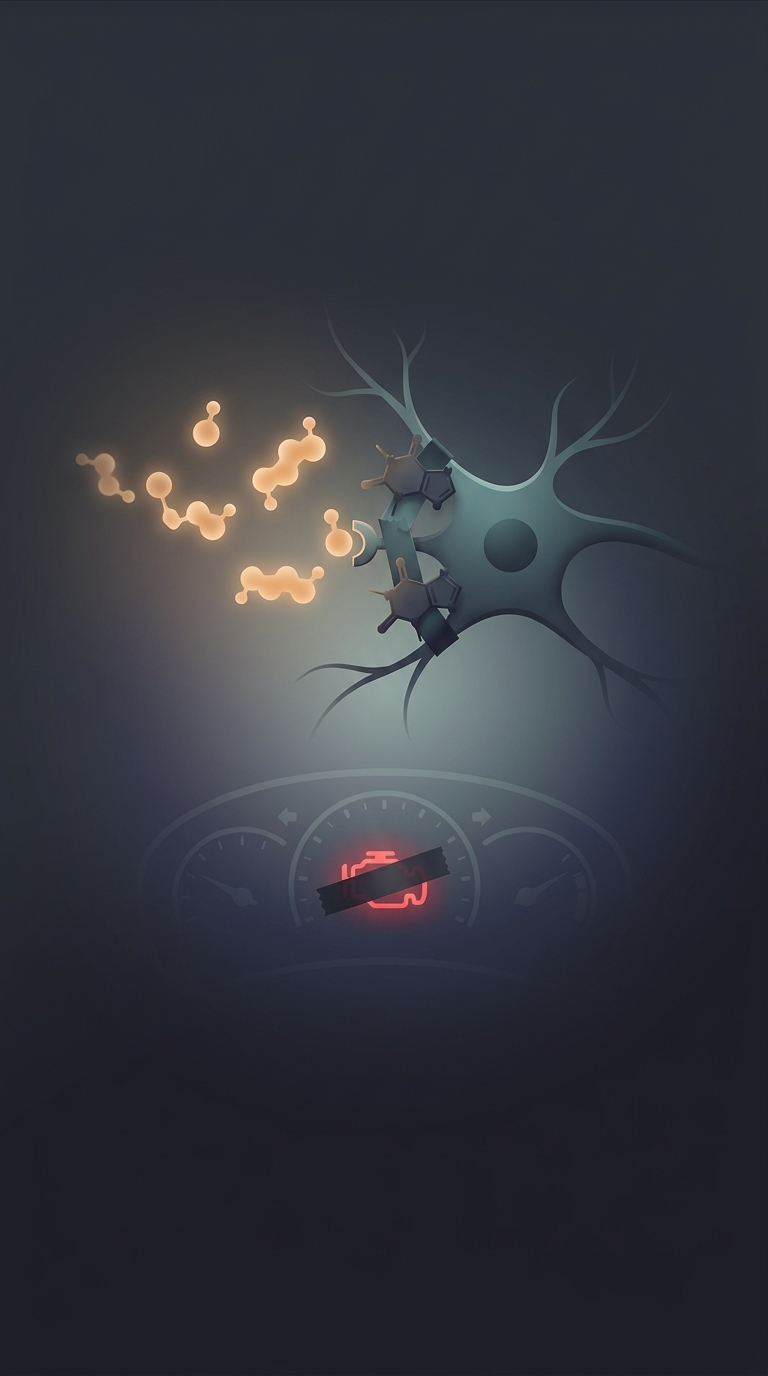
Caffeine does not create energy so much as interfere with one of the brain’s signals for winding down. As the day goes on, the molecule adenosine builds up and binds to receptors that promote sleepiness. Caffeine can occupy those same receptors without activating them, temporarily muting the signal. The body may feel more alert, but the pressure to rest has not vanished.
At higher doses, caffeine can also heighten activity in systems involved in alertness. The heart may beat faster, muscles may feel shaky, and attention can become jumpy. These sensations resemble parts of the body’s ordinary threat response, even when the person is sitting safely at a desk.
How alertness turns into unease
The mismatch matters: a racing pulse is a physical cue the brain can interpret as evidence that something is wrong. That interpretation can increase worry and make the bodily sensations harder to ignore. In this way, caffeine can contribute to a feedback loop—stimulation produces alarming sensations, and alarm makes those sensations feel more intense.
The effect depends on the amount consumed and on the person; caffeine sensitivity varies, and a dose that feels manageable to one person may feel unpleasant to another. It can also linger for hours, so another cup may add stimulation before the earlier one has worn off. The practical catch is that feeling more awake is not the same as feeling more capable: when caffeine pushes the body into over-alertness, the pounding heart can become one more distraction from the work it was meant to help with.