A sport built around two kinds of pressure
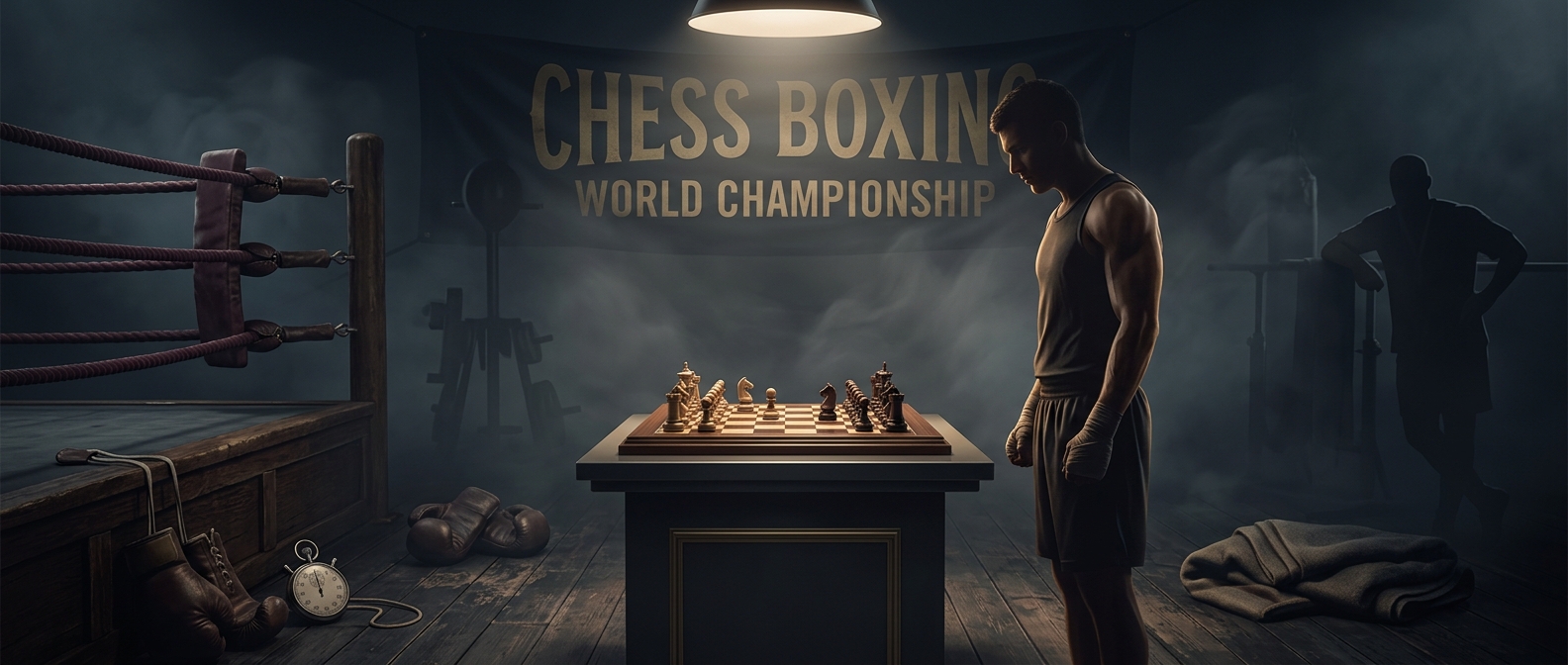
Chess boxing makes competitors switch not just activities but kinds of attention. In the ring, they must react to an opponent’s movement and protect themselves; at the board, they must slow down, calculate and avoid a costly mistake. The chess position carries over from one chess segment to the next, so a player returns to the same problem after being jolted by the physical round.
That shift is the point. Fatigue and the stress of fighting can make concentration harder, while a player who falls behind on the board may have to take risks in the ring. Neither discipline is a sideshow: each gives the opponent another route to victory.
From a graphic novel to a real contest
The idea appeared in French artist Enki Bilal’s 1992 graphic novel Froid Équateur. Dutch artist Iepe Rubingh later turned the fictional sport into a live event, organizing a match in Berlin in 2003. The leap from page to ring gave the concept a practical test: could alternating chess and boxing produce a contest in which both skills mattered?
The format makes the answer visible in the pauses between rounds. A boxer cannot simply recover; the next challenge may demand a clear head and careful calculation. The unusual contest is not chess plus boxing, but the pressure of having to change mental gears while the match is still unfolding.