A living prompt for dramatic imagination
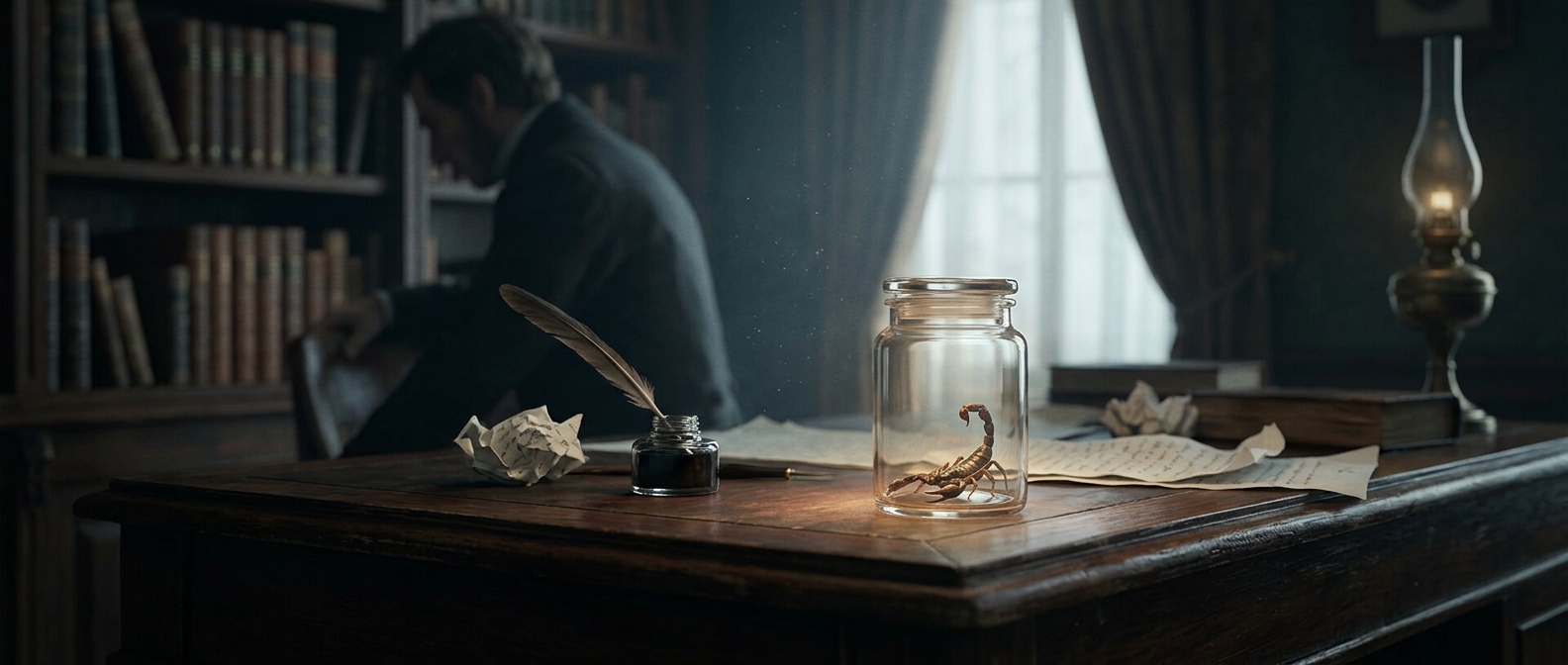
The playwright’s scorpion was more than an unusual pet: it became a small, unpredictable scene to watch. By interpreting its movements as anger and responding with fruit, he turned observing the animal into a private ritual. The important part was not whether the scorpion’s mood truly shaped his writing, but that he treated its apparent agitation as a source of creative energy.
What the scorpion could—and could not—show
A scorpion does not become venomous because it is angry. It uses venom mainly to subdue prey and may use its tail defensively when threatened. Its movements can look aggressive to a human observer, but they do not reveal a human-like emotional state. Fruit, meanwhile, is not the kind of food scorpions normally hunt.
That mismatch makes the episode revealing rather than merely strange: the animal’s behavior supplied a vivid image, while the playwright supplied the meaning. The scorpion did not need to understand the ritual for it to serve as a focus for his imagination. The drama began in the observer’s interpretation—an everyday act of watching transformed into a personal prompt for invention.