Hands can join the work of speaking
When people explain an idea, speech is not assembled by the mouth alone. The brain has to choose words, arrange them into a sequence, and keep track of what the explanation refers to. Hand movements can accompany that planning: a speaker may trace a path, mark a contrast, or move a hand as an idea unfolds. The motion can give a thought a physical shape while the speaker searches for language.
Why sight is not required
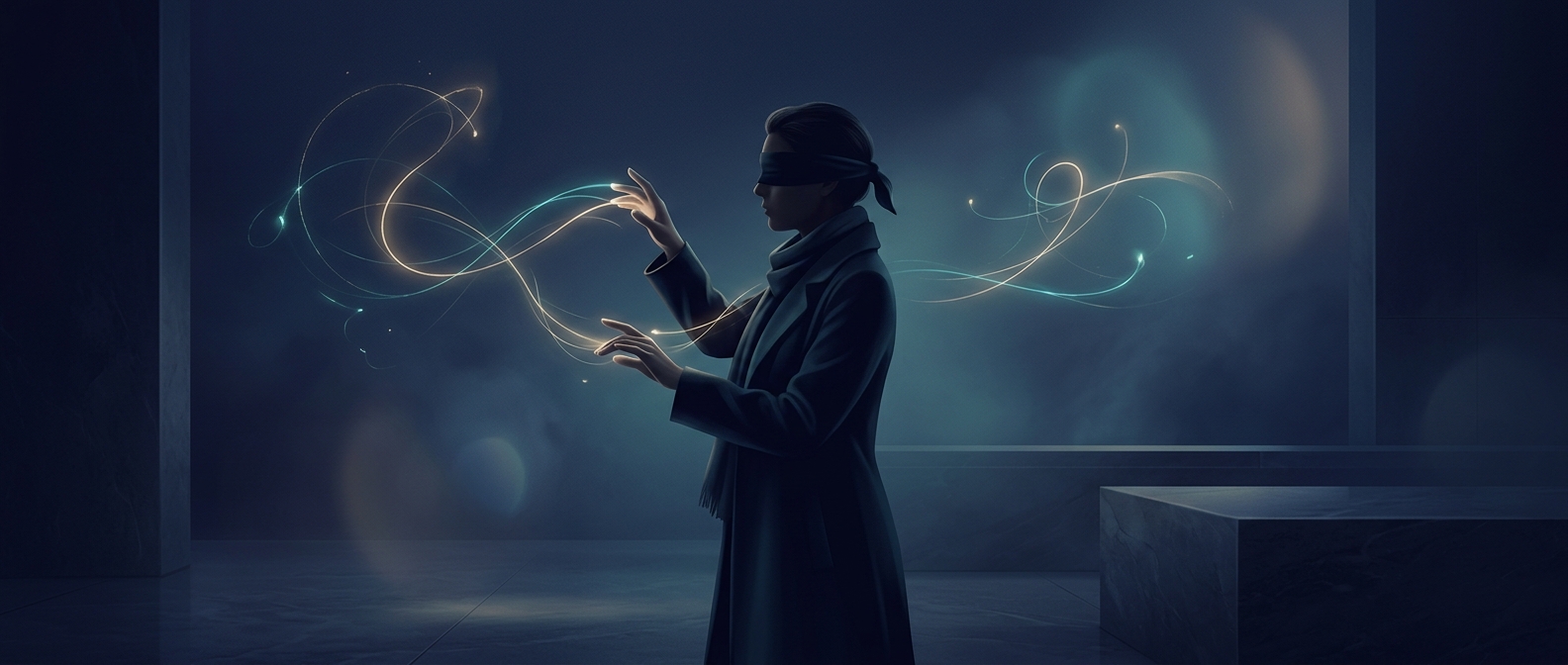
People blind from birth also gesture while talking, so seeing an audience cannot be the only reason gestures occur. The movements appear to be tied partly to the process of producing speech and organizing meaning, rather than being merely visual signals for listeners. A hand can enact a direction or relation even when no one can see it—and even when the speaker does not consciously decide to gesture.
That does not mean every gesture improves every sentence. Speech and movement are closely coordinated, and gestures may help some speakers keep an idea active or make a difficult explanation easier to formulate. The hands are not translating a finished thought; they can help shape it as it is being put into words.
A window into thought
This is why conversation includes so much movement that seems unnecessary to an observer. A gesture can be useful even if it carries no information to the person listening: it may be part of the speaker’s own thinking process. In that moment, the hand is less a display than a small, moving model of an idea.