How Enceladus keeps water moving
Enceladus is small and covered in ice, but Saturn’s gravity continually squeezes and stretches it as it travels along its orbit. This flexing produces tidal heating: friction inside the moon that helps keep water beneath the crust from freezing solid. The ocean is thought to lie beneath a thick shell of ice, with fractures near the south pole connecting the interior to space.
Those long fractures, nicknamed “tiger stripes,” act less like openings in a volcano’s rocky chamber and more like leaky seams in an icy lid. Water and water vapor escape through them, carrying fine ice grains and dissolved material upward. In the near-vacuum above the surface, some vapor expands and freezes into ice particles; the plume is not simply a jet of liquid water that stays liquid in space.
A plume becomes part of a ring
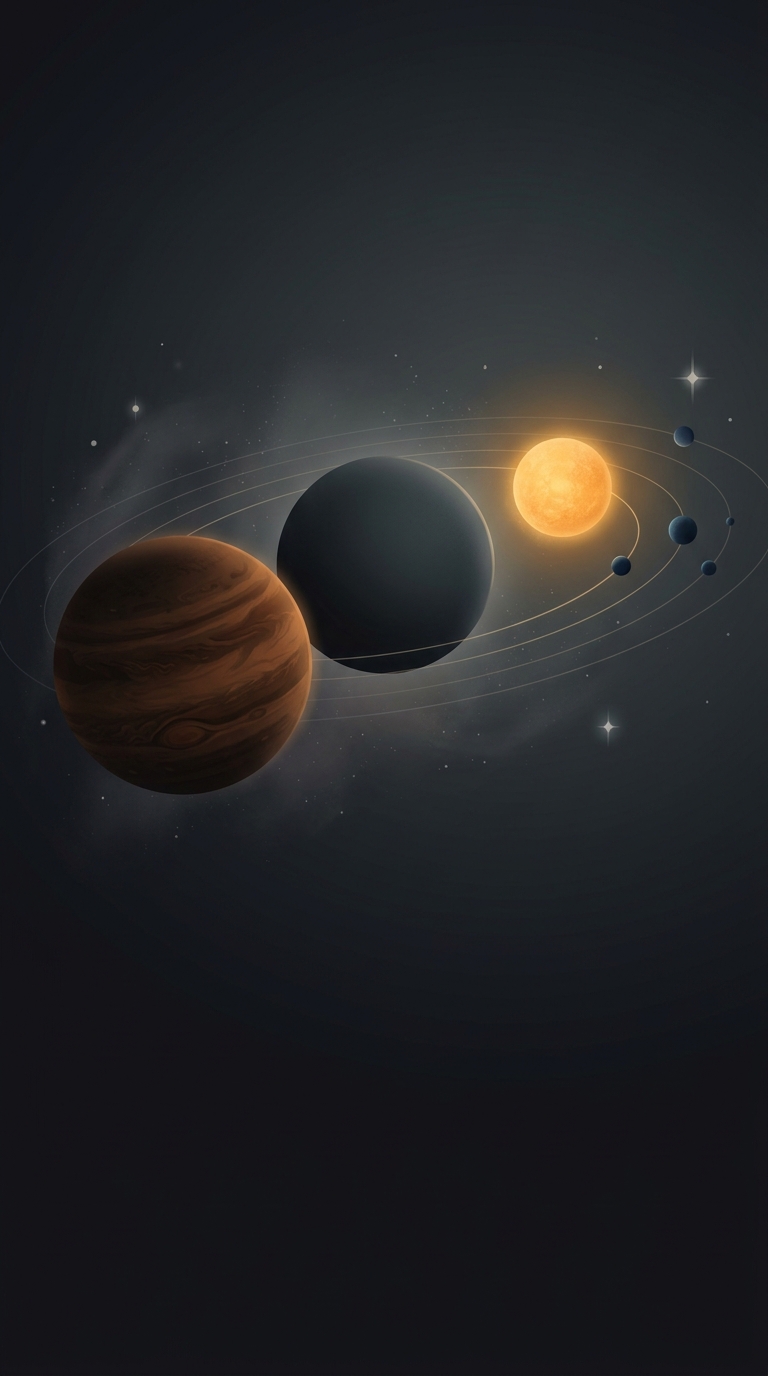
Some of the escaping ice falls back onto Enceladus. Other particles travel into orbit around Saturn and replenish the planet’s faint E ring. That connection makes the moon’s activity visible on a much larger scale: material from cracks on a small moon helps maintain a ring spanning the space around Saturn.
The plume also offers a way to study an ocean that is hidden under ice. Salt-bearing grains and organic molecules carried upward reveal ingredients from the moon’s interior without requiring a probe to drill through its crust. Their presence does not by itself establish that life exists, but it gives scientists material to investigate when assessing the ocean’s chemistry.
Eruptions do not require lava
On Earth, “volcano” usually brings molten rock to mind. Enceladus illustrates a broader geological process called cryovolcanism: the eruption of water or other volatile substances, rather than molten silicate rock. The driving forces and erupted materials differ from those of a lava volcano, but the result can still reshape a surface and send material far beyond it. On Enceladus, an icy fracture can feed a planetary ring.