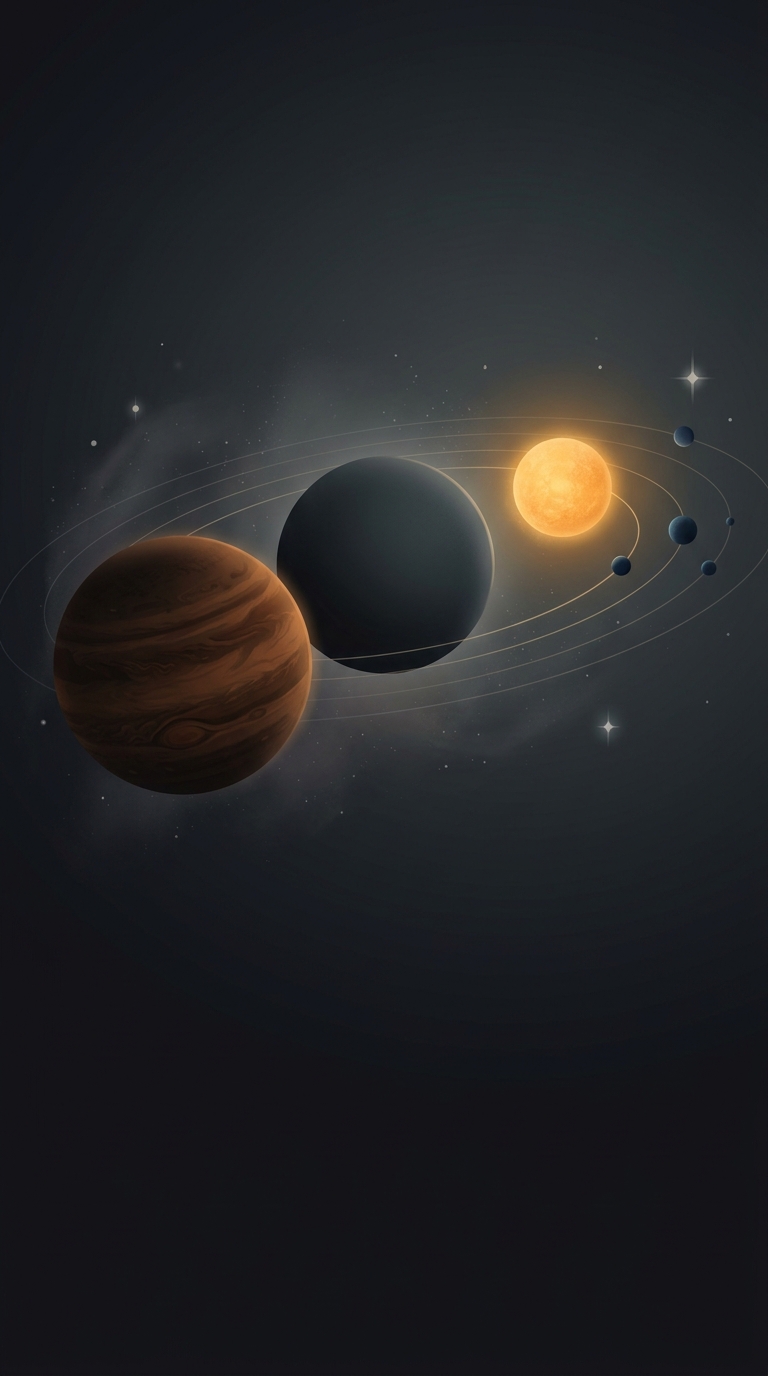
Why Jupiter Makes the Sun Move
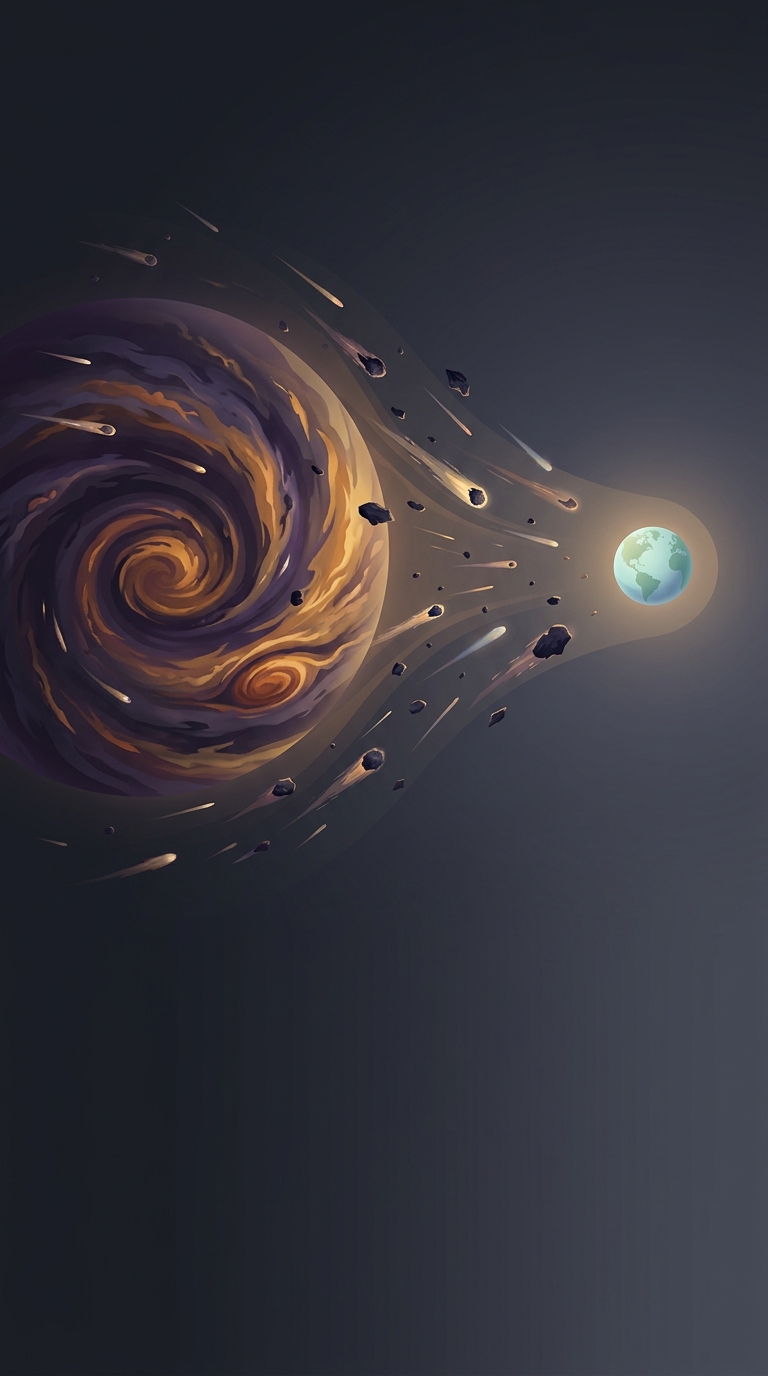
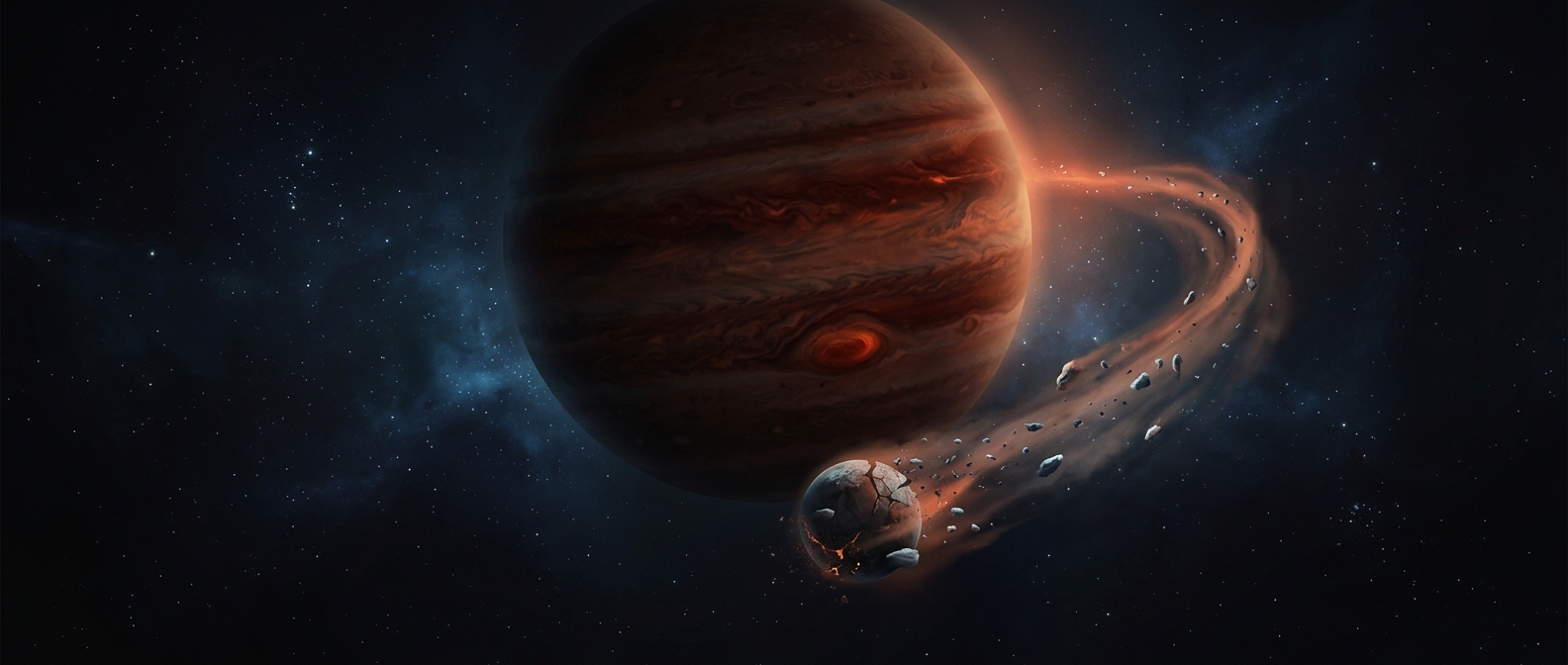
Gravity pulls in both directions. Jupiter attracts the Sun just as the Sun attracts Jupiter; the difference is that the Sun is so much more massive that the same interaction gives it a much smaller motion. The two bodies move around a shared balance point, called the barycenter—the center of mass of the pair.
For the Sun and Jupiter, that point lies slightly beyond the Sun’s visible surface. Jupiter therefore follows a large path around it, while the Sun makes a much tighter loop. The Sun is not fixed in place: it shifts as Jupiter changes position, completing a cycle along with the planet.
How a Wobble Reveals an Unseen Planet
That small motion can be detected from Earth even when the planet itself is too faint or too close to its star to distinguish. As a star moves toward us, its light shifts slightly toward shorter wavelengths; as it moves away, the light shifts toward longer wavelengths. This is the Doppler effect, the same principle behind the changing pitch of a passing siren.
A repeating back-and-forth shift in a star’s light can reveal that an orbiting planet is tugging on it. The pattern helps astronomers estimate the planet’s orbital period and how strongly it pulls on the star. A more massive planet generally produces a larger stellar wobble, though the planet’s orbit and viewing angle also affect what observers measure.
The Star’s Motion Is the Clue
The method turns a planet’s gravitational influence into evidence: astronomers can infer a world from its star’s movement without seeing the world directly. Jupiter’s tug makes the point vivid—the Sun’s shift is small compared with the planet’s journey, but it is not zero, and that little motion is enough to carry a planetary signature.