A waltz built from a menu of measures
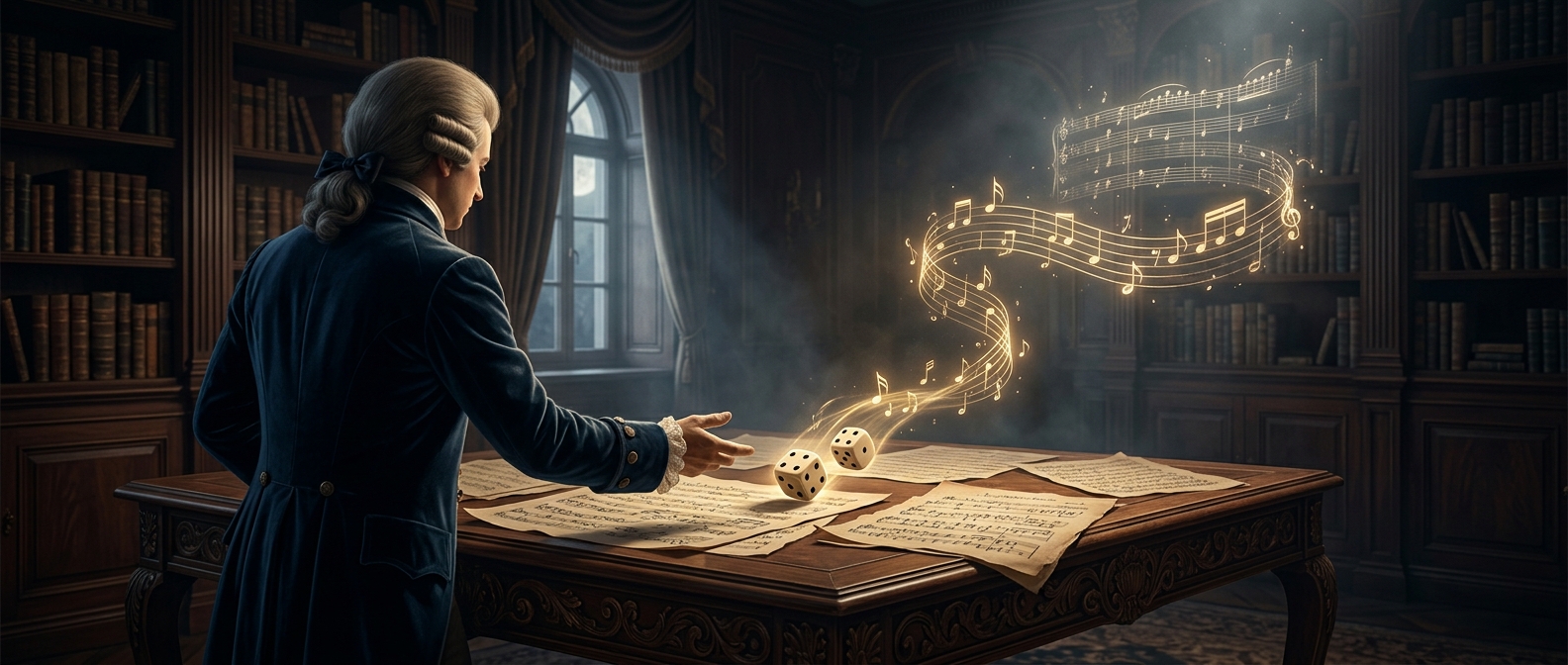
A musical dice game did not ask chance to invent notes. The composer prepared short passages in advance, then arranged them in a table. A throw of the dice pointed to one passage for the next place in the piece; another throw selected the passage after it. Follow the instructions through the table, and the chosen measures formed a complete waltz.
That distinction made the game playable. The dice selected among music already written for the task, rather than pairing arbitrary notes that might sound disjointed. Each passage was designed to work in its assigned spot, so the tune could change from one performance to the next while retaining a recognizable shape.
Chance inside a musical frame
The composer’s real work was in setting the limits. A measure intended for the opening had to function as an opening; one placed near the end had to help bring the piece to a close. The available choices could vary the melody and its turns, while the waltz’s meter and underlying musical plan held the result together.
The player’s role was part game, part assembly: roll, consult the table, copy the selected measures in order, and perform the result. A different sequence of rolls could produce a different version from the same prepared material. Chance chose the route through the music, but the composer designed the road.