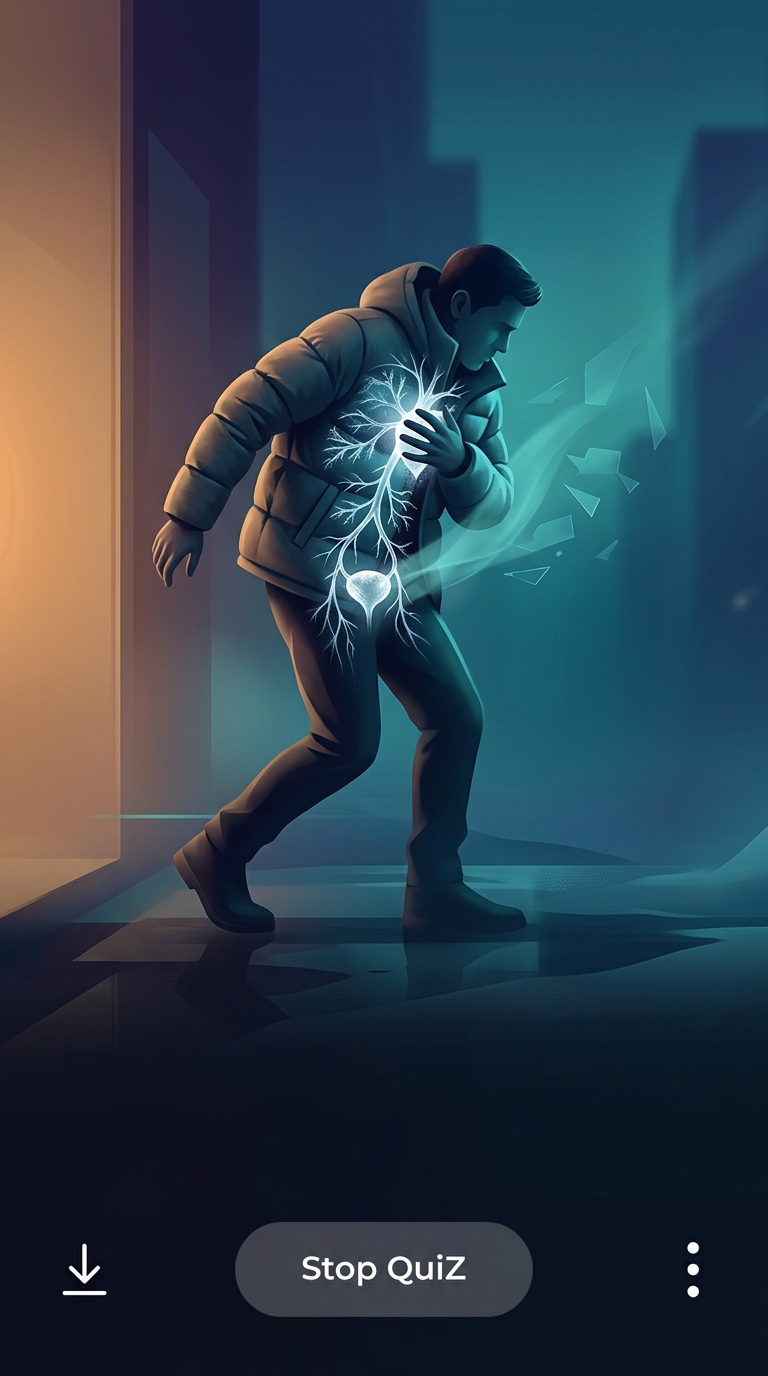
Cold shifts blood toward your core
When you step into freezing air, blood vessels near your skin tighten. That vasoconstriction reduces heat loss, but it also shifts some blood from the limbs toward the chest and abdomen. The body reads this central increase as a sign that it has more circulating fluid than it needs.
The kidneys respond by letting more water go
The kidneys help correct that perceived surplus. They can reduce signals that normally tell them to conserve water, including the hormone vasopressin, and increase the amount of water—and sometimes salt—passed into urine. This response is called cold-induced diuresis. It takes time for the kidneys to make and deliver extra urine, so it does not fully explain an urge that hits the instant you feel cold.
Urgency can arrive before the extra urine
The sudden sensation is partly about timing: your bladder may already contain urine, and the cold-related shift can make the urge harder to ignore. Cold can also affect the nerves and muscles involved in bladder control, though the exact contribution varies from person to person. As the cold-induced kidney response adds urine, a bladder that was only partly full may fill sooner than expected.
So the urge is real, but it is not a sign that your body instantly produced a full bladder. The fast jolt is the sensation; the kidneys’ extra work follows behind it.