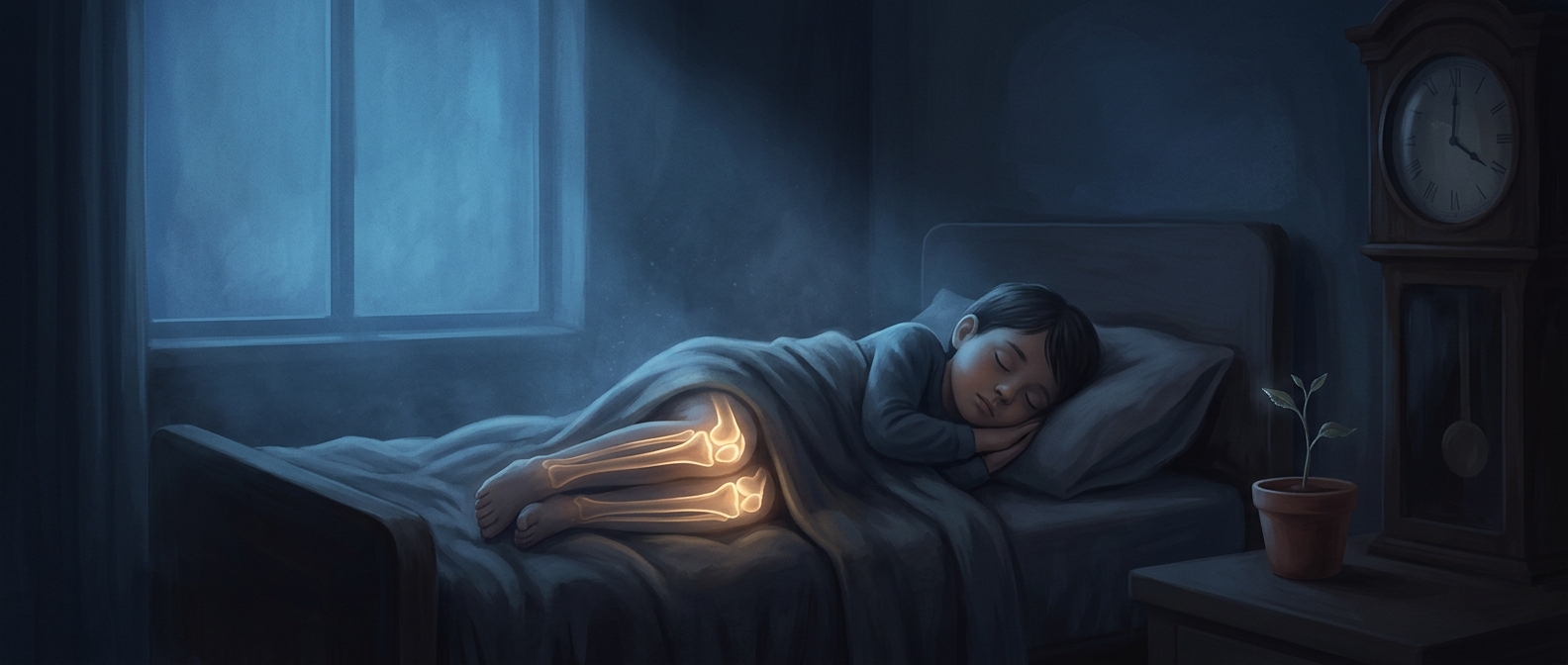
Why quiet can make an ache feel louder
Pain is not a direct meter of damage. The brain combines signals from the body with attention and the surrounding situation to decide what deserves notice. During play, a child may be focused on a game, moving between sensations, and less aware of a mild ache. At bedtime, with little else competing for attention, the same sensation can become harder to ignore.
That helps explain the familiar pattern called growing pains: recurring aches, often in both legs, that tend to show up in the evening or at night. The name is misleading—there is no good reason to conclude that bones are actively hurting because they are lengthening at that moment. The exact cause of these aches is not settled, and the label describes a pattern rather than proving a specific mechanism.
What the bedtime pattern can—and cannot—tell you
Aches that come and go, affect both legs, and are gone by morning fit the usual description. But timing alone cannot identify the cause of pain. A persistent or worsening ache, pain focused in one spot, a limp, swelling, fever, or pain that continues into the day deserves attention from a health professional. Those details are different from an occasional ache that becomes noticeable only when the day winds down.
The useful takeaway is not that bedtime creates pain, but that less distraction can make a mild sensation feel more prominent. A child’s quiet complaint may therefore be worth listening to without assuming that the ache signals rapid growth—or dismissing it simply because it appeared at night.