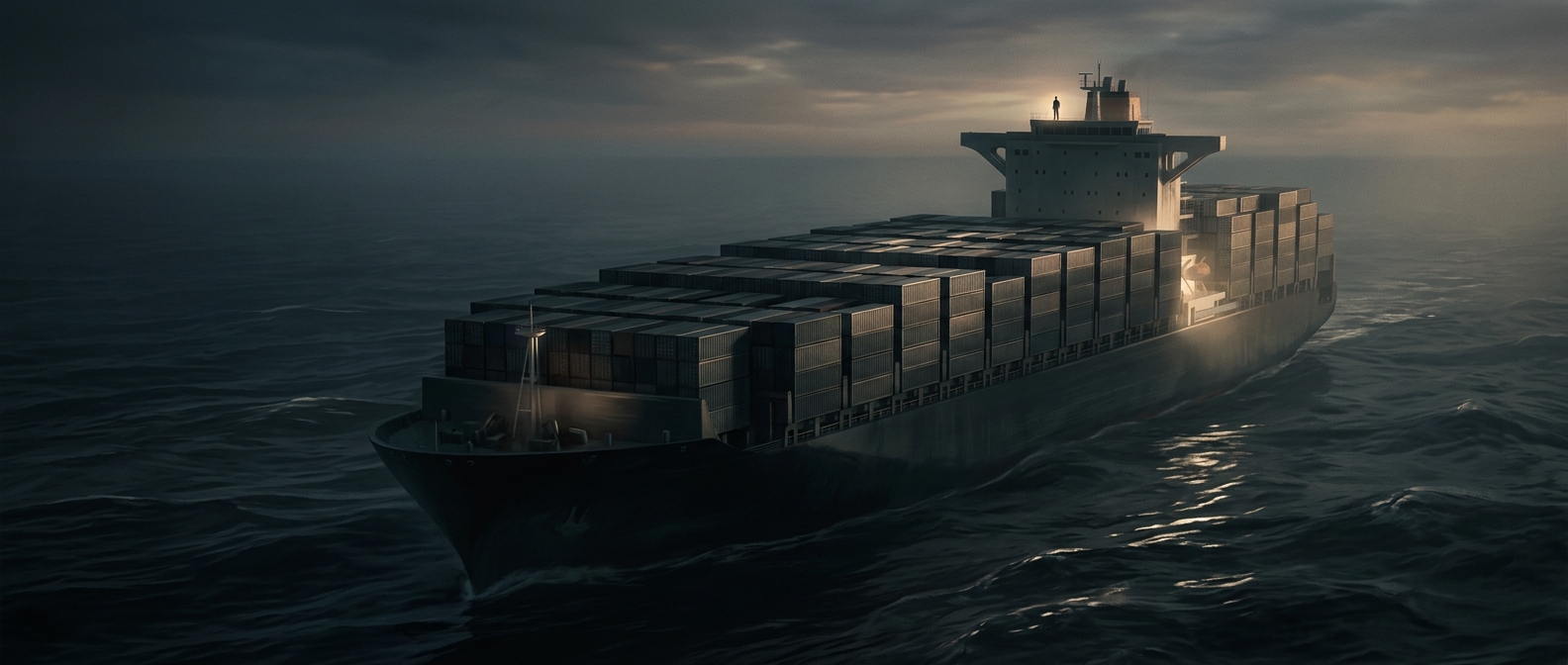
Two defenses aimed at the boarding attempt
A cargo ship is difficult to defend like a building: it has long, exposed sides, limited room for guards, and crews who must keep working while the vessel is at sea. Sound and slippery foam address different moments in an attempted boarding. One tries to make approaching the ship uncomfortable and conspicuous; the other can make gaining a foothold harder.
Sound carries a warning beyond the rail
A directional acoustic device concentrates loud sound toward a chosen area instead of broadcasting it equally in every direction. That can let a crew issue warnings across open water without relying only on a handheld loudspeaker. The sound is meant to deter and draw attention, not physically stop a boat. Its usefulness depends on factors such as distance, wind, background noise, and whether the approaching crew can hear or understand the warning.
Direction also matters for the ship’s own people. A powerful sound beam can be hazardous at close range, so operators need to aim it away from crew members and use it as a controlled warning rather than an indiscriminate blast.
Foam targets the climb, not the whole ship
Anti-boarding foam works by reducing traction on surfaces an intruder might use to climb or move. A person trying to haul themselves up a ship’s side or cross a treated area has less secure footing, making a fast boarding harder. It is a physical obstacle, not a barrier: it cannot guarantee that someone will fall or prevent every route onto the vessel.
The practical challenge is applying it where it can impede a boarder without making the crew’s own work unsafe. On a working ship, decks and access points still have to remain usable, and conditions at sea can complicate any defensive measure. Together, the two approaches buy time and make a boarding attempt more difficult—time the crew can use to secure vulnerable areas and call for help.