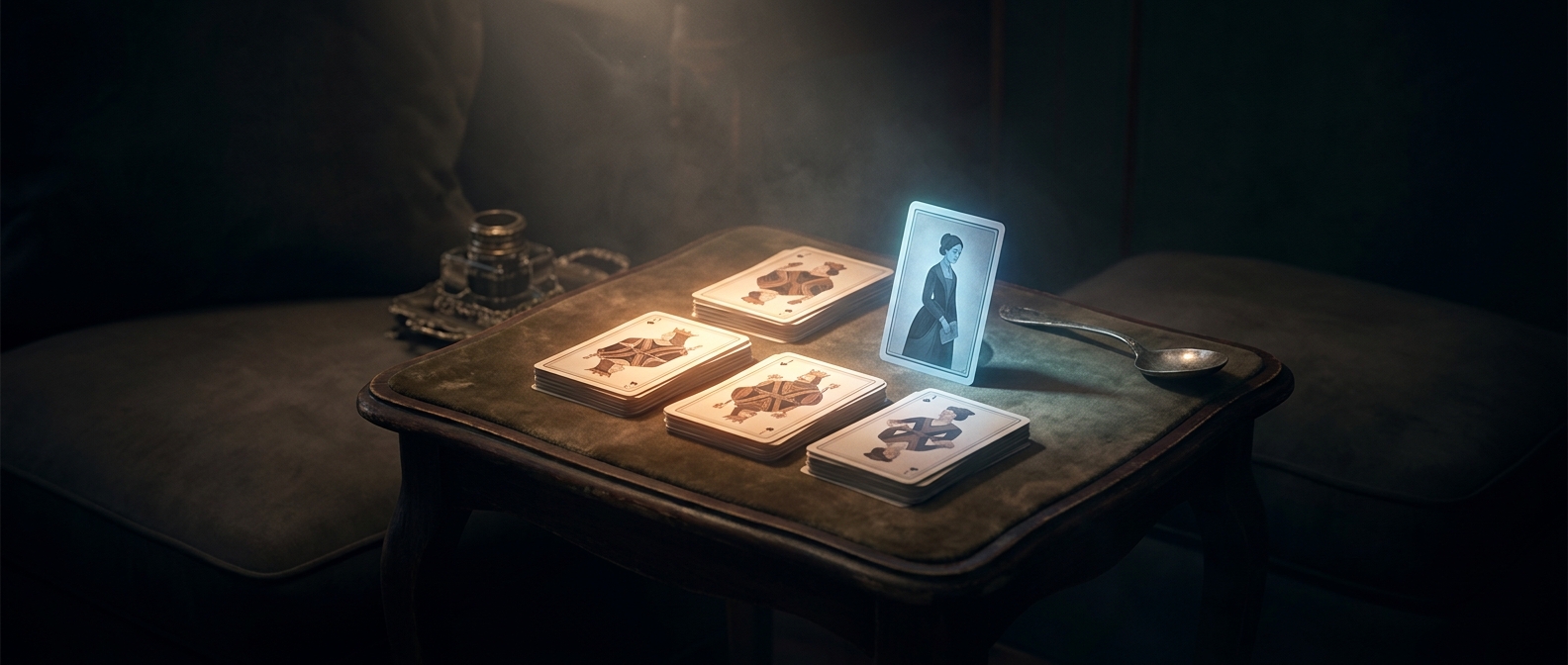
How Old Maid Turns a Pairing Game Into a Trap
Most cards in an Old Maid hand have a partner. Players get rid of matching pairs, then take turns drawing a card from another player’s hand, hoping to make a new pair. Each successful match shrinks the hands and removes more cards from play.
The unmatched card behaves differently: it can’t be cleared by finding its twin. Instead, it passes between players as they draw. A player may feel safe after discarding a pair, only to pick up the dangerous card on a later turn. The game’s tension comes from that changing risk, not from building a winning hand.
Why the Ending Is Unusual
In many card games, the goal is to empty your hand first. Old Maid reverses that expectation: getting rid of cards is usually helpful, but the last card is a liability if it has no match. Once all possible pairs are gone, the remaining player has nowhere to pass the unmatched card, and the game ends with a clear loser.
That design makes the outcome easy to follow even for young players. Every turn offers a small choice—where to draw—and a visible consequence: a pair disappears, or the unmatched card changes hands. The final card turns an ordinary match into a game of passing along a problem.