How a robot factory can run in the dark
A “lights-out” factory is designed to keep operating with few or no workers on the production floor. Darkness is possible because many industrial robots do not need to see a brightly lit room: they repeat programmed movements and use sensors to judge position, detect parts, or confirm that a step has finished. Where a task does require a camera, it can rely on controlled lighting at the inspection station rather than illumination across the whole building.
Robots making robots
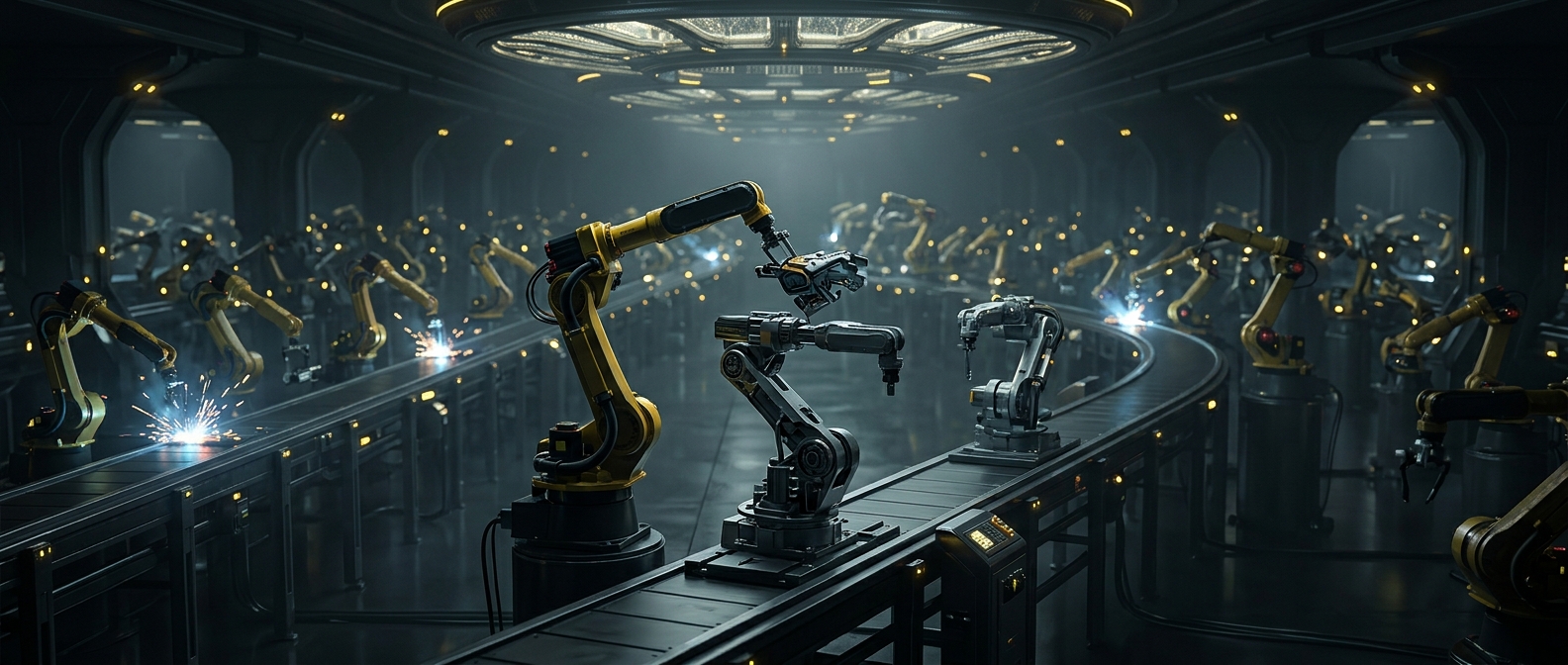
Building a robot is a chain of precise jobs: handling components, positioning them for assembly, fastening parts, and checking that mechanisms move as intended. In an automated line, one machine can pass a component to another, while programmed controls coordinate their movements. FANUC’s factory applies that idea to making robots themselves, so the equipment being produced is also the kind of equipment used in automated manufacturing.
“Robots build robots” does not mean a factory runs without people at every stage. People still design and program the process, supply materials, and respond when equipment needs attention. The lights-out approach shifts routine work to machines and reduces the need for staff to remain beside the line; it does not remove the need for oversight.
The real advantage of darkness
The striking point is not that darkness makes robots faster. It is that a production line can keep working without lighting the space for human comfort or visibility. When machines can repeat tasks and pass work along with minimal intervention, the factory can use its floor differently—and the robots coming off the line can help automate production elsewhere.