The die gives the rail its shape
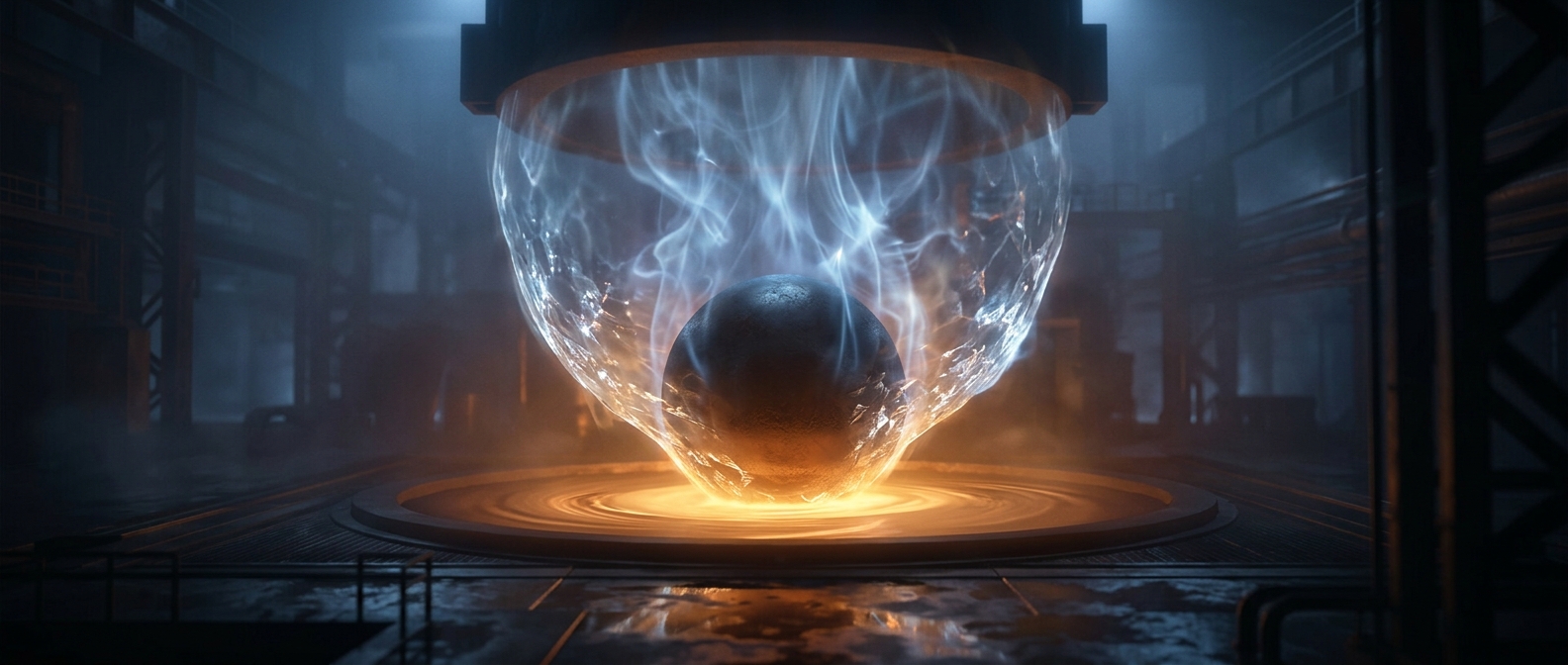
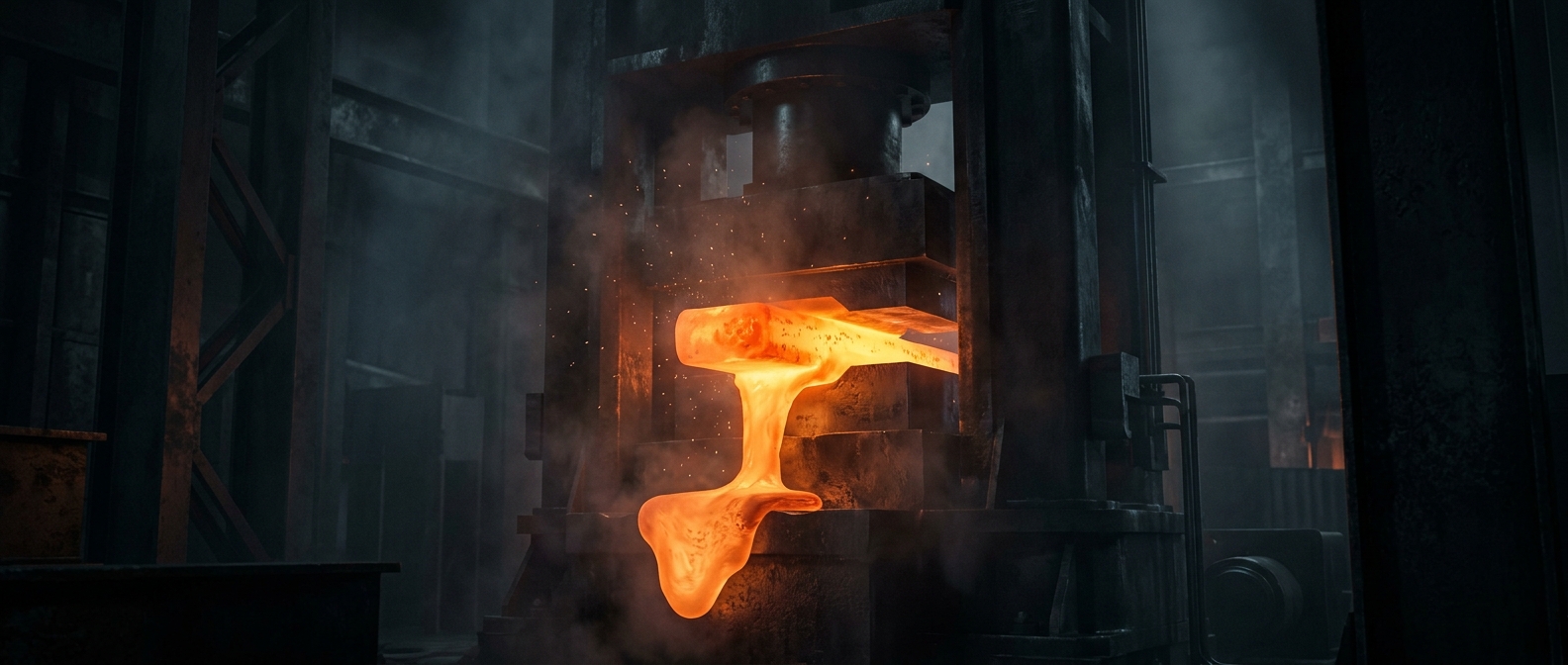
A rail made by extrusion begins as a short, heated metal billet—a solid block warmed until it can deform under pressure. A powerful hydraulic ram pushes it against a die, a thick tool with an opening cut to the desired cross-section. The metal is forced through that opening and emerges with the same profile along its length: a channel, groove, flange, or other detailed shape.
The billet is not normally a pool of molten metal. It stays solid while becoming soft enough to flow under the press. That matters: the process reshapes the metal without pouring it into a mold, and the die can form features that would be difficult to create by cutting a finished bar.
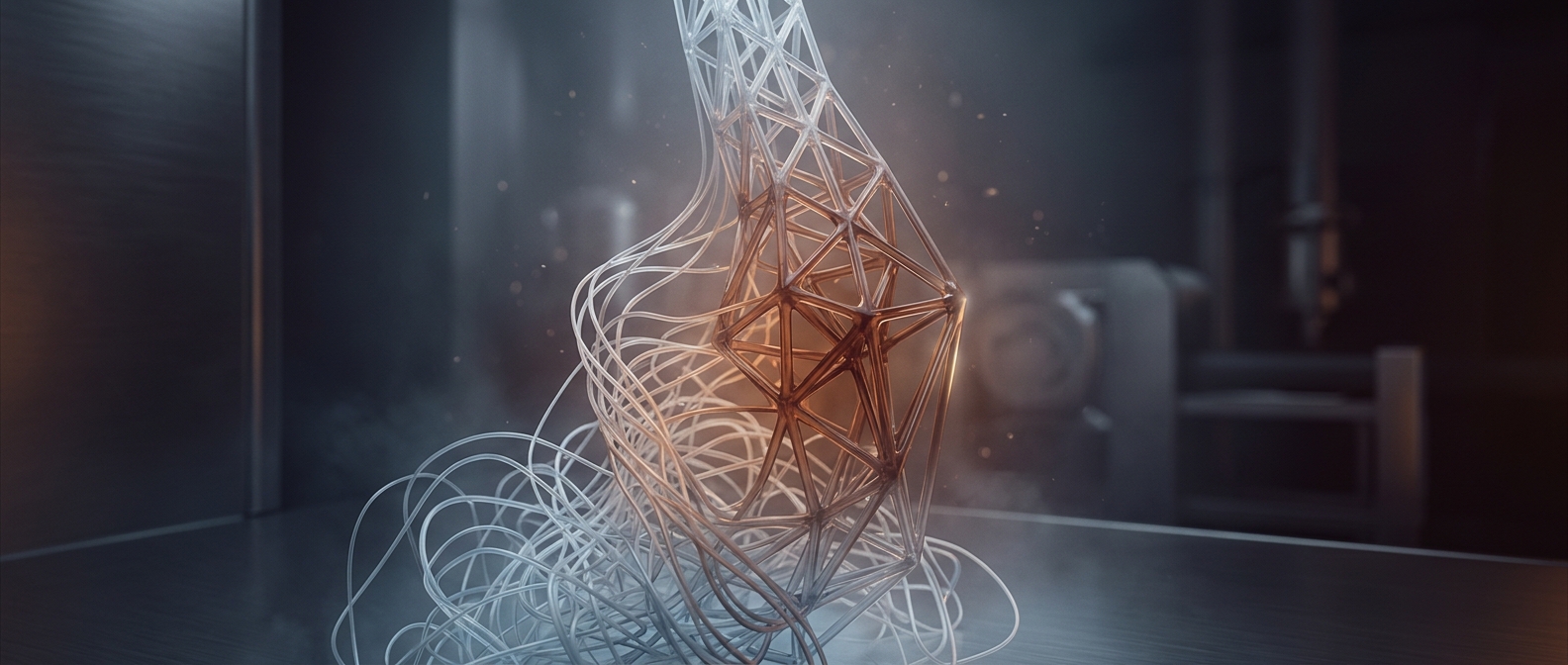
Pressure turns a short block into a long section
Inside the press, the billet cannot simply move forward as a whole, because the die opening is smaller than the block. Instead, pressure makes the hot metal spread and flow through the opening. As more material follows, a continuous length of shaped section emerges. The press supplies the force; the die controls where the metal can go.
The result is generally made longer than any single finished piece. After it exits, the section can be cooled, straightened if needed, and cut to length. The exact finishing steps depend on the metal and the job the rail must do.
Why use extrusion?
Extrusion is useful when a component needs the same complex cross-section from end to end. Rather than assembling several pieces or machining away material to create grooves and ridges, a manufacturer forms those features in one pass through the die. The key advantage is repeatable shape along a long length—the reason one press stroke can turn a compact billet into a rail ready for finishing and cutting.