The Missing Length of a Triceratops Horn
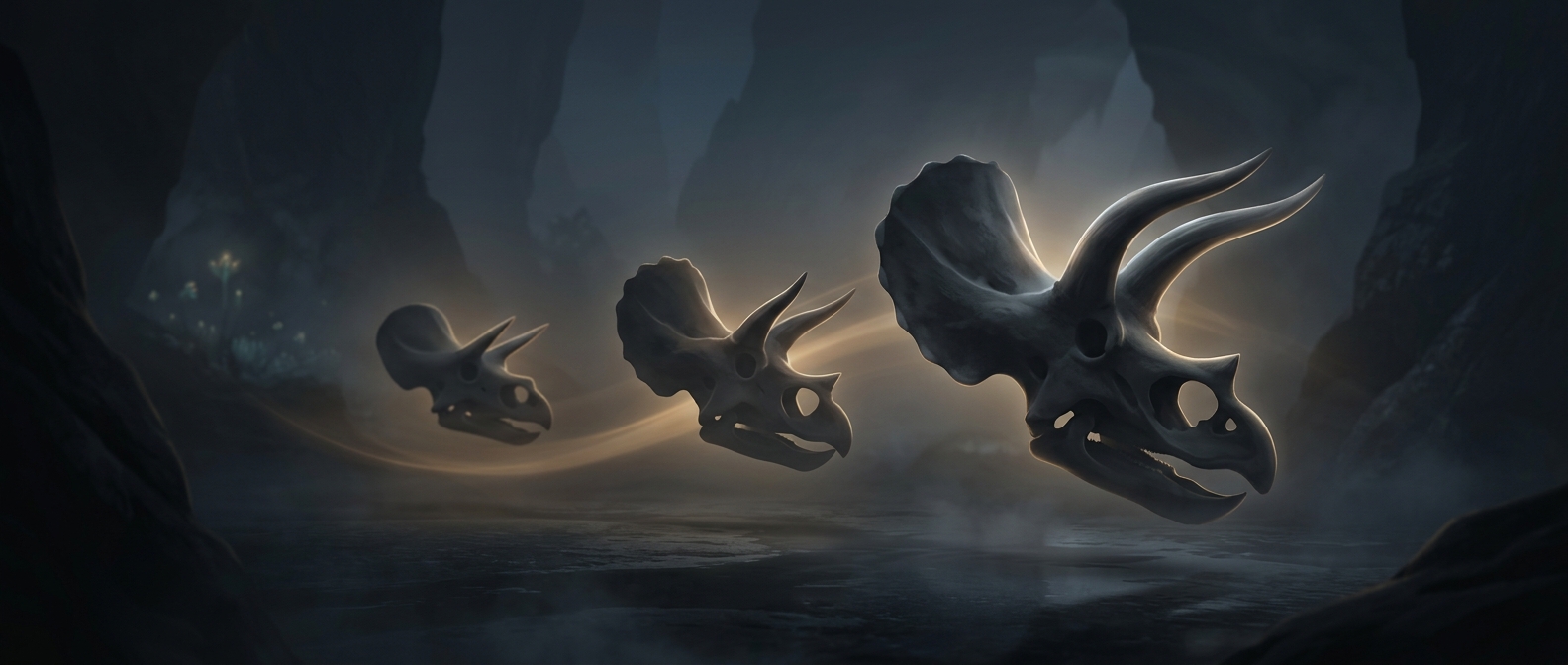
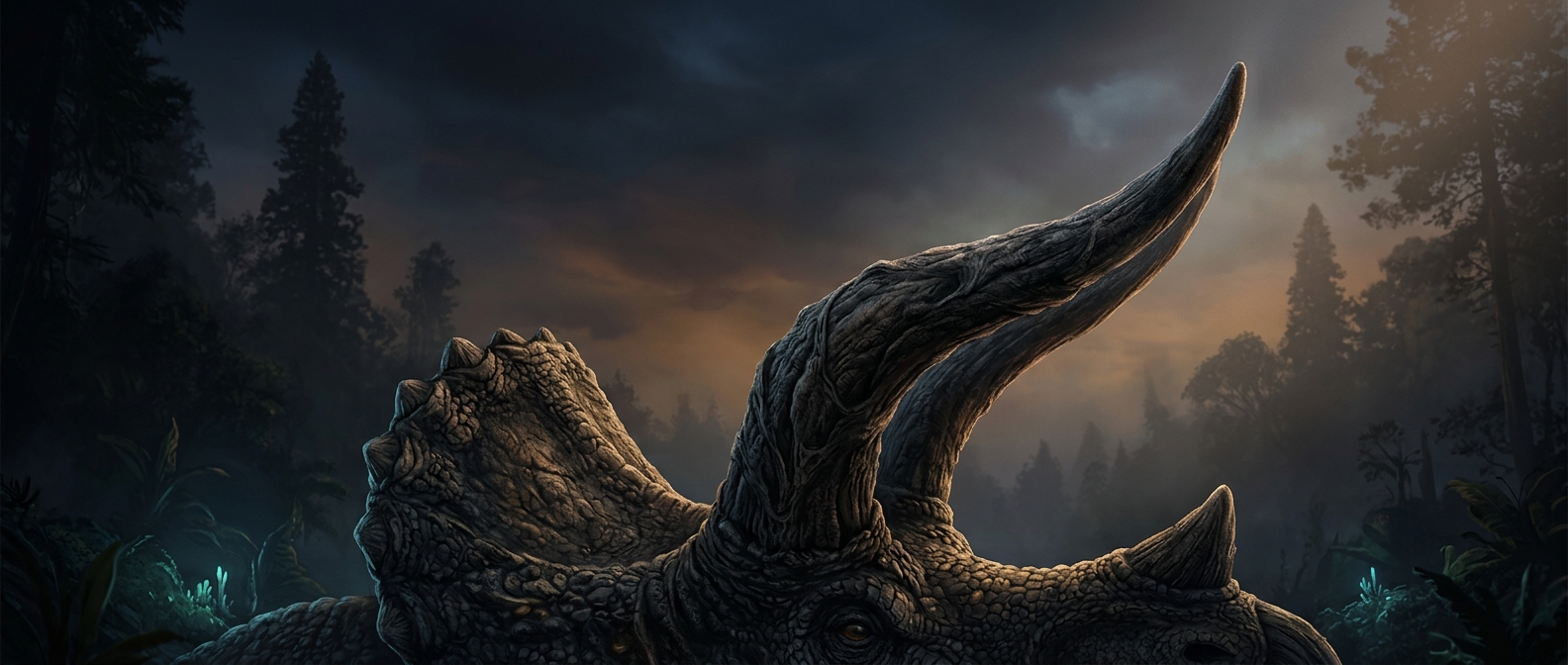
A Triceratops fossil preserves bone, but the horn seen in life was not bare bone. A tough outer sheath made of keratin—the same material found in fingernails—covered the bony core. Because that sheath could continue beyond the bone, the fossil alone does not show exactly where the living horn ended.
How a Horn Could Extend Beyond Its Core
Think of the bone as a firm anchor beneath a harder outer covering. In life, keratin formed the visible surface and could project past the tip of the bony core, giving the horn a longer outline than the preserved fossil suggests. Once the animal died, soft tissues and keratin were far less likely to survive burial and fossilization than bone. The core remained; the full covering usually did not.
That gap matters when reconstructing the animal’s appearance. A fossil horn is not a complete measurement of the horn as it looked on the living dinosaur. Its preserved length records the underlying support, while the original keratin sheath could have added to the visible reach. The exact outline cannot be read directly from the bone alone.
A Fossil Is a Record of What Survived
This is a broader lesson in reading fossils: a skeleton preserves some parts of an animal much better than others. Triceratops’s bony horn cores give paleontologists a real structure to study, but they are only one part of the living horn. The familiar fossil display may therefore show a shorter form than the animal carried in life.