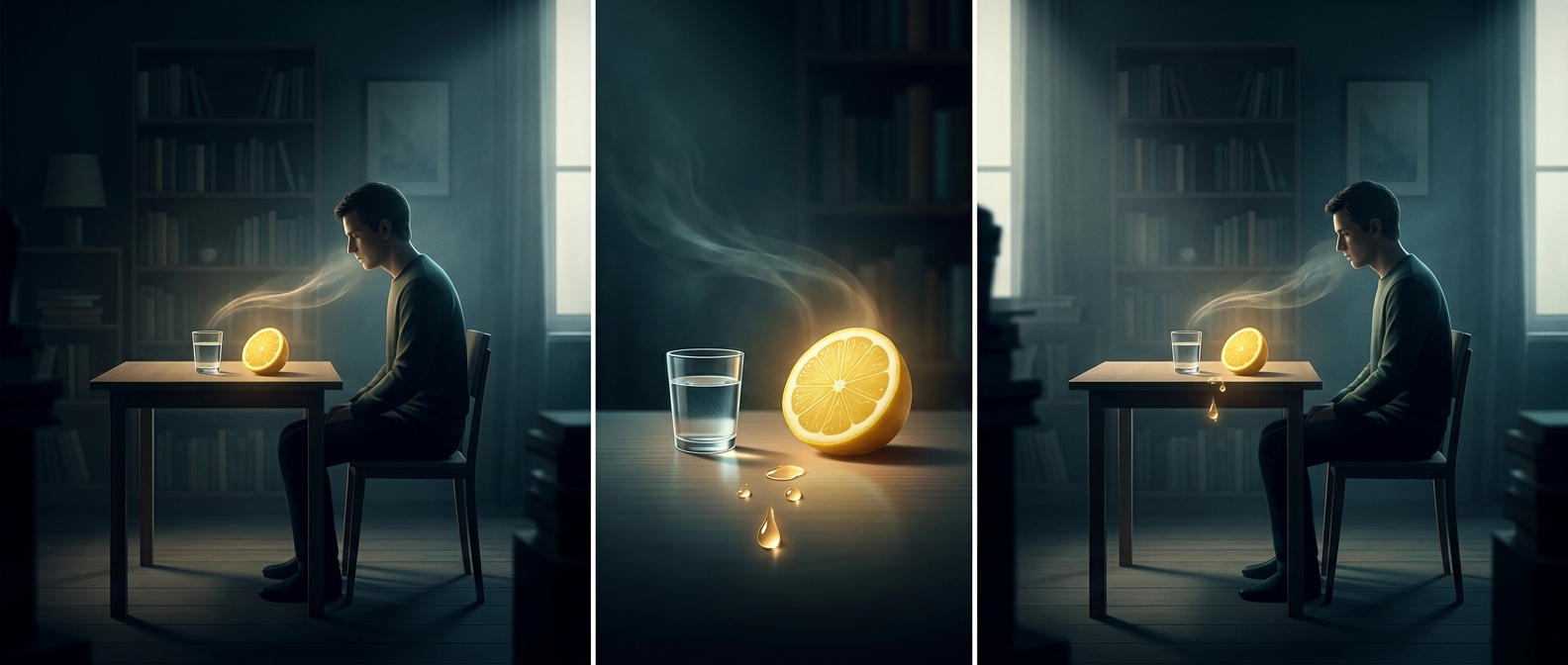
Why a Sour Taste Can Reveal a Difference
Lemon juice makes the mouth water because sourness activates taste nerves that prompt the salivary glands to release fluid. That response helps dilute and wash away the sharp-tasting substance. Researchers can compare it by measuring how much saliva someone produces after tasting lemon juice—a visible, measurable reaction to a brief sensory stimulus.
The Arousal Explanation
The classic finding was that people described as introverts produced more saliva after the same sour stimulus than people described as extroverts. One proposed explanation is differences in sensitivity to stimulation: if introverts tend to react more strongly to sensory input, lemon’s intense taste may trigger a larger bodily response.
This is a theory about average tendencies, not a rule for every person. Saliva also varies with ordinary factors such as how sour the juice is, how it is tasted, and a person’s state at the time. A single lemon test cannot establish someone’s personality.
A Small Reaction, Not a Personality Test
The result is memorable because it gives an abstract psychological distinction a physical form: personality-related differences may show up in an automatic response, before anyone chooses how to behave. But the measurement captures salivation, not introversion itself. The useful takeaway is narrower—and more concrete: the same taste can produce different bodily reactions in different people.