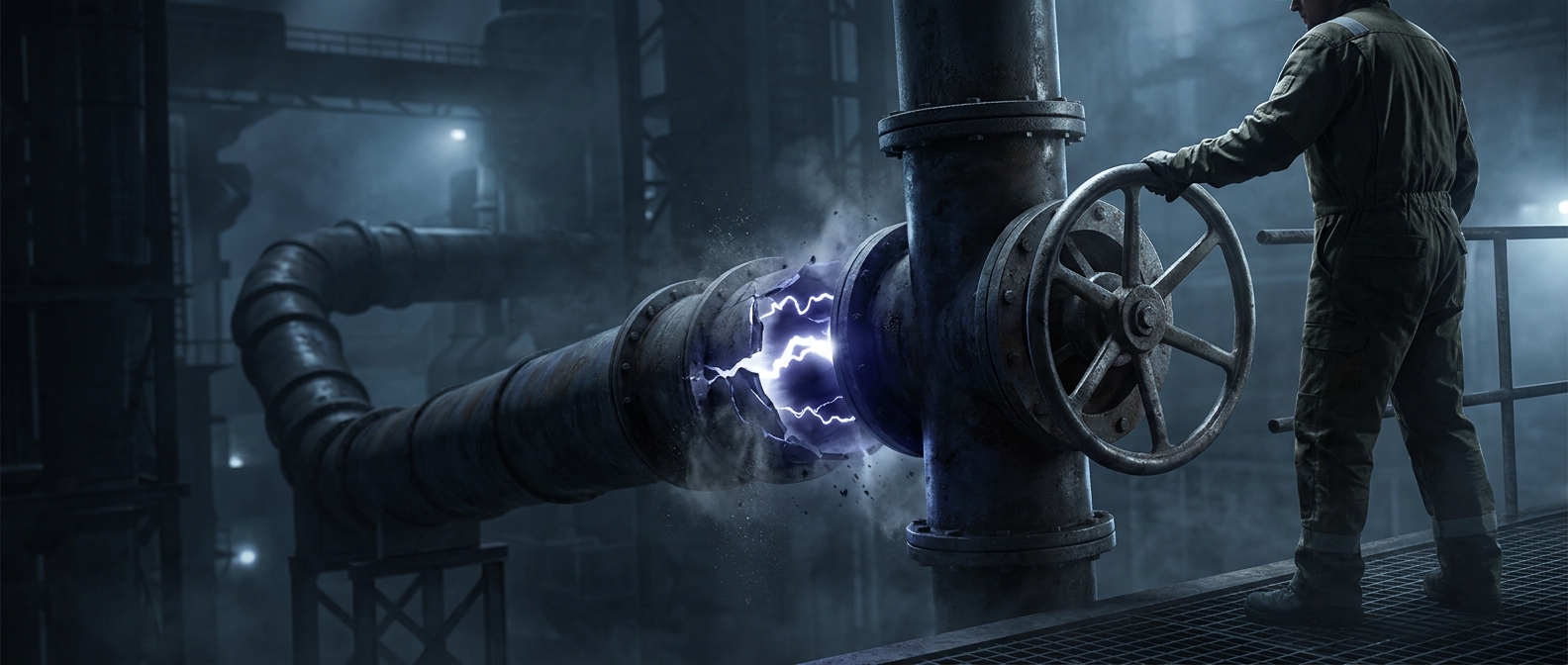
The pressure wave behind a pipe’s shudder
Water in a pipe is moving mass, and a fast-closing faucet forces that moving water to slow abruptly. The change in motion creates a pressure wave that travels through the plumbing. When it reaches a bend, valve, or other part of the system, it can make the pipe and its supports vibrate—sometimes with a bang or rattle. This effect is commonly called water hammer.
Why the sound varies
The wave is more noticeable when water is moving quickly and the faucet closes in a fraction of a second. Pipes can amplify the disturbance if they are loose enough to shift against a wall or framing. A slower-closing valve reduces the sudden change in flow, so the pressure wave is less forceful.
The pipe’s material and the surrounding plumbing also shape what you hear: a brief knock, a shiver, or a longer rattle. The sound is not simply water sloshing around; it comes from pressure changes and the pipe’s movement in response.
A small jolt with a practical lesson
A gentle turn gives the moving water more time to slow down, easing the jolt that reaches the plumbing. If a faucet’s closure repeatedly produces a hard bang, the vibration is a sign that the pipework is absorbing a sharp pressure change—not just making an odd noise.