Why a cell needs a return route
Microtubules are polarized: their two ends have different molecular structures, like a track with a direction built into it. Dynein generally moves toward the minus end. In many cells, those ends are concentrated near the nucleus, so dynein can carry material inward after it has moved toward the edge—or help redistribute cargo to places where it is needed.
That return traffic matters because a cell is not simply shipping new supplies outward. It also has to retrieve used materials, move compartments that break down waste, and bring some signals from the cell surface toward the interior. Without inward transport, those jobs would depend on cargo drifting through crowded cellular space.
How a molecular motor takes a step
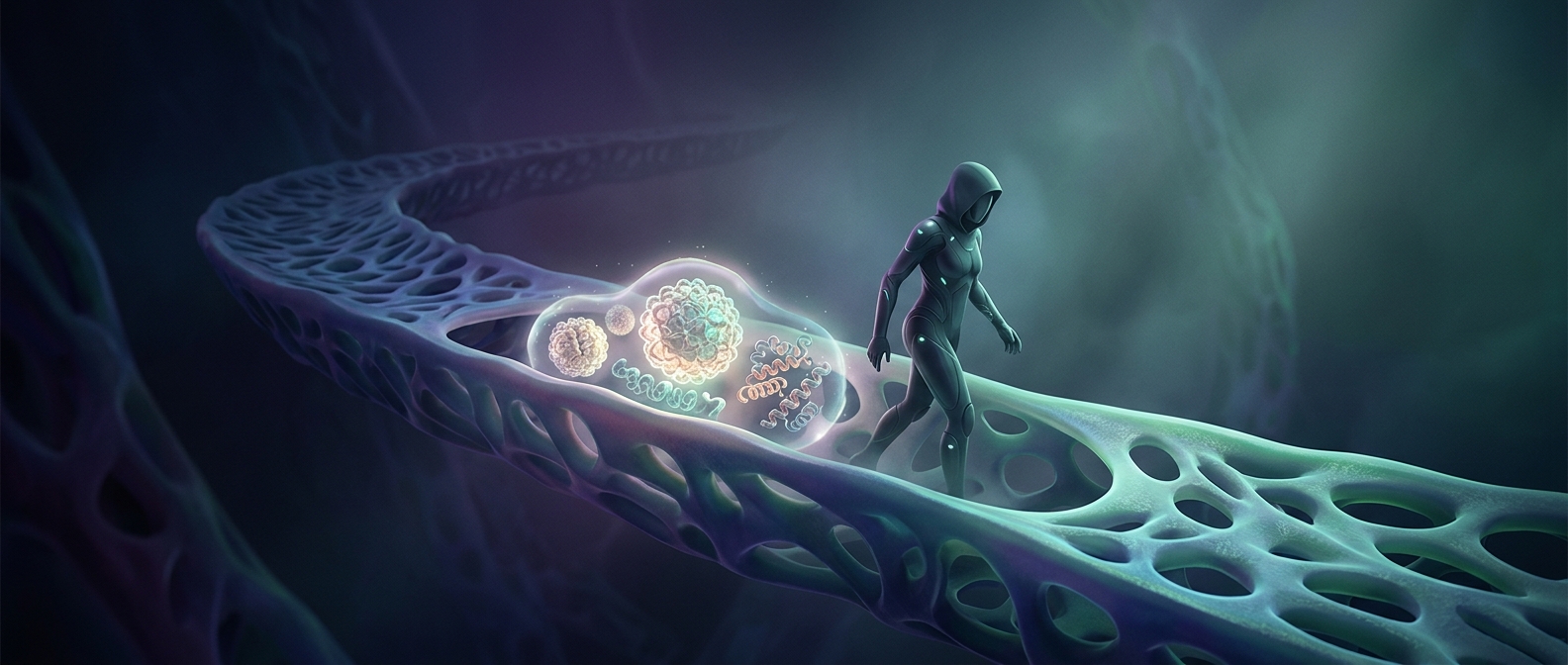
Dynein does not roll along the track. Its motor parts bind the microtubule and change shape as they use energy from ATP, the cell’s common energy-carrying molecule. Those shape changes shift dynein’s attachment points, producing a sequence of small steps. The motor’s flexible structure can help it keep moving despite bumps or interruptions along the track.
Dynein often works with dynactin, a partner complex, and adaptor proteins. Adaptors connect the motor machinery to particular cargo, helping determine what gets moved and when. This arrangement lets the cell route different loads without needing a separate track for every destination.
Traffic is coordinated, not one-way
Dynein shares microtubules with kinesin motors, which usually travel toward the opposite end. A cargo can therefore encounter competing directions of pull. Cellular control systems, along with the proteins attached to the cargo, influence which motor is active and whether a load pauses, changes direction, or continues. The result is less like an automatic conveyor belt than a managed transport network—one that can send a used compartment back for processing while other cargo heads outward.