Why a Tea Gathering Has a Long Middle
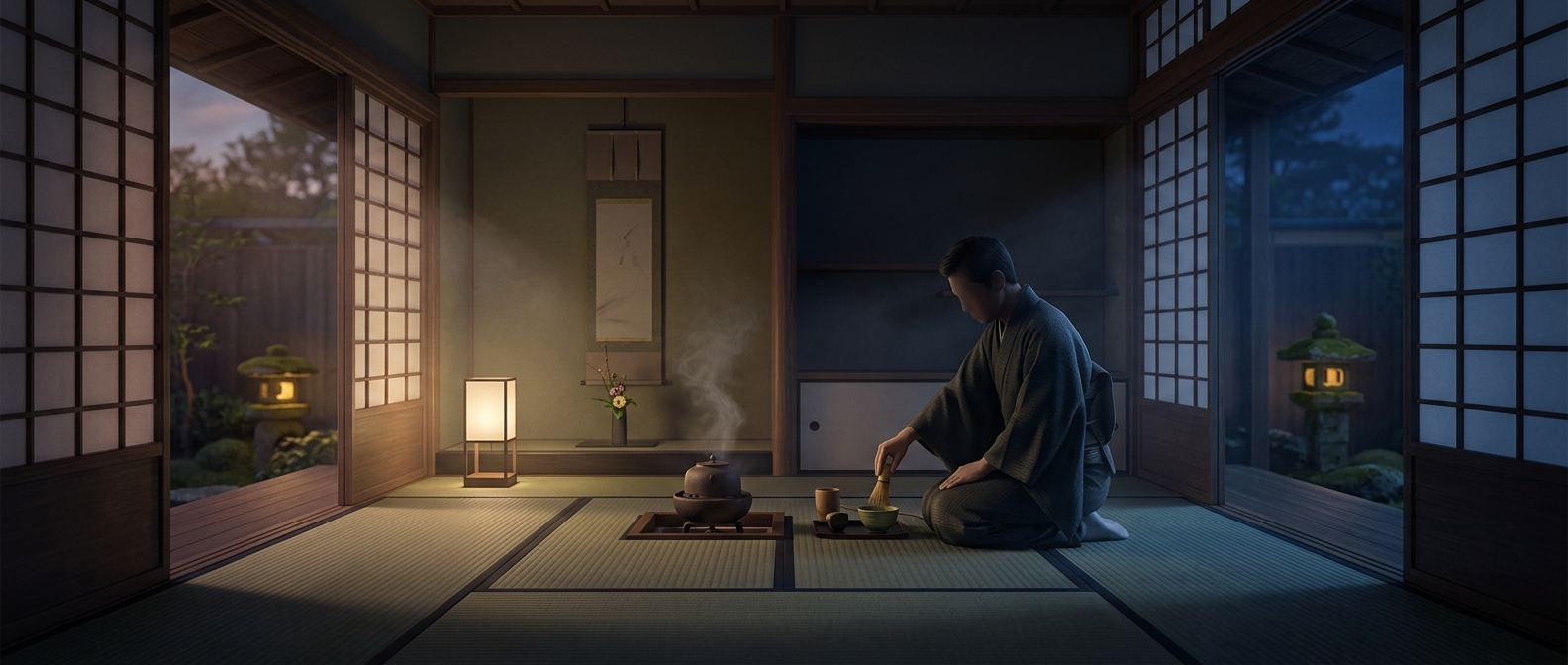
In a formal Japanese tea gathering, the sequence is part of the hospitality. A host does not simply bring out a bowl and begin serving. The gathering may move from a meal to a pause and then to tea, giving guests time to shift from eating to a quieter, more focused encounter.
That pause is not dead time. It creates a boundary between parts of the event, while the host prepares the room and tea equipment for what comes next. Guests, meanwhile, can attend to the setting and the objects being used. The ceremony’s measured pace makes those changes noticeable rather than hiding them behind a quick service.
Two Teas, Two Ways of Sharing
A full gathering may include thick tea (koicha) and thin tea (usucha). Thick tea is prepared with more powdered tea relative to water and is traditionally shared from one bowl among several guests. Thin tea is prepared separately for each guest. The contrast changes the social rhythm: one bowl invites a collective moment, while individual servings allow the gathering to proceed guest by guest.
Each serving also involves small, practiced actions—handling the bowl, receiving it, drinking, and returning it. These gestures are not decorative extras; they organize how people take part and give the host and guests a common pace.
Time as Part of the Design
A gathering that lasts several hours is therefore not a long wait for a drink. Its length comes from transitions, preparation, shared attention, and the different forms of tea. The tea is central, but the event is built around everything that makes receiving it meaningful.