Why a movie can hit harder at cruising altitude
A flight changes the conditions in which you watch a film. You are sitting still, away from your usual tasks and people, with few easy ways to shift your attention. A story that might play as background noise at home can take up more of your mental space when the cabin gives you little else to do.
The setting can also leave you tired or tense. Early departures, long travel days, cramped seating and the effort of navigating an airport all add up. Fatigue makes it harder to keep feelings at arm’s length; it does not create an emotion from nothing, but it can make a tender scene easier to feel.
Small stresses, fewer buffers
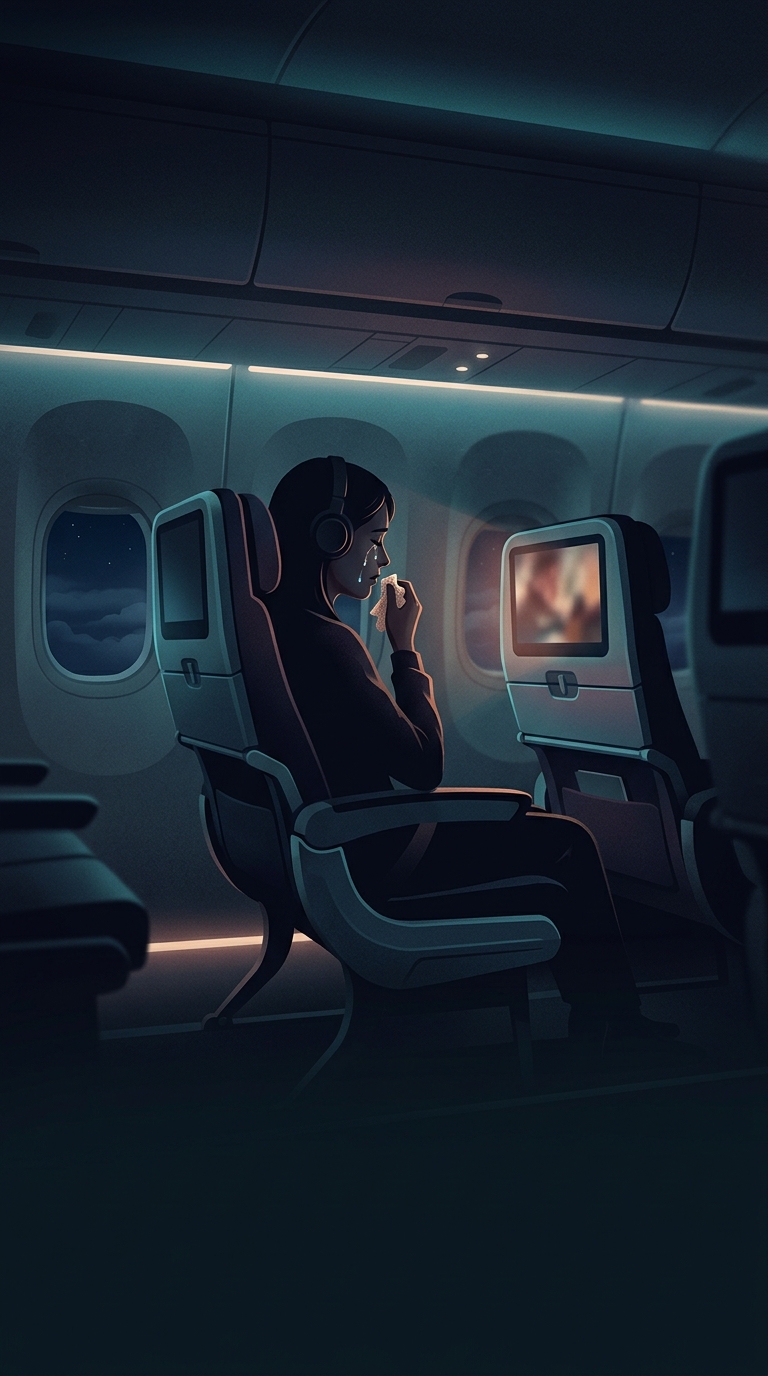
At home, a phone buzzes, someone speaks, or you get up for a snack. On a plane, those interruptions are less available—and the screen is close, headphones make the sound more intimate, and the darkened cabin can feel unusually private despite being full of people. That combination can draw attention into a scene while making tears feel less exposed.
Even an ordinary film may arrive at the right moment. A reunion, a farewell, or a character finally reaching safety can echo the traveler’s own goodbyes, anxieties or relief. The movie supplies the immediate trigger; the journey supplies some of the emotional context.
The tears are not a cabin malfunction
There is no need to assume that altitude has switched on a special crying mechanism. A plane is simply a place where tiredness, concentrated attention and personal associations can converge. And because fellow passengers are mostly absorbed in their own screens, a few tears may feel easier to let happen than they would in a living room full of family. The film may be generic; the moment in which you watch it is not.